Unusually Soars by 10%
Prices Rise as New Car Production Drops Due to Semiconductor Shortage Increasing Demand
Accounts for 30% of Inflation Factors
[Asia Economy New York=Correspondent Baek Jong-min]
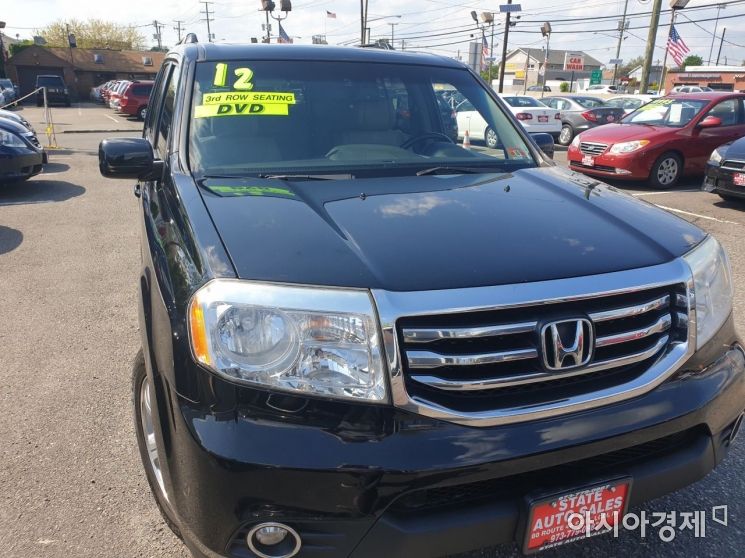
The global semiconductor shortage that has struck the automotive industry worldwide has created a butterfly effect, unexpectedly driving up the U.S. Consumer Price Index (CPI). Since the COVID-19 pandemic, economic forecasting has become difficult, leading experts to shake their heads at the challenge of future outlooks.
Bloomberg reported on the 12th (local time) that the reason the U.S. April CPI surged 4.2% year-on-year was due to rising used car prices. The Wall Street Journal estimated that 30% of the CPI increase was attributable to the rise in used car prices.
In April, used car prices in the U.S. soared by 10%, the largest increase since 1953. Used car prices have shown steady strength since the COVID-19 outbreak last year, rendering the long-held belief that used car prices decline obsolete.
The April rise in used car prices was caused by automakers such as GM and Ford cutting production due to semiconductor shortages, making new car purchases difficult. Those who sold vehicles early in the COVID-19 pandemic are now returning to buy, resulting in a boom for new car dealers and used car traders alike. Instead of discounts, premiums were added during vehicle sales, and dealer inventories are running out.
At Mannheim, the largest car auction site in the U.S., the average auction winning price surged 54% compared to a year ago. Online used car sales company Vroom, which announced its earnings on the same day, reported first-quarter sales up 57% year-on-year and net profit doubling. The company stated that car purchases have exploded and they are making every effort to secure inventory.
The prevailing analysis is that the rise in used car prices is temporary. White House Press Secretary Jen Psaki cited the rise in used car prices as an example in a briefing on the same day when asked about inflation concerns, stating it is a "phenomenon due to semiconductor shortages." She assessed it is not a long-term inflation factor. Psaki continued to argue that the recent inflation surge was already anticipated and is temporary.
Besides used cars, food prices rose 3.8%, dining-out costs increased 2.4%, and car and truck rental fees soared by a staggering 82%. Airfares also rose 9.6%. Gasoline prices jumped 50% compared to a year ago but fell 1.4% compared to March. This reflects prices rising as demand disappeared and then recovered.
However, the WSJ diagnosed that prices are still 2.2% lower than in 2019. Although price increases have exceeded expectations, the analysis suggests the economy has not yet fully normalized.
Some argue that considering the current inflation is influenced by base effects and unpredictable pandemic conditions, it is unlikely to lead to long-term hyperinflation above 10%. The argument is based on the premise that current demand cannot last forever. Rather, it is seen as an opportunity for central banks to achieve stable growth targeted at 2%.
© The Asia Business Daily(www.asiae.co.kr). All rights reserved.
![Clutching a Stolen Dior Bag, Saying "I Hate Being Poor but Real"... The Grotesque Con of a "Human Knockoff" [Slate]](https://cwcontent.asiae.co.kr/asiaresize/183/2026021902243444107_1771435474.jpg)















