Perceived as a Threat to Private Companies and National Security
Semiconductor Meeting at the White House on the 12th...Discussion of Measures with Companies
[Asia Economy Reporter Hyunwoo Lee] As the U.S. Senate plans to introduce a supply chain stabilization bill related to the semiconductor shortage issue, it is expected that semiconductor production in the U.S. will increase and containment of China will intensify. The White House is also scheduled to discuss countermeasures with major U.S. automakers and global semiconductor companies such as Samsung Electronics on the 12th.
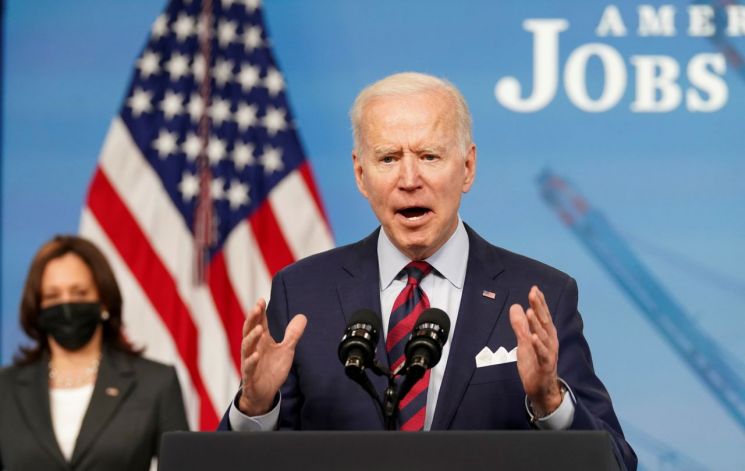
According to foreign media including CNN on the 7th (local time), U.S. President Joe Biden emphasized congressional cooperation in the infrastructure investment bill announced that day, stating, "A bipartisan group came to me 3 to 4 weeks ago regarding semiconductor issues," adding, "They said, 'We need to have our own supply chain, we need to cooperate,' and we are working on it. Senate Majority Leader Chuck Schumer and Senate Minority Leader Mitch McConnell will introduce a bill related to the semiconductor supply chain." The White House is also reported to plan a semiconductor supply chain response meeting on the 12th with major U.S. automakers such as General Motors and Ford, as well as global semiconductor manufacturers including Samsung Electronics.
The bill is expected to include support measures to ensure a stable supply of semiconductor chips to the U.S. industry. Both the Biden administration and the U.S. Republican and Democratic parties view the semiconductor issue not only as an economic problem related to production halts at private automakers or home appliance companies but also as a matter directly linked to national security. Accordingly, the bill is expected to include measures to expand domestic semiconductor production to protect the supply chain and to contain China.
According to the U.S. Semiconductor Industry Association's forecast, the U.S. global semiconductor market share is expected to decline from 12% last year to 9% by 2030, while China’s share is projected to rise from 12% last year to 28% by 2030. Since semiconductors are essential for operating advanced strategic weapons such as stealth fighters and hypersonic ballistic missiles, there is a bipartisan consensus in U.S. politics that semiconductor leadership must not be handed over to China.
© The Asia Business Daily(www.asiae.co.kr). All rights reserved.
![Clutching a Stolen Dior Bag, Saying "I Hate Being Poor but Real"... The Grotesque Con of a "Human Knockoff" [Slate]](https://cwcontent.asiae.co.kr/asiaresize/183/2026021902243444107_1771435474.jpg)
















