Land Targeting a Total of 11 Parcels Valued at Approximately 2.6 Billion KRW
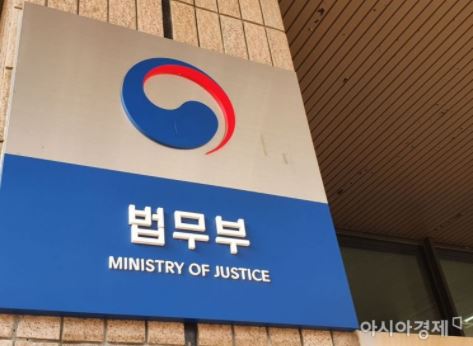
[Asia Economy Reporter Choi Seok-jin] The Ministry of Justice has initiated land restitution lawsuits to transfer properties acquired by pro-Japanese anti-national collaborators to the state.
On the 1st, the Ministry of Justice announced that on the 26th of last month, it filed lawsuits at the Seoul Central District Court and Seoul Western District Court seeking ownership transfer registration and restitution of unjust enrichment for a total of 11 land parcels, including land in Hong Eun-dong, Seodaemun-gu, Seoul, owned by descendants of four pro-Japanese collaborators: Lee Gyu-won (李圭元), Lee Ki-yong (李埼鎔), Hong Seung-mok (洪承穆), and Lee Hae-seung (李海昇).
The total area of the land subject to restitution through the lawsuits is 11 parcels (85,094㎡), with a land value of approximately 2.675 billion KRW based on the official land price.
Specifically, the land includes 7 parcels in Gaegok-ri, Wolgot-myeon, Gimpo-si, Gyeonggi-do owned by descendants of Lee Gyu-won; 2 parcels in Ipae-dong, Namyangju-si, Gyeonggi-do owned by descendants of Lee Ki-yong; 1 parcel in Ungdam-ri, Beopwon-eup, Paju-si, Gyeonggi-do owned by descendants of Hong Seung-mok; and 1 parcel in Hong Eun-dong, Seodaemun-gu, Seoul owned by descendants of Lee Hae-seung.
According to the Ministry of Justice, Lee Gyu-won received the title of Viscount from the Japanese government and was awarded the Korea Annexation Commemorative Medal on August 1, 1912. He served as a promoter and director of the Joseon Defense Corps, and as an initiator of the 10-jeon donation campaign for the conscription law implementation committee. He was designated as a pro-Japanese anti-national collaborator in 2007.
Lee Ki-yong, a relative of the Joseon royal family, received the title of Viscount from the Japanese government at the age of 22 after the Japan-Korea Annexation Treaty was signed on October 7, 1910. In April 1945, he served as a member of the House of Peers, the upper house of the Imperial Diet of Japan, alongside Park Sang-jun, Yun Chi-ho, and Park Jung-yang. He was designated as a pro-Japanese anti-national collaborator in 2007.
Hong Seung-mok was a late Joseon official who served as a councilor of the Central Advisory Council of the Japanese Governor-General of Korea during the Japanese colonial period. He was awarded the Korea Annexation Commemorative Medal by the Japanese government in 1912 and was designated as a pro-Japanese anti-national collaborator in 2007.
Lee Hae-seung received the title of Marquis from the Japanese government and was awarded the Korea Annexation Commemorative Medal on August 1, 1912. He was designated as a pro-Japanese anti-national collaborator in 2007.
According to Article 3 of the “Special Act on the State Ownership of Property Acquired by Pro-Japanese Anti-National Collaborators,” property acquired by collaborators from the outbreak of the Russo-Japanese War (February 1904), when the infringement of national sovereignty began, until August 15, 1945, as a reward for cooperating with the Japanese colonial regime, shall belong to the state unless acquired by a third party in good faith or through legitimate compensation.
The Ministry of Justice has been handling lawsuits related to the state ownership of pro-Japanese properties since July 2010, succeeding the litigation duties of the “Committee for the Investigation of Property of Pro-Japanese Anti-National Collaborators,” based on the Prime Minister’s directive on the succession of litigation duties related to the state ownership of pro-Japanese anti-national collaborators’ properties.
Since its establishment in July 2010, the Ministry of Justice’s pro-Japanese property litigation team has won 17 out of 19 lawsuits, with the total amount won reaching approximately 26 billion KRW.
In October 2019, Seodaemun-gu, Seoul, discovered land suspected to be pro-Japanese property during a park development project and requested the Ministry of Justice to review whether it should be subject to state ownership. The Liberation Association also requested the Ministry of Justice in August 2020 to recover the pro-Japanese properties, including the land in question.
After thorough data investigation and detailed legal review, the Ministry of Justice determined that among the 66 parcels of land requested for review, 11 parcels clearly met the criteria for state ownership under the special law, with all related evidence secured. The Ministry promptly filed injunctions to prohibit disposition with the courts and obtained approval.
The Ministry of Justice plans to file additional lawsuits for the remaining land parcels not included in this lawsuit due to lack of evidence or statute of limitations issues, if further evidence and legal review confirm their eligibility for litigation.
The Ministry of Justice stated, “We will complete the state ownership procedures for the targeted land through thorough litigation, continuously promote the liquidation of pro-Japanese collaborators’ assets, and recover even the last parcel of pro-Japanese property to realize the constitutional ideals and historical justice of the March 1st Movement.”
© The Asia Business Daily(www.asiae.co.kr). All rights reserved.
![Clutching a Stolen Dior Bag, Saying "I Hate Being Poor but Real"... The Grotesque Con of a "Human Knockoff" [Slate]](https://cwcontent.asiae.co.kr/asiaresize/183/2026021902243444107_1771435474.jpg)















