Seokjeong Urban Development Co., Ltd., which is actively conducting projects in major regions nationwide and striving to revitalize housing supply, is emerging as a strong player in real estate development starting with the ‘Osong Station Hyundai Hillstate’ project initiated last year. The company plans to supply about 5,000 households in 2021 and about 4,000 households in 2022 by dedicating great efforts to all projects underway in Daejeon, Osan, and other areas.
◆ ‘Osong Station Hyundai Hillstate’ eliminates distrust in cooperative projects by securing speed and stability.
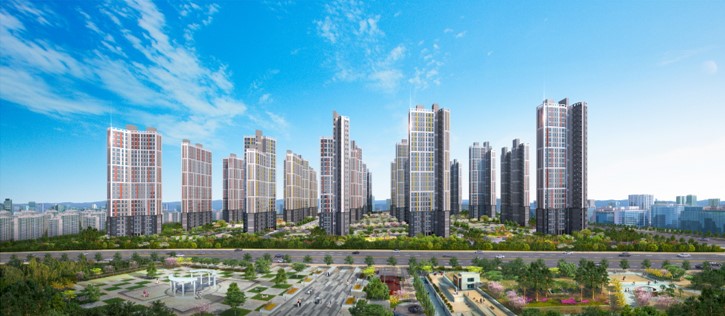
Osong Station Hyundai Hillstate is a regional housing cooperative project located around Cheongju Osong Station area, consisting of 24 apartment buildings ranging from two basement floors to a maximum of 25 floors above ground, totaling 2,094 households. In May last year, excluding rental units, the recruitment of 1,593 apartment cooperative members was completed with a 100% subscription rate in just one day, followed by a record-setting 100% contract completion for all unit types within one week.
To ensure the success of this project, Seokjeong Urban Development Co., Ltd. stated, “We are working comprehensively, receiving favorable reviews from cooperative members. Prioritizing smooth project progress over company profits, we have foregone tens of billions of won in additional revenue and are proceeding with a rapid project schedule. We have also secured project stability by covering land balance payments and project funding 100% with our own funds, without burdening cooperative members.”
◆ Osan project seeks a path to success armed with responsibility
Seokjeong Urban Development Co., Ltd. is handling other ongoing projects, including Osong Station Hyundai Hillstate, with responsibility by promoting transparent management and mutual growth among project stakeholders.
In particular, Chairman Lee Chang-seop of Seokjeong Urban Development regards the 2017 Smart City Osan regional housing cooperative project as a painful long-standing issue that has remained unresolved for several years. The project progressed rapidly, completing recruitment of 1,500 cooperative members in just three months?the shortest period in the Gyeonggi area?and obtaining establishment approval within five months, an uncommon case in regional housing cooperative projects. Additionally, the cooperative president and executives were elected through autonomous voting by cooperative members, and the project rights were transferred to the cooperative to ensure transparency and fairness.
Nevertheless, the project faced a crisis after wasting two years due to immature work by the licensing company and changes in surrounding conditions. In response, Seokjeong Urban Development, as the overall project manager, acknowledged full responsibility and boldly changed the licensing company and project methods to reorganize the project.
In addition, the company fully refunded hundreds of cooperative members who requested cancellations due to growing dissatisfaction and anxiety caused by project delays. To minimize the burden of additional payments arising from project prolongation, Seokjeong Urban Development declared a 100% waiver of agency fees and completed document notarization, thereby enhancing trust with the cooperative and resuming the project.
Recently, Seokjeong Urban Development has demonstrated its commitment by injecting an additional 10 billion won, re-contracting all expired land contracts, and submitting licensing applications to Osan City Hall.
A representative of Seokjeong Urban Development stated, “Due to the three-year delay, including waived agency fees and sunk costs, we estimate losses of about 40 billion won from the Smart City Osan project alone. However, Chairman Lee Chang-seop’s business philosophy is that people must come first for a project to succeed, and only when the project succeeds does the company have a future. We are responsibly leading the project for the Smart City Osan cooperative members.”
Furthermore, Chairman Lee said, “In the past, during the Gyeongbuk Gimcheon regional housing cooperative project, we made a swift decision to refund 100% of the cooperative fees to about 300 members and incurred a loss of about 20 billion won. That is why Seokjeong Urban Development is proud in the regional housing cooperative business.”
He added, “Although there were many difficulties during the Smart City Osan regional housing project, I recalled the bitter experience of the Gimcheon project and worked even harder to find solutions. Our goal is to successfully lead the Osan project and leave a good precedent in the regional housing cooperative business.”
In the second half of 2021, Seokjeong Urban Development plans to supply 2,465 households (planned) near Daejeon Doan New Town. The ‘Daejeon Doan GS Xi (tentative name),’ which attracted attention in the region by signing a subcontract with the major domestic construction company GS Construction, is progressing with about 40 billion won of land costs pre-invested. Among these, one block is being developed to preserve the occupancy rights of landowners.
Finally, executives and employees of Seokjeong Urban Development expressed their commitment, saying, “Rather than insisting solely on our company’s profits in any project, we focus on smooth communication and cooperation where rights, authority, responsibilities, and duties of all parties are accompanied. We will always prioritize people and lead the projects currently underway to become a trusted partner both inside and outside.”
© The Asia Business Daily(www.asiae.co.kr). All rights reserved.
![Clutching a Stolen Dior Bag, Saying "I Hate Being Poor but Real"... The Grotesque Con of a "Human Knockoff" [Slate]](https://cwcontent.asiae.co.kr/asiaresize/183/2026021902243444107_1771435474.jpg)















