Jehovah's Witness Reservist Who Conscientiously Objected to Training Found Not Guilty by Supreme Court
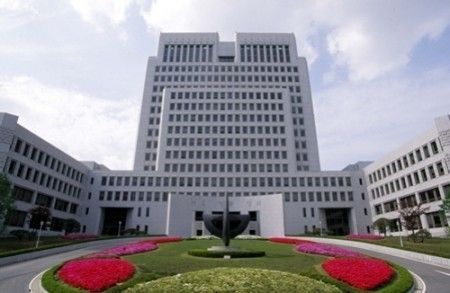
[Asia Economy Reporter Baek Kyunghwan] The Supreme Court has ruled that refusing reserve forces training on the grounds of religious beliefs, following conscientious objection to active duty enlistment, cannot be punished. This decision follows the 2018 Supreme Court plenary session ruling that religious beliefs are included in the justifiable reasons defined by the Military Service Act, and conscientious objectors should not be criminally punished.
Recently, the Supreme Court overturned and remanded the lower court’s guilty verdict in the appeal trial of Mr. Nam, who was charged with violating the Reserve Forces Act.
Mr. Nam was prosecuted and tried for failing to participate in the "deferred supplementary training" several times between June and August 2017 at his residence in Yangsan-si, Gyeongnam, without justifiable reasons despite receiving multiple notices. Article 15, Paragraph 9, Subparagraph 1 of the Reserve Forces Act punishes those who do not attend training without justifiable reasons.
Mr. Nam completed his military service as active duty but later converted to a religion. In previous trials, he claimed, "As a Jehovah’s Witness, I did not participate in the training based on freedom of conscience, which constitutes a justifiable reason."
The first and second trials rejected Mr. Nam’s claim. They judged, "Although the defendant’s refusal to participate in training based on his religious beliefs can be understood from the perspective of freedom of conscience expression, it cannot be considered a justifiable reason under the Reserve Forces Act, as it is an act that sufficiently damages or has the potential to damage constitutional values such as national security." The first trial sentenced him to 10 months imprisonment with a two-year probation, and the second trial imposed a fine of 5 million won.
However, the Supreme Court’s judgment differed. The bench stated, "Article 15, Paragraph 9, Subparagraph 1 of the Reserve Forces Act, like the Military Service Act, was established to specify the national defense duty of citizens, which constitutes the fulfillment of military service obligations," overturning the lower court rulings. Since reserve forces training also involves bearing arms or military training as part of fulfilling military service obligations, it is appropriate to reinterpret it according to the plenary session ruling recognizing 'conscientious objection to military service.'
This ruling is the first decision on violations of the Reserve Forces Act following the 2018 Supreme Court plenary session ruling that religious and conscientious objectors should not be punished under the Military Service Act. In June 2018, the Constitutional Court declared the Military Service Act unconstitutional for not providing an alternative service system for conscientious objectors. The Supreme Court plenary session also ruled in November of the same year that religious beliefs are included in justifiable reasons under the Military Service Act and that conscientious objectors should not be criminally punished.
Following this Supreme Court ruling, acquittals for those refusing reserve forces training are expected to continue. In fact, on the 29th, the Cheongju District Court acquitted Mr. A, who was charged with violating the Reserve Forces Act.
Mr. A was also tried for failing to attend reserve forces training twice on June 30 and July 5, 2017. Mr. A, who was discharged in July 2011, became a Jehovah’s Witness the following year and refused reserve forces training summons after returning to Korea from overseas missionary volunteer work.
Mr. A claimed innocence based on justifiable reasons, stating, "I did not attend reserve forces training due to sincere religious conscience." The court accepted Mr. A’s claim, stating, "Forcing conscientious objectors to fulfill military service obligations uniformly does not guarantee constitutional fundamental rights," and "If the refusal is based on genuine conscience, it constitutes a 'justifiable reason' for not attending reserve forces training."
© The Asia Business Daily(www.asiae.co.kr). All rights reserved.
![Clutching a Stolen Dior Bag, Saying "I Hate Being Poor but Real"... The Grotesque Con of a "Human Knockoff" [Slate]](https://cwcontent.asiae.co.kr/asiaresize/183/2026021902243444107_1771435474.jpg)
















