[Asia Economy Reporter Choi Seok-jin] Lee Yong-ho, former chairman of G&G Group (63), who was the main figure in the 'Lee Yong-ho Gate,' a representative power-type corruption case involving presidential relatives and the brother of the Prosecutor General during the Kim Dae-jung administration, has been sentenced to prison and detained in court on another criminal charge.
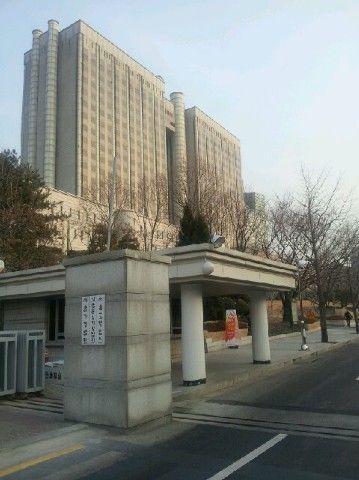
The Seoul High Court Criminal Division 12 (Presiding Judges Yoon Jong-gu, Choi Bong-hee, Jo Chan-young) on the 26th sentenced Lee to two years in prison, the same as the first trial, for violating the Act on the Regulation of Concealment of Criminal Proceeds and other charges, and detained him in court.
The court stated, "The defendant committed the crime during the recidivism period, and the amount embezzled is large," adding, "Even though some charges were acquitted, it is difficult to sentence differently from the first trial."
It further added, "Since the defendant exercised his right to defense sufficiently in both the first trial and the appeal, he will be detained in court according to the prison sentence."
Lee was indicted in July 2015 on charges including using 1.23 billion won of company funds from a venture capital company in which he invested shares to repay personal debts in 2014.
He is also accused of concealing the fact that 25.1 billion won obtained through illegal loans from the Gimhae Credit Cooperative in Gyeongnam by his accomplice Kim was criminal proceeds.
Lee committed these crimes less than a year after being released from prison after serving a three-year sentence for fraud.
Article 35 (Recidivism) of the Criminal Act stipulates that if a person commits a crime punishable by imprisonment or heavier punishment within three years after completing or being exempted from the execution of such a sentence, the punishment for that crime can be increased up to twice the maximum term prescribed. For example, if the statutory maximum sentence is "imprisonment for up to 5 years," a recidivist can be sentenced to "imprisonment for up to 10 years."
Earlier, the first trial court recognized guilt, stating, "The defendant managed the company by registering family members and others on the registration and committing crimes under their names, cleverly hiding his existence, which shows the bad nature of the crime," and sentenced Lee to prison.
'Lee Yong-ho Gate' is a representative power-type corruption case in the early 2000s where Lee, backed by influential figures in politics and government, committed financial crimes such as stock price manipulation by promoting treasure ship salvage projects.
© The Asia Business Daily(www.asiae.co.kr). All rights reserved.
![Clutching a Stolen Dior Bag, Saying "I Hate Being Poor but Real"... The Grotesque Con of a "Human Knockoff" [Slate]](https://cwcontent.asiae.co.kr/asiaresize/183/2026021902243444107_1771435474.jpg)
















