Rise of the Middle Class and Young Population Structure
Combined Effects of Low Labor Costs and Rent
Grab Expands as a Comprehensive Economic Platform
IPO Targeting at Least $2 Billion, Plans to List on the New York Stock Exchange
Gojek Also Enters the Digital Payment Market
Foreign Companies Including Amazon and Delivery Hero Join In
Growth Expected to Continue for the Time Being Riding Economic Recovery
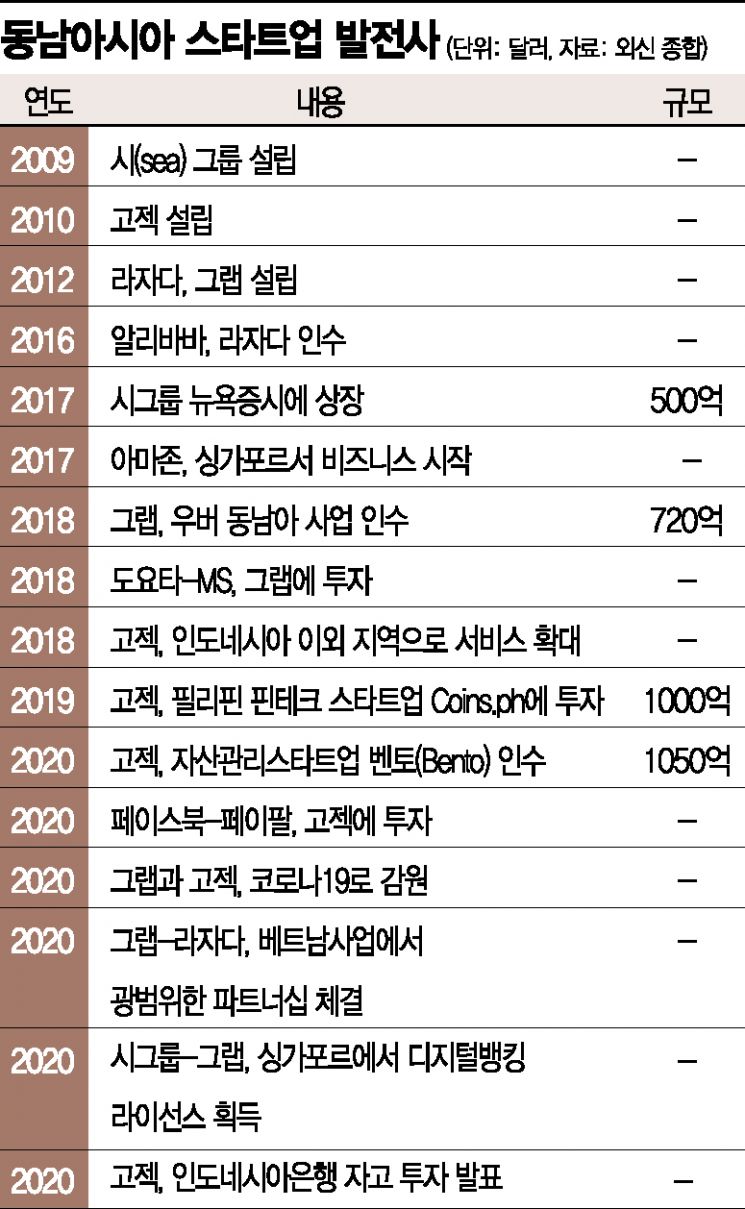
[Asia Economy Reporter Kwon Jaehee] Southeast Asia is emerging as a cradle for startups. While startups used to mainly operate in the US, China, and Japan, in recent years many have turned their attention to Southeast Asia, and startups originating locally are growing and even planning to list on the New York Stock Exchange, establishing Southeast Asia as Asia’s ‘Silicon Valley.’ The background includes a combination of factors such as the rise of the middle class due to economic growth, a population structure where the majority are young people aged 10 to 30, and low labor and rental costs.
On the 18th (local time), Grab, known as the Southeast Asian version of ‘Uber,’ announced plans to list on the US New York Stock Exchange within the year. The size of Grab’s initial public offering (IPO) is estimated to be at least $2 billion (approximately 2.2 trillion KRW), and if the IPO is realized, it will be the largest overseas stock offering by a Southeast Asian company to date.
◆Homegrown Companies Growing into Global Enterprises=Grab, which started as a ride-hailing service venture in Malaysia in 2012, has recently successfully established its food delivery service, significantly increasing its market share. Recently, it obtained a digital banking license in Singapore and is growing into a comprehensive economic platform covering finance, payments, shopping, reservations, and insurance. Having attracted investments from Japan’s SoftBank Group and Mitsubishi UFJ Financial Group, it is currently valued at over $16 billion, establishing itself as the largest startup in Southeast Asia.
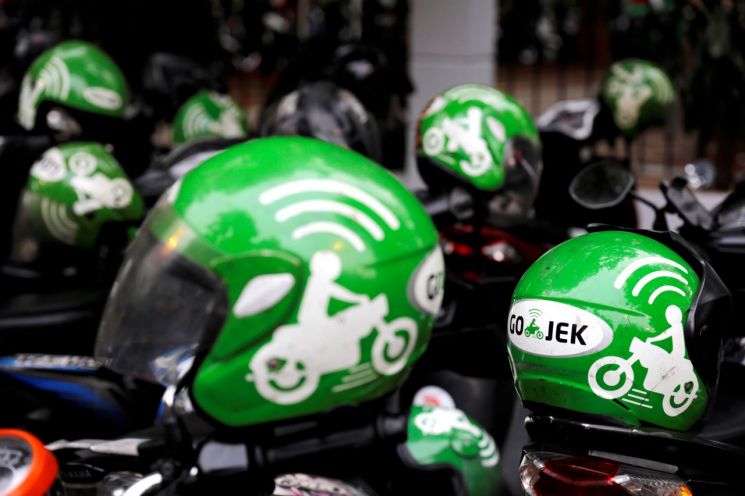
Gojek is another representative Southeast Asian startup that cannot be overlooked. Starting in 2010 as a motorcycle ride-sharing service in Indonesia, Gojek has since launched related services such as food delivery GoFood, cleaning service GoClean, massage booking GoMassage, and grocery shopping GoMart, capturing the 270 million-strong Indonesian market. Notably, in 2016, it introduced GoPay, an e-wallet and digital payment service, which is credited with causing a major shift in the Southeast Asian digital ecosystem. Following this, Gojek pursued aggressive mergers and acquisitions and expanded its business from Indonesia to Singapore, Vietnam, and Thailand. Currently, Gojek receives over 100 million orders monthly across 204 cities. Its corporate value is estimated at around $10 billion (approximately 11 trillion KRW).

Shopee, an online shopping platform based in Southeast Asia, is also recognized as a notable startup. Established in 2015 by Singaporean IT company Sea Group, Shopee operates in seven Asian countries including Singapore, Indonesia, Malaysia, Vietnam, Thailand, the Philippines, and Taiwan, making it the largest online shopping platform in Southeast Asia. According to research firm iPrice Group, Shopee was the most visited site in Indonesia, Malaysia, the Philippines, Thailand, Singapore, and Vietnam as of Q3 2020. Particularly in Vietnam, it recorded 62 million monthly visitors during the same period, an increase of over 80% compared to the previous year.
◆12 Unicorn Companies in Southeast Asia=Various factors such as high economic growth rates and a population structure dominated by young people appear to have contributed to the startup boom in Southeast Asia. According to an economic outlook report by Oxford Economics, Southeast Asia’s economic growth rate is projected at 6.2% this year, with Vietnam expected to grow by 8%. The rise of the middle class due to high economic growth and the fact that the 15-34 age group accounts for 60% of the total population have created fertile ground for IT-based services to take root. Reasonable labor costs, low rents, and aggressive marketing such as free shipping have made the region attractive not only to local startups but also to startups relocating from abroad. According to joint research by Google, Temasek Holdings, and Bain & Company, there are a total of 12 unicorn companies valued at over $1 billion in Southeast Asia alone.
Vietnam, in particular, is the most noteworthy market in Southeast Asia. According to a report released by Google, Vietnam’s digital economy, including e-commerce and food delivery, was estimated at $14 billion in 2020, a 16% increase from the previous year. It is expected to grow to $53 billion by 2025.
Singapore and Vietnam, recognized as exemplary countries in COVID-19 prevention, are leading the economic recovery, and this trend is expected to continue for the time being.
◆Money Flowing into Southeast Asia=Fueled by this, startups based in Southeast Asia are actively reinvesting and forming alliances. In 2020, Grab acquired asset management startup Bento Invest and invested in Indonesia’s state-owned payment company LinkAja, while Gojek acquired a 22% stake in Bank Jago to expand its fintech business. Overseas companies are also rushing to enter Southeast Asia. The fastest mover was the US company Amazon.com, which launched ‘Amazon Prime Now,’ a service for delivering goods in the shortest time, in Singapore in 2017. This was Amazon’s first service launched in Southeast Asia. German food delivery company Delivery Hero is aggressively expanding in Southeast Asia through its Foodpanda brand.
Although some voices suggest that the Southeast Asian startup market may have reached maturity, growth is expected to continue for some time. Adarsh Baijal, partner at Bain & Company, said, “The long-term outlook for Southeast Asia’s digital economy is stronger than ever. Not only technology but also strong demand for online commerce will energize the digital economy.”
© The Asia Business Daily(www.asiae.co.kr). All rights reserved.
![Clutching a Stolen Dior Bag, Saying "I Hate Being Poor but Real"... The Grotesque Con of a "Human Knockoff" [Slate]](https://cwcontent.asiae.co.kr/asiaresize/183/2026021902243444107_1771435474.jpg)

















