Many Small-Scale Damages and Difficulty Verifying Seller Information
Frequent Cases of Contract Breach Such as Delivery Delays and Non-Delivery
[Asia Economy Reporter Moon Chaeseok]
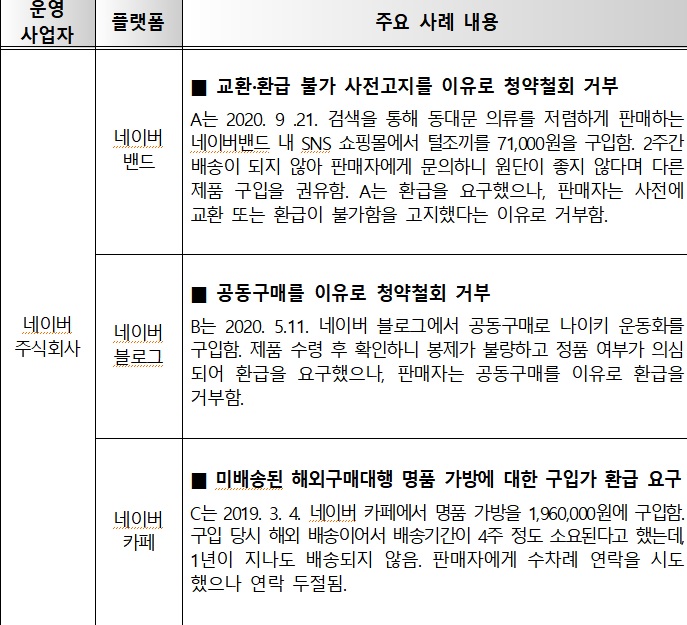
#A purchased a luxury bag worth 1,960,000 KRW on a Naver Cafe on March 4, 2019. At the time of purchase, it was an overseas delivery with an estimated shipping period of about 4 weeks, but even after a year, the product did not arrive. Despite multiple attempts to contact the seller, communication was cut off.
#B bought a fur vest worth 71,000 KRW from an SNS shopping mall within Naver Band on September 21 last year, but it was not delivered for two weeks. The seller recommended purchasing a different product, claiming the fabric was of poor quality. B requested a refund, but the seller refused, citing prior notice that exchanges and refunds were not allowed.
On the 17th, the Korea Consumer Agency disclosed the results of 3,960 consumer consultations related to SNS platform transactions. The analysis was based on consultations received by the 1372 Consumer Counseling Center from January to October last year.
According to the Consumer Agency, transactions through SNS include not only goods such as clothing, textiles, and information communication devices but also services like culture, entertainment, and education.
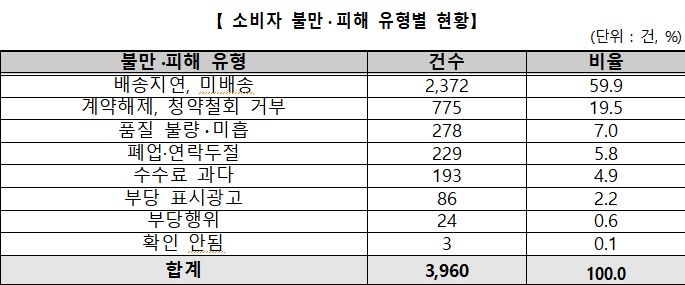
Looking at the types of complaints and damages, 'delivery delay/non-delivery' accounted for the largest portion at 59.9% (2,372 cases). This was followed by 'refusal of contract cancellation/withdrawal' at 19.5% (775 cases), 'poor or defective quality' at 7% (278 cases), and 'business closure/contact loss' at 5.8% (229 cases).
In particular, there were cases where products were not received even after one year from the purchase date due to delivery delays.
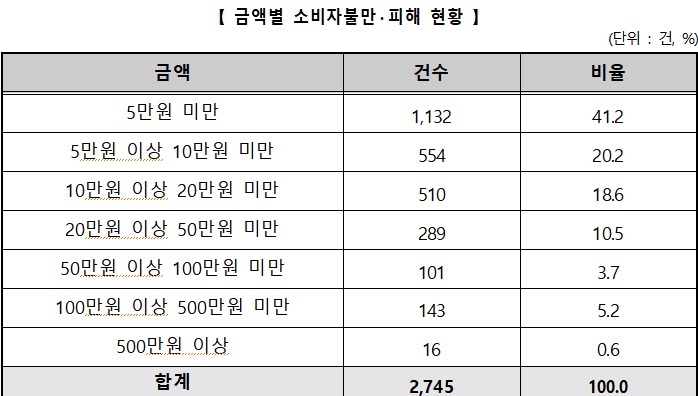
Narrowing down to 2,745 transactions where the damage amount could be confirmed, small cases under 100,000 KRW accounted for 61.4%. Complaints and damages in the 'under 50,000 KRW' range were the most frequent at 41.2% (1,132 cases), but those between '100,000 KRW and under 200,000 KRW' also accounted for 18.6% (510 cases).
SNS platform transaction routes were found to be diverse, including seller exposure through search, advertisement links, seller posts, messages, emails, and apps. Contract and order methods mainly involved KakaoTalk, comments, cafe chats, and shopping mall order forms.
Some sellers were simultaneously selling the same products on multiple SNS platforms. They posted sales information on all available platforms and linked to personal blogs or shopping malls. As transaction routes increased, cases occurred where consumers could not properly verify the purchase location, business information, or contact details.
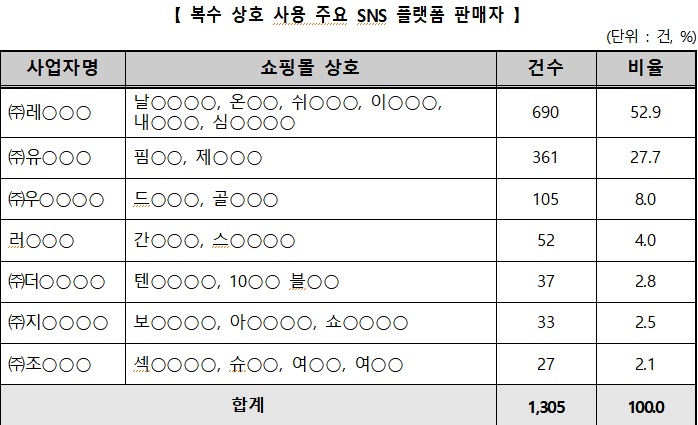
Many cases involved the same business operator using multiple trade names. Related complaints and damages accounted for 33% of the total, or 1,305 cases. These operators used 2 to 6 different shopping mall trade names and exposed advertisements on various SNS platforms to lure consumers.
The problem is that current laws do not have appropriate regulations to punish platform operators. The current 'Electronic Commerce Act' only stipulates passive responsibilities such as cooperation in providing identity information of resident sellers, notifying sellers of legal compliance, and acting as an agent for damage relief applications.
Foreign platform operators like Google and YouTube, classified as 'electronic bulletin board service providers' under the law, do not acknowledge related responsibilities. As a result, consumers are not receiving adequate compensation.
A representative from the Consumer Agency emphasized, "Regulations should be introduced to impose responsibilities on SNS platforms according to their level of involvement and role in transactions," and added, "Active cooperation from platform operators is necessary to verify sellers' identity information when consumer damages related to SNS platform transactions occur."
Based on this survey, the Consumer Agency plans to recommend SNS platform operators to voluntarily improve consumer protection efforts such as providing seller identity information and monitoring.
They also plan to propose institutional improvements to relevant government departments to strengthen the management responsibilities of SNS platform operators over resident sellers.
© The Asia Business Daily(www.asiae.co.kr). All rights reserved.
![Clutching a Stolen Dior Bag, Saying "I Hate Being Poor but Real"... The Grotesque Con of a "Human Knockoff" [Slate]](https://cwcontent.asiae.co.kr/asiaresize/183/2026021902243444107_1771435474.jpg)

















