Jongno, Yeoju, and Other Restaurant-Centered COVID-19 Cluster Infections Spread
Experts Emphasize Strengthening Social Distancing, "Winter Infections More Dangerous"
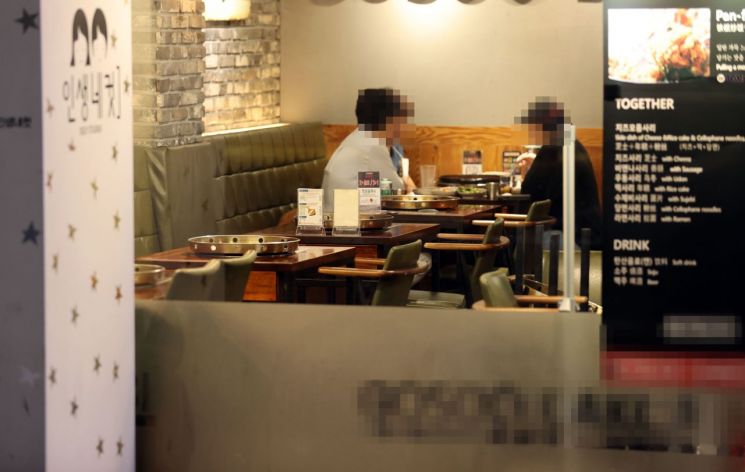 A restaurant near Gangnam Station in Seoul last September. Customers are dining and chatting.
 Photo by Yonhap News
[Asia Economy reporters Han Seung-gon and Kang Joo-hee] Amid the ongoing spread of the novel coronavirus infection (COVID-19), the number of confirmed cases is increasing in restaurants across the Seoul metropolitan area, raising concerns about cluster infections centered around dining establishments.
Unlike cafes, which are only allowed takeout and delivery under the 'Social Distancing Level 2' measures in the metropolitan area, restaurants and bars are still permitted to operate on-site until 9 p.m., leading to continuous concerns about the high risk of infection. As of the 4th, with the number of new domestic COVID-19 cases reaching the 600s and the spread becoming severe, there are calls for urgent strengthening of quarantine measures for restaurants and similar venues.
Experts have pointed out that the Level 2 social distancing measures are insufficient in a situation where cluster infections could spread more rapidly due to seasonal factors.
According to Jongno-gu, on the 3rd, over 20 people were confirmed positive at a restaurant in Pagoda Town. Confirmed cases include four people from Seodaemun-gu, two from Dobong-gu, and residents from Gyeonggi Province. It was found that a total of 608 visitors and contacts related to the restaurant were identified.
The restaurant is a large Korean cuisine establishment with an area of 400㎡, known to attract many middle-aged and elderly visitors. Since there is usually a high flow of elderly people, there are concerns about the potential for a large-scale cluster infection. Jongno-gu has identified visitors and contacts of the restaurant and advised them to undergo COVID-19 screening tests.
In Gyeonggi Province, a cluster infection involving 14 people occurred during a gathering at a restaurant. According to Yeoju City and Yeoju University, one Yeoju University student (patient number 605 from Gangseo-gu, Seoul) was first confirmed positive on the 30th of last month.
The student reportedly had a gathering with classmates from the same department at a restaurant near the school on the 25th of last month. As a result of diagnostic tests conducted on about 20 Yeoju University students who either attended the gathering or visited the restaurant on the same day, 13 tested positive consecutively between the 1st and 3rd of this month.
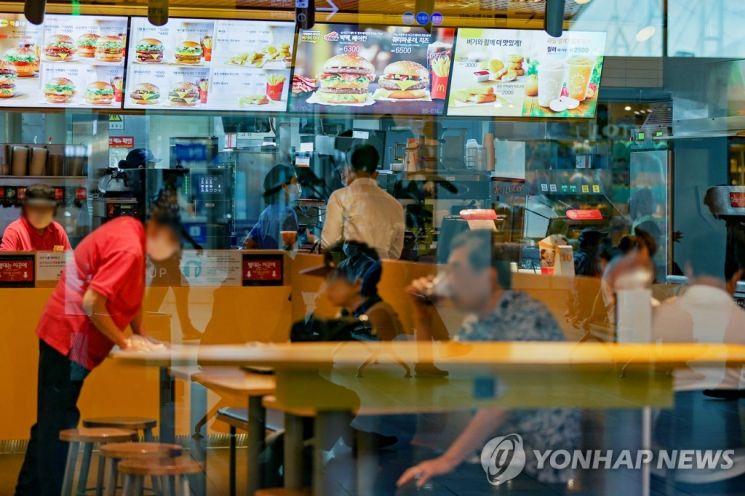
Among citizens, reactions such as "what was bound to happen has happened" are emerging. Unlike cafes, which had relatively strengthened quarantine guidelines under Social Distancing Level 2, restaurants still allow indoor dining.
Office worker Kang (32) said, "Honestly, it wasn't surprising that COVID-19 would break out in restaurants. Since people take off their masks to eat, droplets inevitably spread, making restaurants the most vulnerable to infection. People don't just eat silently; they also talk while eating. Measures should be taken now to allow only takeout and delivery."
According to health authorities, although ten days have passed since the implementation of Level 2 distancing measures, the COVID-19 spread remains serious. The Central Disease Control Headquarters announced that the number of new domestic COVID-19 cases reached 629 as of midnight on the 4th. This is the first time in over nine months since the first major wave in March that the number has exceeded 600. Authorities warned that if the current trend continues, daily cases could reach 1,000 within one to two weeks.
Concerns are rising that cluster infections could spread further due to increased outdoor activities such as year-end and New Year gatherings and parties, especially since the college entrance exam has just ended. There are calls for urgent measures, including strengthening quarantine guidelines centered on restaurants.
One netizen suggested, "There should at least be a campaign for eating quietly in restaurants." They added, "People have to eat, so you can't just close restaurants, but can't they refrain from talking while eating? Talking loudly in a confined space while eating inevitably leads to infection. Instead of forcing other things, the government should implement practical campaigns like this."
Prime Minister Chung Sye-kyun said at the COVID-19 Central Disaster and Safety Countermeasures Headquarters meeting held at the Gyeongnam Provincial Office that "the number of COVID-19 cases is rising again, creating a crisis situation. We will decide on additional quarantine measures, such as extending or raising distancing levels, after observing the situation through the weekend." He emphasized, "Please remember and actively practice 'no talking while eating, and wearing masks while talking.'"
Experts have pointed out that Level 2 social distancing measures are insufficient in a situation where cluster infections could spread more rapidly due to seasonal factors.
Professor Kim Woo-joo, an infectious disease specialist at Korea University Guro Hospital, said, "Currently, cafes only allow takeout, causing a balloon effect where people flock to restaurants. The number of confirmed cases is increasing like a snowball. During the infection wave in August and September, it was summer, but now it is winter, which is more vulnerable to infection, making the situation more concerning."
He added, "However, current quarantine guidelines are weaker than those in August and September. Reports about vaccine development have lowered people's vigilance. We must not be mistaken; we still do not know when vaccines will be distributed. We must not forget the seriousness of the situation. If quarantine standards are not properly followed, cases will continue to rise, hospital beds will become scarce, and the economy and people's daily lives will inevitably become more difficult."
© The Asia Business Daily(www.asiae.co.kr). All rights reserved.
![Clutching a Stolen Dior Bag, Saying "I Hate Being Poor but Real"... The Grotesque Con of a "Human Knockoff" [Slate]](https://cwcontent.asiae.co.kr/asiaresize/183/2026021902243444107_1771435474.jpg)
















