Ministry of Environment Confirms '3rd Plan Period National Emission Allowance Allocation Plan' on 29th
Total Emission Allowance Reaches 3.05 Billion Tons from 2021 to 2025
Greenhouse Gas Trading Sectors Increase from 62 to 69, Companies from 589 to 685
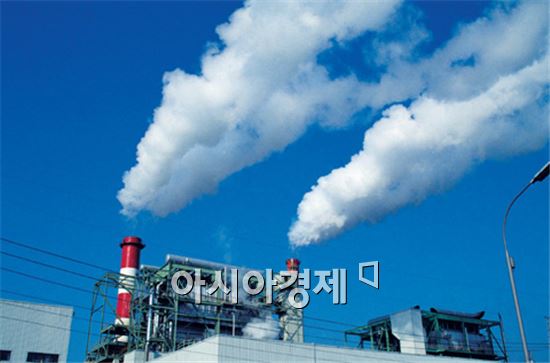 [Photo by Asia Economy]
[Asia Economy Reporter Kim Bo-kyung] Starting next year, approximately 680 domestic companies that emit greenhouse gases will be allocated a total annual emission allowance of 609.7 million tons.
The Ministry of Environment announced that the "3rd Plan Period (2021?2025) National Emission Allowance Allocation Plan," which presents comprehensive criteria for greenhouse gas emission allowance allocation over the next five years, was finalized through the Cabinet meeting on the 29th.
The allocation plan, finalized at the Cabinet meeting, sets the greenhouse gas emission limits for companies participating in the emission trading system, as well as allocation criteria and methods by sector and industry.
The 3rd plan will be applied for five years starting January 1 of next year. It is a plan to achieve the goal of reducing annual greenhouse gas emissions to 536 million tons by 2030.
Since January 2015, Korea became the first in Asia to start a national-level greenhouse gas emission trading system. The emission trading system is a scheme where the government allocates annual emission allowances to facilities that emit greenhouse gases, allowing emissions within that limit and permitting trading of allowances between facilities.
During the 3rd plan period, the proportion of greenhouse gas emissions covered by the emission trading system increased from 70.2% in the 2nd plan period (2018?2020) to 73.5%.
The total emission allowance is 609.7 million tons annually, an increase from 592 million tons in the 2nd plan, amounting to a total of 3.05 billion tons over five years.
The greenhouse gas emission trading system applies to all companies subject to legal standards. It covers all sectors and industries with companies that had an average annual emission of 125,000 tons or more from 2017 to 2019, or facilities with emissions of 25,000 tons or more.
In the 3rd plan, with the addition of sectors such as transportation and construction to the emission trading system, the number of industries expanded from 62 to 69, and the number of companies increased from 589 to 685.
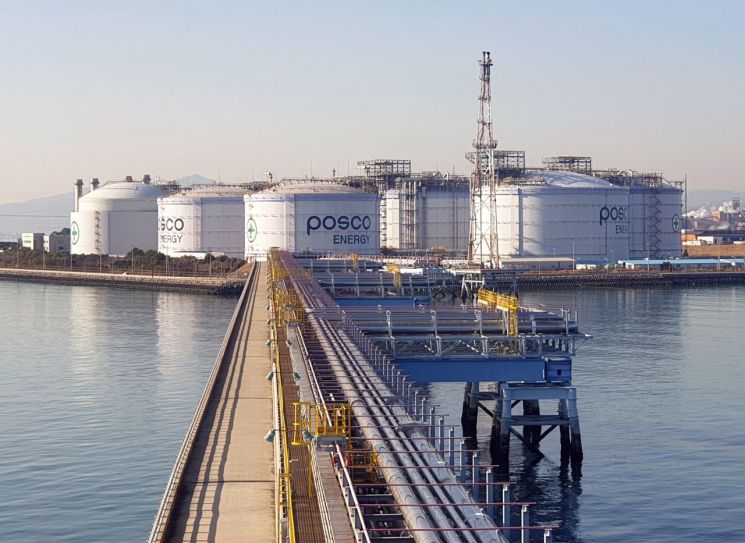
The proportion of paid allocation, first introduced in the 2nd plan, was raised from 3% to 10%. Among the 69 industries, 90% of allowances will be allocated free of charge, and the remaining 10% will be allocated through auctions or other paid methods.
However, according to the revised "Enforcement Decree of the Act on Allocation and Trading of Greenhouse Gas Emission Allowances" amended last month, 28 industries will receive 100% free allocation.
For the power generation sector, the allocation method based on emission efficiency standards (BM) will be improved, but it will be strengthened gradually considering the industry's burden.
BM is a method that calculates emission allowance amounts based on a company's greenhouse gas emission efficiency. It is a favorable evaluation system for companies that emit relatively fewer greenhouse gases compared to their production activities. Coal power producers are concerned that strengthening BM and increasing the proportion of paid allocation will increase power generation costs.
Additionally, the 3rd plan allows financial institutions and securities companies to participate in and trade in the emission allowance market to strengthen the market functions of the emission allowance market.
The Ministry of Environment plans to receive companies' emission allowance applications by the end of next month and complete the allocation by the end of this year based on this allocation plan. Companies can file objections to their allocation amounts until January next year.
Jang I-jae, Director of the Climate Economy Division at the Ministry of Environment, said, "Through the smooth implementation of the emission trading system, we will be able to efficiently achieve greenhouse gas reduction targets," adding, "We will continue to devise support measures to help companies reduce greenhouse gases."
© The Asia Business Daily(www.asiae.co.kr). All rights reserved.
![Clutching a Stolen Dior Bag, Saying "I Hate Being Poor but Real"... The Grotesque Con of a "Human Knockoff" [Slate]](https://cwcontent.asiae.co.kr/asiaresize/183/2026021902243444107_1771435474.jpg)















