Deputy Assistant Secretary Cooper: "Defense Cost Increase Is Not Just Cost Sharing but Burden Sharing for Security on the Korean Peninsula"
Pressures Defense Cost Increase Again Citing Military Crisis Around the Peninsula
US-Korea Negotiation Representatives Begin Communication by Phone... Timely Resolution Uncertain
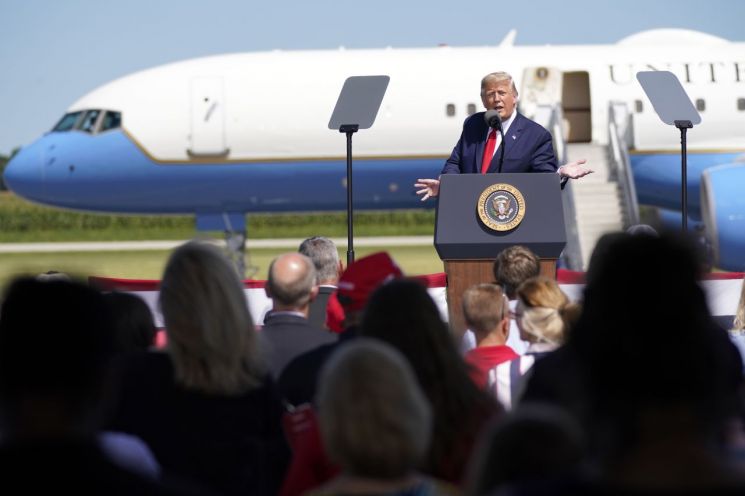
[Asia Economy Reporter Lim Cheol-young] After replacing the U.S. representative for the South Korea-U.S. defense cost-sharing negotiations, the United States has now brought up the issue of burden-sharing for security on the Korean Peninsula. The U.S. government, which has pressured the South Korean government to increase defense costs by claiming that South Korea is paying too little, appears to be using the security crisis surrounding the Korean Peninsula as a new justification for a significant increase, mindful of domestic and international criticism that its approach is excessively cost-focused.
Clark Cooper, U.S. Deputy Assistant Secretary of State for Political-Military Affairs, stated during a video briefing on the 20th (local time) regarding the Special Measures Agreement (SMA) negotiations, "There was a pause, but the negotiations have never ended and we are approaching them again," adding, "Communication has not stopped."
Deputy Assistant Secretary Cooper particularly raised the issue of "the burden sharing of the security" on the Korean Peninsula while maintaining the stance of a significant increase in defense costs. This adds the rationale of "burden sharing of the security on the Korean Peninsula" to the previous logic used by former President Donald Trump that South Korea is paying too little for the cost of stationing U.S. troops in South Korea.
He emphasized, "(The increase in defense costs) is not just about cost sharing but about the burden sharing of security on the Korean Peninsula," and added, "A mutually acceptable agreement between South Korea and the U.S. has been a continuous topic of dialogue, and again, communication has never stopped." He also reiterated, "The U.S. has shown considerable flexibility."
The U.S. government's emphasized logic of "burden sharing of security on the Korean Peninsula" is seen as a new phase of pressure that calls for South Korea's flexibility, using the military crisis surrounding the Korean Peninsula?where inter-Korean relations have been strained since June and concerns over accidental military clashes in the Senkaku Islands, South China Sea, and Taiwan Strait are higher than ever?as justification.
Although the U.S. continues to pressure for a significant increase in defense cost-sharing, the process toward a final agreement is expected to be difficult. The 11th SMA negotiations, which began in September last year, have been stalled for 11 months. Earlier this month, the newly appointed U.S. representative Donna Welton and South Korean chief negotiator Jung Eun-bo reportedly had a phone call that served as a courtesy meeting but only confirmed their differences in position. South Korea continues to stand firm on the principle of "a reasonable and fair share."
Since President Trump rejected the tentative agreement of a "13% increase" proposed by the South Korea-U.S. negotiation team in April, negotiations between the two countries have been deadlocked. Some analysts suggest that the defense cost-sharing negotiations have moved beyond the working level and the responsibility now lies with the heads of state, implying that the deadlock could last longer. Meanwhile, President Trump has cited fair defense cost-sharing among allies as a top priority if re-elected, leading to expectations that significant progress before the November election is unlikely.
Deputy Assistant Secretary Cooper avoided giving a direct answer regarding the "50% increase" proposal reportedly counter-offered to South Korea that day, and regarding the U.S.-Japan defense cost-sharing negotiations, he said, "The agreement expires in March 2021 and preparations are underway," but did not specify when negotiations would begin.
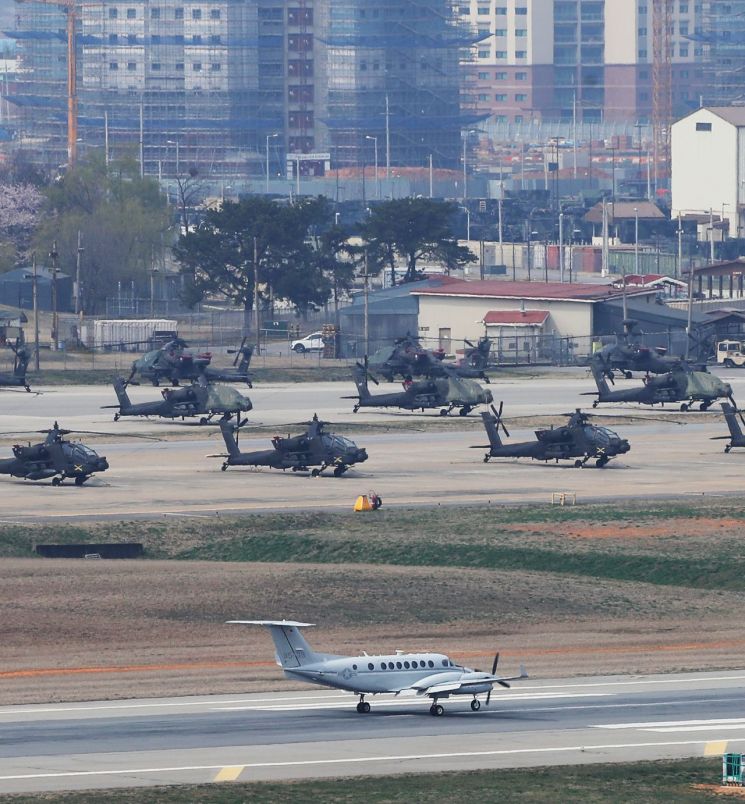
© The Asia Business Daily(www.asiae.co.kr). All rights reserved.
![Clutching a Stolen Dior Bag, Saying "I Hate Being Poor but Real"... The Grotesque Con of a "Human Knockoff" [Slate]](https://cwcontent.asiae.co.kr/asiaresize/183/2026021902243444107_1771435474.jpg)
















