USPS Faces Public Trust Crisis and Massive Deficits
Trump Angered Over Amazon Package Deliveries
Losses Grow as China Mail Volume Increases
Overtime Halted and Mailboxes Removed Amid Backlash
Funding for Mail-In Voting May Prove Futile
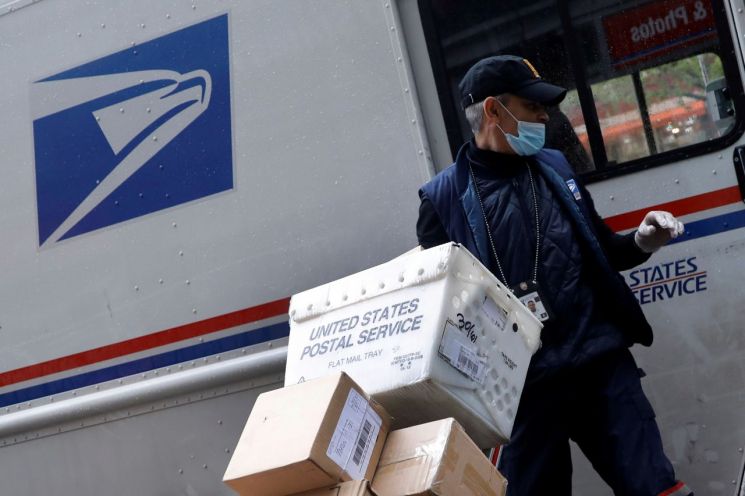
[Asia Economy New York=Correspondent Baek Jong-min] Whether or not to provide financial support to the United States Postal Service (USPS) is a representative issue currently heating up the U.S. political scene.
U.S. President Donald Trump opposes universal mail-in voting and firmly maintains his stance against providing financial support to the USPS.
In fact, supporting the USPS in the U.S. is not a simple matter. In addition to the fundamental problems accumulated over decades within the USPS, conflicts with China and the relationship with Jeff Bezos, CEO of Amazon?who is almost a political rival to President Trump?are intertwined, making it difficult to find a solution.
The U.S. Postal Service on the Brink of Bankruptcy
The USPS, already in poor financial condition, is being pushed to the brink of bankruptcy amid the COVID-19 pandemic.
The COVID-19 crisis, which occurred amid a financial crisis caused by declining mail volume, has driven the USPS to the edge. According to the Postal Accountability and Enhancement Act enacted in 2006, the USPS is required to be financially self-sufficient. This means it must bear the enormous costs of retirement pensions and health insurance for its 630,000 employees.
Maintaining post offices and delivery networks across the vast U.S. territory makes it inevitably difficult to generate normal profits.
As a national infrastructure service, the USPS cannot arbitrarily raise postage rates. This year, the U.S. postage stamp price is 55 cents, which is about 660 Korean won. Whether sending a letter from the East Coast to a remote mountainous area on the West Coast, the cost is only 55 cents. This structure makes it hard to break even. The accumulated deficit reached $169.9 billion by last year. It is an organization that could go bankrupt at any time.
In response, the U.S. Congress granted the USPS a $10 billion credit line in the economic relief bill related to COVID-19, but the Trump administration is blocking its use.
The USPS has requested an additional budget support of $25 billion (approximately 29.6 trillion won), but President Trump has clearly opposed it, claiming it would be used for universal mail-in voting.
Falling Out of Favor with President Trump Due to Amazon Delivery
There is a decisive reason why the USPS fell out of favor with President Trump: the delivery contract with e-commerce company Amazon. In 2013, when the USPS was on the verge of bankruptcy, it took on Amazon’s deliveries to diversify its revenue sources. In the U.S., a significant number of items ordered from Amazon are delivered by USPS mail carriers.
Although this was a measure to compensate for declining sales, the situation changed when President Trump took office. Jeff Bezos, the owner of Amazon, also owns The Washington Post, a newspaper leading criticism against President Trump.
The fact that a federal agency delivers goods operated by Bezos’s Amazon was enough to provoke President Trump’s anger. He has strongly criticized the USPS as being "Amazon’s delivery service."
The issue between the USPS and China cannot be overlooked either. According to the Universal Postal Union, of which USPS is a member, the more mail and parcels coming from China, the greater the burden on the USPS. When mail or parcels sent by Chinese e-commerce company AliExpress at Chinese domestic rates arrive in the U.S., the USPS must deliver them at a loss. This is identified as a significant factor worsening the already deficit-ridden USPS finances.
If the U.S. government provides funds to the USPS, President Trump may have to take responsibility for the government covering losses caused by China. The Trump administration has already threatened to withdraw from the Universal Postal Union.
“Can We Trust Them?” The Vanishing Trust of the American People
A bigger problem is the low trust Americans have in the USPS. Due to frequent delivery accidents and delays, the USPS does not enjoy high trust among U.S. citizens. In the U.S., it is common to use private companies like FedEx for important mail or parcels. This contrasts with South Korea, where the national postal service’s parcel delivery enjoys the highest consumer trust among delivery services.
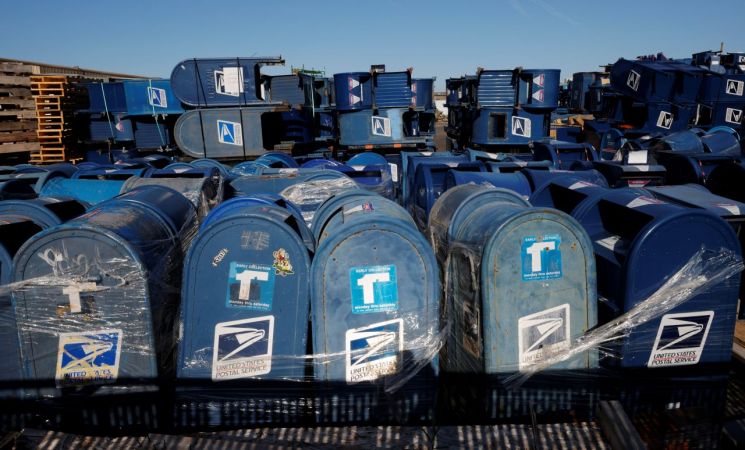
Recently, the USPS again faced harsh criticism from the American public. The USPS began reducing the number of mailboxes. When large-scale removal of mailboxes loaded onto trucks was witnessed, fierce criticism erupted nationwide.
Compared to South Korea, the U.S. still has relatively high mail demand. It is common in the U.S. to send rent and credit card payments by check through the mail. People still exchange cards on various holidays. How welcome would the disappearance of the mailbox in front of one’s home be?
The USPS stated that the mailbox reduction was a readjustment of underused mailboxes due to decreased mail volume, but the already soaring public anger could not be quelled.
Especially as the mail-in voting issue has emerged as a key point in the upcoming November presidential election, the mailbox reduction policy drew attention even in Congress.
Senator Ron Wyden, a Democrat, criticized the USPS mailbox reduction policy as an election sabotage and voter suppression operation led by President Trump.
As criticism intensified, the USPS announced a 90-day suspension of mailbox reductions until after the election.
This turmoil, occurring amid suspicions that Louis DeJoy, appointed USPS Postmaster General in May, allowed overtime cuts and delayed some mail deliveries as a strategy to interfere with mail-in voting, was enough to raise doubts about whether the November U.S. presidential election conducted via mail would proceed smoothly even if financial support were provided.
© The Asia Business Daily(www.asiae.co.kr). All rights reserved.











![The Special Connection Between the Statue of Martyr Lee Jun in Jangchungdan Park and Mayor Oh Sehoon ③ [Current Affairs Show]](https://cwcontent.asiae.co.kr/asiaresize/319/2026012110001599450_1768957215.jpg)

