Over 66,000 Juvenile Offenders... 5% Committed Heinous Crimes Like Robbery and Sexual Violence
8 out of 10 Citizens Say "Juvenile Law Should Be Revised or Abolished"
Blue House: "Criminal Punishment for Delinquent Juveniles Requires Further Social Discussion"

.
[Asia Economy Reporter Heo Midam] As circumstances have emerged revealing that five middle school students assaulted and subjected elementary school students to cruel acts, public opinion is rising to increase the punishment severity for the juvenile offenders. In particular, the victim claimed that she was even forced into transactional meetings during the assault, sparking social outrage.
Recently, juvenile crimes have escalated from simple assaults or thefts to heinous crimes such as murder and robbery, leading to growing calls for more fundamental measures against teenage crime. Under current law, those aged 10 years or older but under 14 are classified as "chokbeopsonyeon" (juveniles exempt from criminal punishment) and are not subject to criminal penalties.
According to the Samsan Police Station in Incheon, A (12), a 6th-grade elementary school student, reported to the police at around 9:25 p.m. on the 2nd that she was "assaulted by five middle school students, including an older sister she knew."
A was called out by B (13), a first-year middle school student she knew, and was assaulted for about 2 hours and 30 minutes along with her peer C (12) at a parking lot in Bupyeong-gu. During the police investigation, A claimed that the middle school students also forced her into transactional meetings. The accused are five male and female middle school students, including B.
However, some of the accused students denied their charges. Among the five accused, only three, including B, admitted to hitting A, while the other two claimed they did not participate in the assault. They also denied the victim’s claim of being forced into transactional meetings, stating it was untrue.
Amid ongoing juvenile crimes, it has been revealed that there are over 60,000 juvenile offenders. Notably, 5% of them committed heinous crimes such as robbery and sexual violence.
According to the '2020 Youth Statistics' released last month by Statistics Korea and the Ministry of Gender Equality and Family, the number of juvenile offenders (aged 14 to 18) was 66,142 in 2018. This accounts for 3.8% of all offenders (1,738,000) that year.
The types of crimes are also diversifying. By crime type, property crimes such as theft, receiving stolen goods, and fraud accounted for 40.1%, violent crimes such as extortion, assault, and injury accounted for 29.8%, other crimes such as traffic violations or copyright infringement accounted for 24.8%, and heinous crimes such as murder, robbery, arson, and sexual violence accounted for 5.3%.
In particular, some chokbeopsonyeon cases are problematic due to their methods and brutality being comparable to adult crimes. In December last year, in Guri City, Gyeonggi Province, a female elementary school 5th grader fatally stabbed a peer with a weapon because the peer had spoken ill of her family.
The police urgently arrested the female offender, but since the child was a chokbeopsonyeon (a criminally immature minor aged 10 or older but under 14), she was not criminally prosecuted and was instead sent to a juvenile classification examiner.
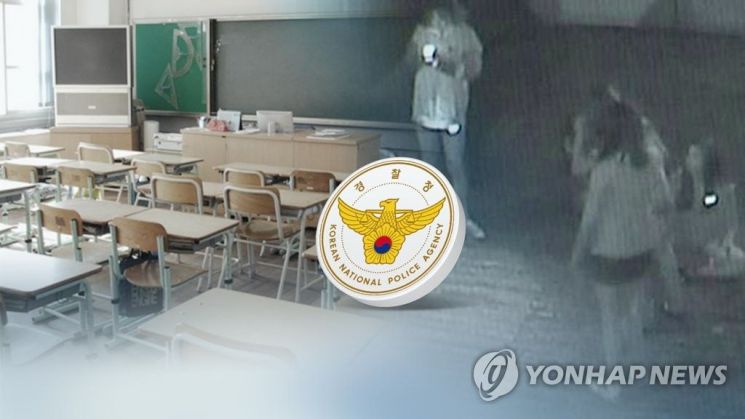
As a result, voices calling for amendments to the Juvenile Protection Act are continuing. There is an opinion that strong punishment is necessary regardless of age.
Last year, a survey by 'Realmeter' on the Juvenile Act showed that 62.6% responded that 'some provisions of the Juvenile Act should be amended to strengthen punishment.' 21.0% responded that 'the Juvenile Act should be completely abolished to impose the same punishment as adults.' In other words, 8 out of 10 people agreed that the Juvenile Act should be amended or abolished.
However, the government maintains that criminal punishment for chokbeopsonyeon is currently difficult. The Blue House stated in April that it is difficult to punish chokbeopsonyeon in response to a petition requesting such punishment.
Earlier, the petitioner demanded strict punishment for teenage offenders who, in March, fled in a stolen rental car and fatally struck a university student working part-time delivery to pay tuition fees. Over one million citizens expressed support for this petition.
Regarding this, Kang Jeongsoo, head of the Blue House Digital Communication Center, said last month, "The 20th National Assembly did not pass the Juvenile Act amendment bill," and "there needs to be social discussion on the issue of criminal punishment for chokbeopsonyeon."
He added, "However, the juvenile crime issue should be understood widely from the government's perspective, which considers not only the criminal justice aspect of strengthening punishment but also the social welfare and educational aspects of properly educating juvenile offenders and reintegrating them into society."
Meanwhile, the Ministry of Education announced plans to lower the chokbeopsonyeon age from under 14 to under 13 to strictly respond to serious school violence.
In January, the Ministry of Education announced the '4th (2020?2024) Basic Plan for School Violence Prevention and Countermeasures.' The 4th basic plan includes lowering the chokbeopsonyeon age from '10 years or older and under 14' to '10 years or older and under 13' to strengthen education and guidance for offending students. This appears to be aimed at handling school violence cases more strictly.
The Ministry of Education added, "To enhance the effect of preventing school violence, we will promote legal amendments to lower the chokbeopsonyeon age and will also ensure that even first-time offenders who commit serious acts are subject to detention investigation."
© The Asia Business Daily(www.asiae.co.kr). All rights reserved.
![Clutching a Stolen Dior Bag, Saying "I Hate Being Poor but Real"... The Grotesque Con of a "Human Knockoff" [Slate]](https://cwcontent.asiae.co.kr/asiaresize/183/2026021902243444107_1771435474.jpg)
















