Cultural Heritage Administration Announces Treasure Designation for 'Jangyongyeong Headquarters Diagram Collection'
Top-Quality Plans Based on Accurate Measurements and Exquisite Brushwork
"Provides Both Pictorial Artistic Value and Rich Information Through Realistic Depiction"
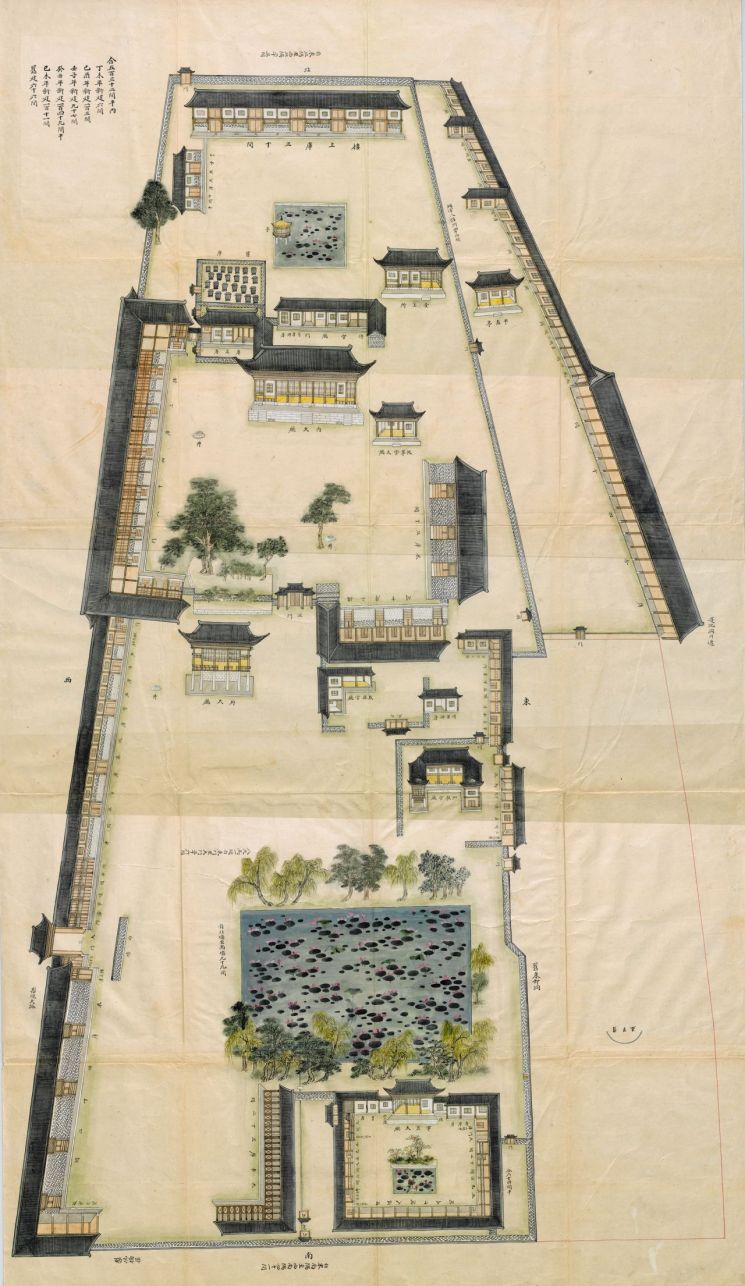 Jang Yong-yeong Main Camp Uniform - Uniform Outline and Colored Drawing of the Gimi Bon (Academy of Korean Studies)
An architectural painting depicting the main headquarters of the royal guard unit under King Jeongjo of the Joseon Dynasty, titled ‘Jangyongyeong Bonyeong Dohyeong Ilgwal (壯勇營 本營圖形 一括)’, has been designated as a Treasure.
On the 29th, the Cultural Heritage Administration announced the preliminary designation of this cultural asset, which consists of one colored painting and two floor plan drawings (Ganggado, 간가도; drawings of building floor plans or layouts). Jangyongyeong was a military camp established by King Jeongjo in 1793 to strengthen royal authority. It operated with its main headquarters inside the capital (presumed to be the site of Ihyeongung in Jongno 4-ga, Seoul) and an outer camp at Suwon Hwaseong Fortress. It was created by reorganizing Jangyongwi (壯勇衛), a royal guard unit established in 1785, but was abolished two years after King Jeongjo’s death and King Sunjo’s ascension.
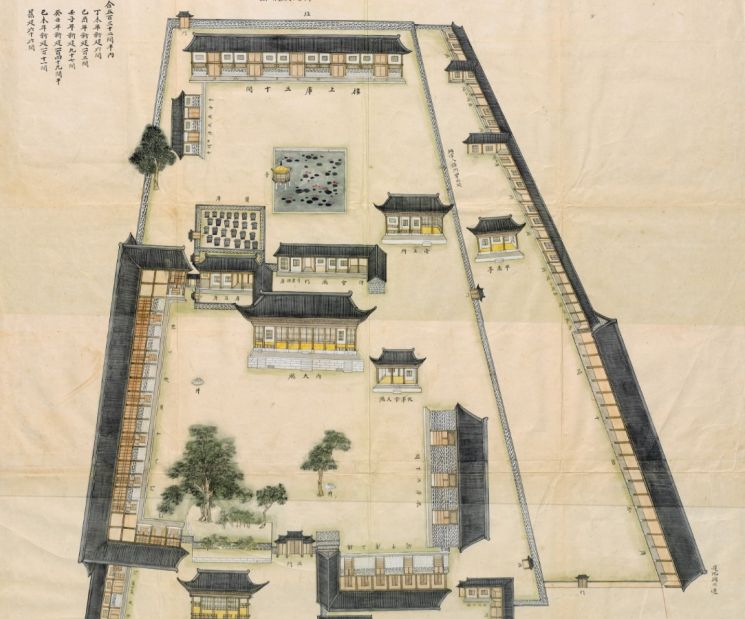 Jang Yong-yeong Main Camp Uniform - Uniform Outline and Colored Drawing of the Gimi Bon (Academy of Korean Studies)
The paintings depicting architectural and topographical conditions were produced in the 23rd year of King Jeongjo’s reign (1799) and the 1st year of King Sunjo’s reign (1801). In the Joseon era, these were called Dohyeong (圖形). Since it was necessary to report changes in the dimensions of government offices to the king, the drawings were based on accurate scales and depicted buildings with precise brushwork. At a time when scientific surveying was not yet practiced, the landforms were represented almost identically to reality, based on a high understanding of scale and topography. Furthermore, the colored paintings and floor plan drawings were created as a set to help viewers easily understand the architectural details.
A Cultural Heritage Administration official explained, “The buildings expanded in later periods were redrawn to visually confirm the process of Jangyongyeong’s expansion.” They added, “It reveals the exact scale and functions of the detailed buildings of Jangyongyeong, which no longer exist and whose form is unknown today,” and noted, “It is the oldest and only surviving Dohyeong that includes a large-scale floor plan with sectional divisions and a matching colored architectural painting.”
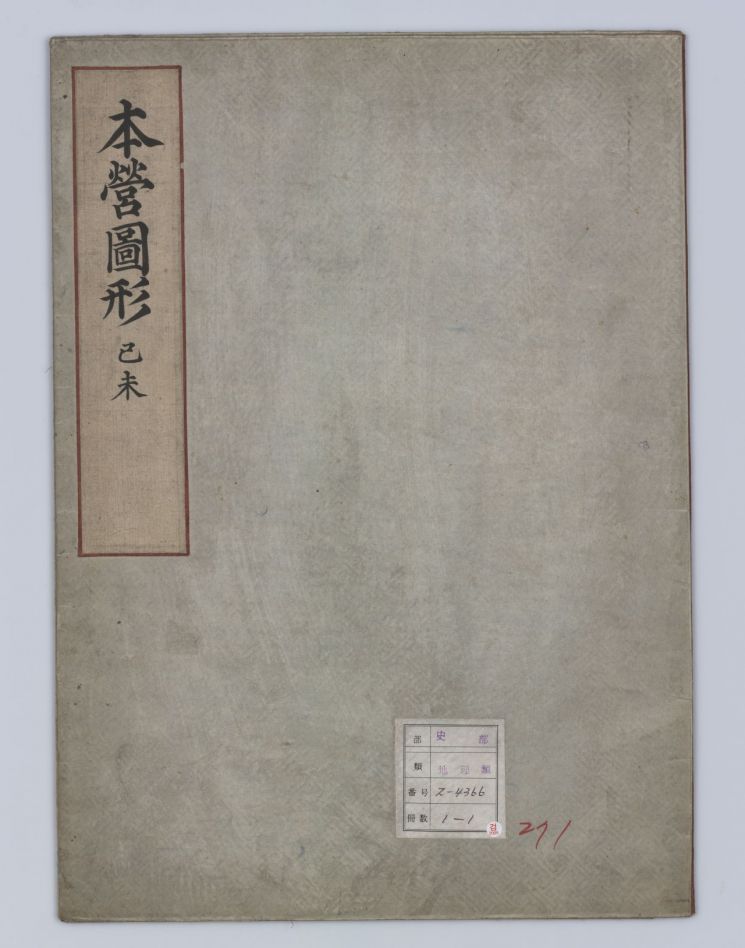
‘Jangyongyeong Bonyeong Dohyeong Ilgwal’ is a tangible artifact with a clear production period and purpose, demonstrating the methods, utilization, and development process of architectural record paintings. It is distinguished from other floor plan drawings by being produced together with colored paintings, and its realistic depiction conveys both artistic value and rich information, making it highly valuable historically, artistically, and academically. The Cultural Heritage Administration will collect opinions from various sectors for one month and finalize the designation as a Treasure after review by the Cultural Heritage Committee.
© The Asia Business Daily(www.asiae.co.kr). All rights reserved.
![Clutching a Stolen Dior Bag, Saying "I Hate Being Poor but Real"... The Grotesque Con of a "Human Knockoff" [Slate]](https://cwcontent.asiae.co.kr/asiaresize/183/2026021902243444107_1771435474.jpg)

















