3 out of 10 Part-Time Workers "Unintentionally Photographed or Filmed During Work"
Some Stores Declare 'No Photo Zone'
Experts Say "Whether Portrait Rights Are Violated Depends on Personal Identification"
[Asia Economy Reporter Heo Midam] "I can't even ask to have my face erased if it gets photographed."
Kim (25), who works part-time at a cafe in Mapo-gu, Seoul, has recently been troubled by customers' indiscriminate photo-taking.
Kim said, "Our cafe is famous on SNS, so customers often take pictures of the interior or drinks. But sometimes my face gets caught in the photos, which makes me uncomfortable," adding, "When you search for our cafe with hashtags, my face sometimes appears as is. I wish they would at least mosaic my face before posting the photos."
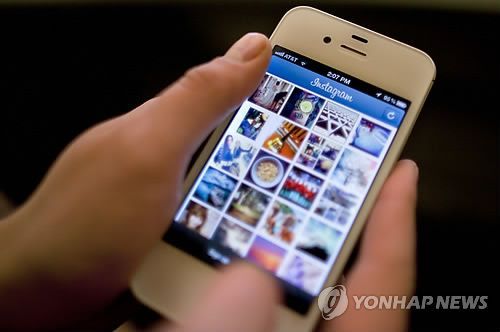
The so-called 'proof shot culture,' where people take pictures of their daily lives and upload them on social networking services (SNS), is spreading. However, some express discomfort due to people taking photos indiscriminately regardless of time and place.
In particular, some customers post photos on their SNS without permission even though the employee's face is captured during the process of taking 'selfies.' Experts say that distributing photos or videos without the consent of the subject of portrait rights can be legally problematic.
The number of people uploading their daily lives on SNS is increasing. According to a 2016 survey by University Tomorrow's 20s Research Institute targeting 410 men and women in their 20s, one in four (25.6%) enjoys receiving attention through SNS. They performed an average of 1.46 proof acts per day on their SNS accounts.
University student Lee (25) said, "When food arrives at a restaurant, I take a photo before eating. It preserves memories with friends, and when I look at the photo album later, it reminds me of those times," adding, "Not only me, but my friends are also busy taking pictures. The best photo among those taken by friends is posted on Instagram."
He continued, "I have two Instagram accounts. One for daily life and another for introducing restaurants," adding, "Uploading photos on Instagram and seeing people's reactions is a small pleasure."
The problem lies in the fact that one-sided photography regardless of time and place can cause discomfort to others. Especially, some part-time workers often experience unintentional posting of their faces on SNS, causing considerable stress.
Nam (24), a university student working at a restaurant in Yangcheon-gu, Seoul, said, "Recently, a YouTuber came into the restaurant without permission and started filming. It was unpleasant, but I had no choice but to avoid the camera," adding, "Nowadays, I even avoid the place when I hear the 'click' sound."
Some part-time workers suffer from unwanted videos or photos taken of them. According to a survey by Albamon last month targeting 5,641 part-time workers, 32.9% of respondents said they had been unintentionally photographed or filmed during work. This response was higher among service workers (34.8%) than non-service workers (22.5%).
However, most part-time workers did not take active measures. 47.0% of respondents said, "I gave up on the photos already taken and avoided being photographed further," while only 4.7% said they "requested deletion or mosaic of the photos."
As a result, some stores have started expanding so-called 'No Photo Zones' to protect employees' portrait rights by banning photography inside the store.
University student Lee (25) said, "I went to Ssamziegil in Insadong, and some stores had 'No Photography' signs. At first, I was disappointed not to be able to take pictures, but it was actually nice because I could focus more on the products inside the store," adding, "I even browsed more leisurely than usual."
In other countries, legal standards and awareness regarding portrait rights protection tend to be stricter than in Korea.
In France, distributing someone's photo or posting it on SNS without consent can result in a fine of 45,000 euros (about 57 million KRW) and up to one year in prison. This applies even when parents post photos of their children during infancy.
Vietnam is pushing legislation to punish parents who post photos or videos of their children on SNS without their consent.
Experts say that even if photos are taken for selfie purposes, posting clear photos of third parties on SNS without consent can be legally problematic.
Attorney Hong Minho of Hanseo Law Office explained, "Taking photos without others' consent and clearly showing a third party's face constitutes an infringement of portrait rights," adding, "Whether it is considered an infringement depends on whether the individual can be identified."
© The Asia Business Daily(www.asiae.co.kr). All rights reserved.
![Clutching a Stolen Dior Bag, Saying "I Hate Being Poor but Real"... The Grotesque Con of a "Human Knockoff" [Slate]](https://cwcontent.asiae.co.kr/asiaresize/183/2026021902243444107_1771435474.jpg)
















