Health Authorities "Stop Stigmatizing Confirmed Cases and Their Families"
Experts "We Should Think 'If It Were My Family'"
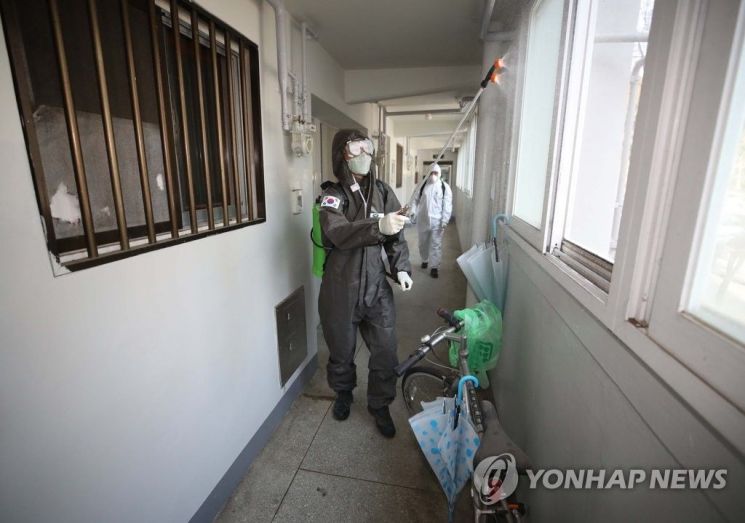 Soldiers belonging to the Army 50th Division are conducting disinfection at an apartment in Hwanggeum-dong, Jung-gu, Daegu City on the 9th to prevent the spread of the novel coronavirus infection (COVID-19). Photo by Yonhap News.
[Asia Economy Reporter Han Seung-gon, Intern Reporter Kim Seul-gi] "The neighbors tell me not to go over there. They say it's an apartment where confirmed cases appeared."
As the aftermath of the novel coronavirus disease (COVID-19) originating from the Itaewon clubs in Yongsan-gu, Seoul continues day by day, some residents near confirmed cases are showing movements to completely avoid the patients or their families, causing the patients to suffer silently. Some even complain that they don't understand how this is different from bullying.
Although only some, people who ostracize confirmed cases identify the closest confirmed cases to themselves by gathering publicly disclosed movement paths or COVID-19 related information. They then share this information with acquaintances, avoiding or directly or indirectly criticizing the confirmed cases.
A (89), living in Bucheon, Gyeonggi-do, lamented, "When I go out in the neighborhood, I often hear residents whispering not to go toward the apartment where confirmed cases appeared."
He added, "Even families who used to be close in the neighborhood avoid that household. Even if the confirmed case's family tests 'negative' for COVID-19, they are still avoided in the same way," he revealed.
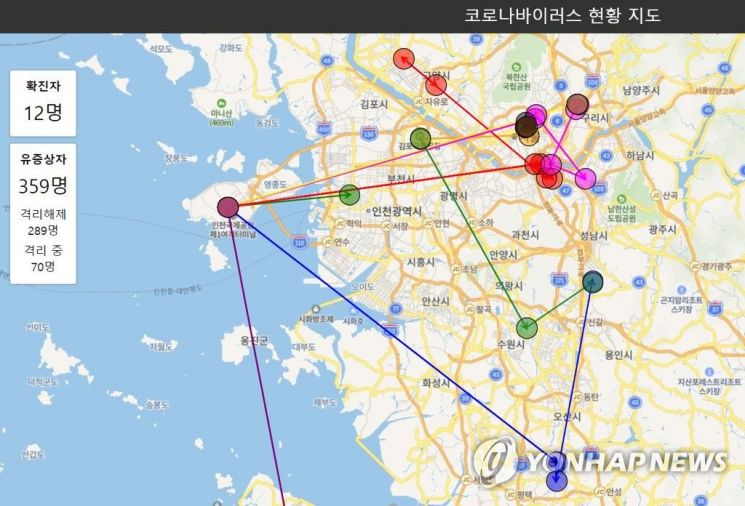 An online map that allows you to see the movement paths of confirmed cases of the novel coronavirus infection at a glance. Photo by Yonhap News
University student B, who admitted to using the COVID-19 confirmed case movement map, said, "I know that the district office or quarantine authorities thoroughly disinfected the places where confirmed cases occurred, but honestly, I still feel uneasy deep down."
B said, "After hearing reports that COVID-19 can also spread through the air, I became a bit anxious. I use the movement map to avoid neighborhoods where confirmed cases appeared as much as possible," he confessed.
The quarantine authorities urged to stop stigmatizing and discriminating against confirmed cases or their families and emphasized the need for cooperation and solidarity.
At the regular briefing of the Central Disaster and Safety Countermeasures Headquarters on the 13th, Kim Kang-rip, the first chief coordinator, emphasized, "Please stop indiscriminate criticism and stigmatization of confirmed cases or contacts. Such actions weaken our society's spirit of solidarity and cooperation, making COVID-19 response more difficult."
Earlier, on the 8th, Park Neung-hoo, the first deputy head of the Central Disaster and Safety Countermeasures Headquarters (Minister of Health and Welfare), also appealed at a regular briefing held at the Government Seoul Office, saying, "What is needed now is cooperation and solidarity, not discrimination and exclusion," and earnestly requested, "Please refrain from stigmatizing confirmed cases, spreading false or distorted information, or shifting responsibility."
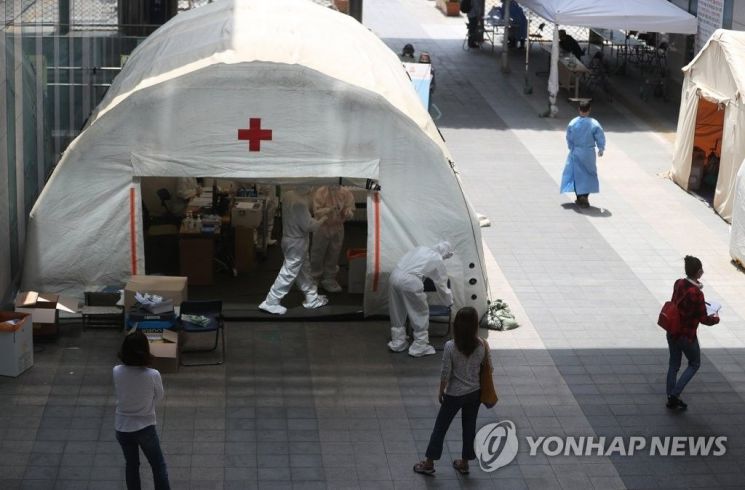
Experts suggested that while 'stigmatization' is an instinctive and natural phenomenon for humans in a state of fear for survival caused by infectious diseases like COVID-19, it is not desirable to treat them as objects of blame rather than understanding, and it is important to adopt an empathetic mindset.
Professor Lee Dong-gwi of the Department of Psychology at Yonsei University explained, "The importance of safety to people is a fundamental desire related to survival needs. When safety and life are threatened, there is no room to consider other things," adding, "Citizens who endure discomfort due to the government's social distancing guidelines naturally look for someone to blame in such situations."
However, Professor Lee emphasized, "Easily blaming and hating others is not a desirable phenomenon. The stigmatization phenomenon based on a culture of division can be seen as an indicator that varies according to social maturity. Feeling emotions and expressing them are different issues," and stressed, "It is necessary to cultivate a mature civic consciousness that refrains from stigmatization for the sake of the community."
He added, "It is important to recognize that anyone can be infected with COVID-19 and to consider how it would feel if the people being stigmatized and blamed were 'my family'."
© The Asia Business Daily(www.asiae.co.kr). All rights reserved.
![Clutching a Stolen Dior Bag, Saying "I Hate Being Poor but Real"... The Grotesque Con of a "Human Knockoff" [Slate]](https://cwcontent.asiae.co.kr/asiaresize/183/2026021902243444107_1771435474.jpg)


















