"Uranium Extraction Possible in Fertilizer Production Process"
US Think Tank Claims "Extraction Activities Also Easy to Conceal"
"Activities Encouraging Increased Agricultural Output" Also Analyzed
 North Korean State Affairs Commission Chairman Kim Jong-un, who was surrounded by rumors of death, resumed public activities after 20 days, demonstrating his vitality.
On the 2nd, the Korean Central News Agency reported that Chairman Kim attended the completion ceremony of the Suncheon Fertilizer Factory on May Day (May 1).
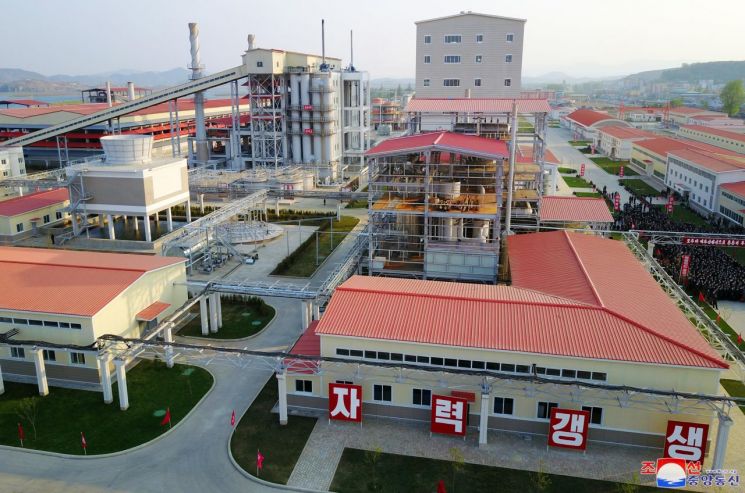
The photo shows the factory's exterior.
The North Korean State Affairs Commission Chairman Kim Jong-un, who was even rumored to have died, chose a fertilizer factory as the dramatic stage for his 'resurrection.' Given the global attention focused on him, there is growing interest in the background of selecting the fertilizer factory as the venue, suggesting that he may have carefully chosen and orchestrated the location to demonstrate his continued presence. Analysts simultaneously interpret this as either a livelihood-focused move to increase agricultural production or a strategic step to produce raw materials for nuclear weapons.
According to the Korean Central News Agency and Korean Central Broadcasting on the 2nd, Kim visited the Suncheon In Fertilizer Factory on Labor Day (May 1) and personally cut the ribbon at the completion ceremony.
Located in Suncheon City, South Pyongan Province, the Suncheon In Fertilizer Factory is a plant that North Korea began constructing on July 16, 2017, to increase agricultural production and alleviate chronic food shortages. It was also the first local guidance site Kim visited this year on January 7 (based on the report date).
The choice of this location appears to carry the intention of sending a message both inside and outside the country that he is a "leader who cares about people's livelihood." Due to prolonged international sanctions, North Korea has difficulty importing chemical fertilizers, and with a limited number of livestock, the supply of manure-based compost has also been inadequate. The quality of fertilizer is directly linked to agricultural output.
Although food conditions have improved somewhat in recent years, this year, with early border closures due to concerns over the novel coronavirus (COVID-19), securing food supplies remains uncertain. If Kim declares the completion of the fertilizer factory, it could provide considerable psychological comfort to North Korean residents.
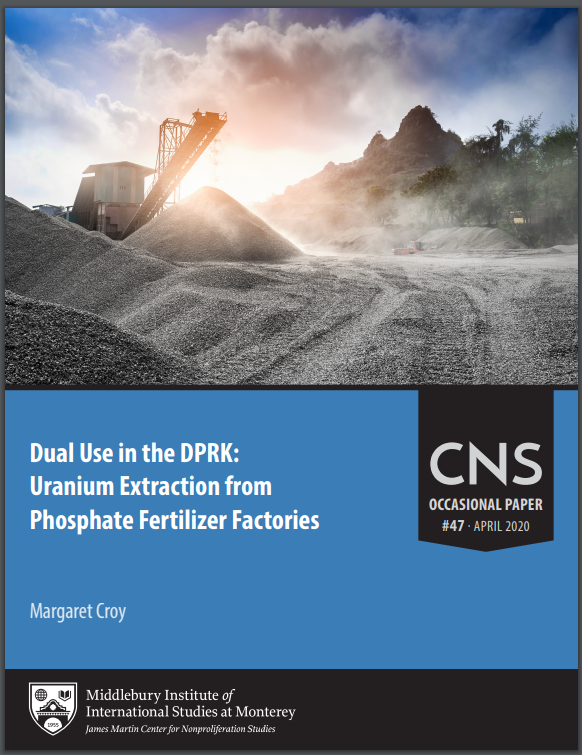 The American think tank, the James Martin Center for Nonproliferation Studies (CNS), stated in a report published on the 6th of last month that "North Korea may be extracting uranium from a phosphoric acid fertilizer plant." They explained that uranium ore (U3O8), also known as Yellow Cake, can be extracted from phosphoric acid, an intermediate product in the phosphoric acid fertilizer production process. CNS noted that Yellow Cake is a raw material that can be used to produce highly enriched uranium for nuclear weapons.
 Some speculate that North Korea is strategically using the fertilizer factory to extract raw materials for nuclear weapons.
The U.S. private think tank, the James Martin Center for Nonproliferation Studies (CNS), released a report titled "Dual Use in North Korea: Uranium Extraction from Phosphate Fertilizer Plants" on the 6th of last month, claiming that "North Korea can extract uranium ore (U3O8), known as Yellow Cake, from phosphoric acid, an intermediate product in phosphate fertilizer production."
Yellow Cake is a raw material that can be used to produce highly enriched uranium for nuclear weapons.
CNS explained that the process of extracting uranium during fertilizer production is relatively simple and does not require significant costs. Furthermore, activities within the fertilizer plant are difficult to detect via satellite imagery, making it easier to conceal uranium extraction operations.
The report stated, "While these activities may be driven by the need to produce phosphate fertilizer to increase agricultural output, there could be several other factors, including the possibility of uranium extraction during fertilizer production."
The fertilizer factory is analyzed as a dual-use facility serving both the overt purpose of increasing agricultural production and the strategic purpose of producing raw materials for nuclear weapons. CNS estimates that there are eight facilities related to phosphate fertilizer production within North Korea.
Margaret Kroenig, a researcher at the James Martin Center for Nonproliferation Studies, said in an interview with Voice of America (VOA) at the time, "There are historical examples showing that uranium extraction through phosphoric acid can be done quietly and inconspicuously, and North Korea has the infrastructure to carry out this process."
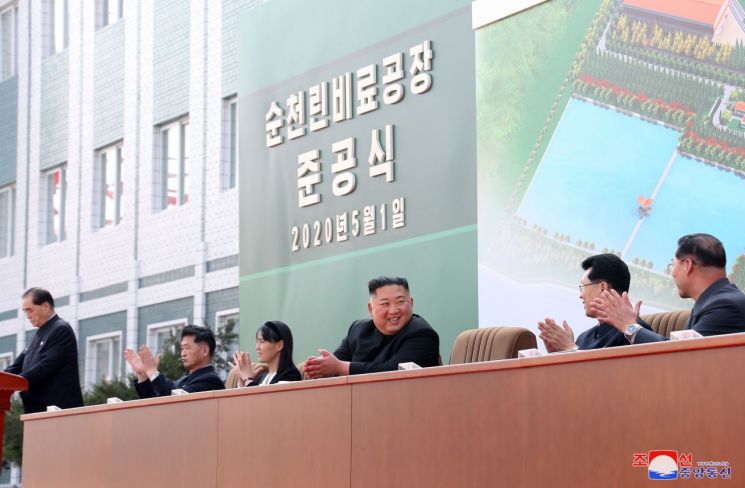 North Korean State Affairs Commission Chairman Kim Jong-un, who had been surrounded by rumors of death, resumed public activities after 20 days, demonstrating his vitality.
 On the 2nd, the Korean Central News Agency reported that Chairman Kim attended the completion ceremony of the Suncheon Fertilizer Factory on May Day (May 1).
In fact, under Kim Jong-un's era, North Korea has emphasized the importance of phosphate fertilizer factories and the chemical fertilizer industry as a whole.
The first official activity Kim undertook this year was also a visit to a fertilizer factory. North Korea has previously operated facilities such as the Namhung Youth Chemical Complex in South Pyongan Province, the Suncheon Lime Nitrogen Fertilizer Factory, and the Haeju In Fertilizer Factory in South Hwanghae Province to increase agricultural production and alleviate chronic food shortages.
Researcher Kroenig pointed out, "Even assuming that uranium extraction occurs in only a few factories in North Korea and that the uranium extraction rate from phosphoric acid is quite low, the amount of uranium ore North Korea can produce is by no means insignificant."
© The Asia Business Daily(www.asiae.co.kr). All rights reserved.
![Clutching a Stolen Dior Bag, Saying "I Hate Being Poor but Real"... The Grotesque Con of a "Human Knockoff" [Slate]](https://cwcontent.asiae.co.kr/asiaresize/183/2026021902243444107_1771435474.jpg)

















