Increased Remote Work Due to COVID-19 Pandemic Drives Up Demand for Server Semiconductors
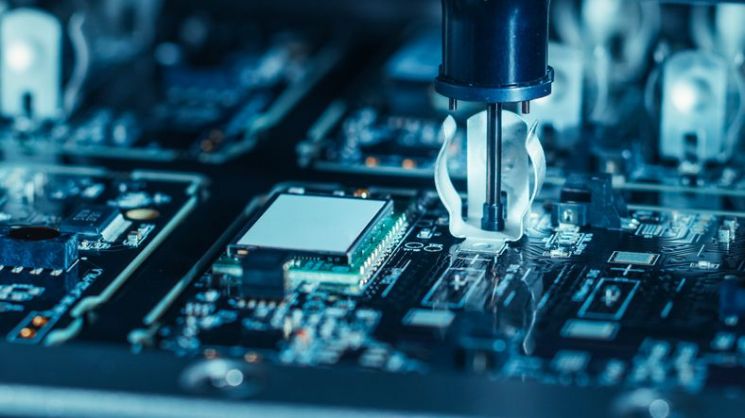
[Asia Economy Reporter Changhwan Lee] Despite the global spread of the novel coronavirus infection (COVID-19), South Korea's semiconductor exports have significantly increased, drawing attention. It is analyzed that the rise in remote work due to the virus spread has boosted demand for server semiconductors.
The rapid growth in demand for data centers worldwide, driven by new technologies such as 5G mobile communications, artificial intelligence (AI), big data, and autonomous vehicles, is also a contributing factor.
According to the Ministry of Trade, Industry and Energy on the 3rd, the total semiconductor export value last month was $7.42 billion, a 9.4% increase compared to the same month last year. This marks the first increase in export value in 15 months since November 2018.
The 20.3% year-on-year rise in memory semiconductor exports to China in February, which is our main export product, led the overall export growth. This is the largest increase since September 2018. China is the largest importer, accounting for 50% of South Korea's total memory semiconductor exports.
Ironically, the increase in semiconductor exports to China is attributed to COVID-19. Chinese companies have greatly expanded remote work and virtual meetings due to COVID-19, which led to increased demand for data centers and consequently higher sales of server semiconductors.
Researcher Soobin Lee from Daishin Securities explained, "The quantity of semiconductor purchases by Chinese data center companies such as Alibaba and Tencent noticeably expanded in February." Although there were concerns about the extended Chinese Lunar New Year holiday, delayed return to production lines, and logistics disruptions due to the widespread COVID-19, the actual impact on semiconductor exports was interpreted as minimal.
Another cause is that global customers, worried about semiconductor supply instability amid the rapid development of new technologies like 5G smartphones, AI, big data, and autonomous vehicles, are securing inventory of memory semiconductors. They are stockpiling semiconductors in advance, fearing future price increases.
Fixed prices for semiconductors are also on the rise. According to the semiconductor market research firm DRAMeXchange, the fixed price of DDR4 8Gb DRAM was $2.88 as of the end of February. This is a 1.4% increase from $2.84 recorded at the end of January, continuing a two-month consecutive rise since the end of last year.
However, concerns have emerged that if COVID-19 prolongs, exports in March may slow down compared to February. This is due to growing worries about a decline in global demand for IT products caused by COVID-19.
© The Asia Business Daily(www.asiae.co.kr). All rights reserved.
![Clutching a Stolen Dior Bag, Saying "I Hate Being Poor but Real"... The Grotesque Con of a "Human Knockoff" [Slate]](https://cwcontent.asiae.co.kr/asiaresize/183/2026021902243444107_1771435474.jpg)
















