The Spread of Solo Leisure Trends Like 'Cocoonjok' and 'Honnoljok' Enjoying Alone Time
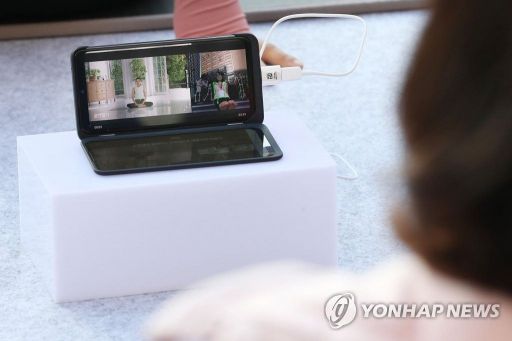 On the 11th, at the customer invitation event celebrating the launch of the 'LG V50S ThinQ' (5G smartphone ThinQ) held at the Millennium Hilton Hotel in Jung-gu, Seoul, an attendee is experiencing the home training coaching service. Photo by Yonhap News
[Asia Economy Intern Reporter Kim Seul-gi] "Just going to work on weekdays is exhausting, so I prefer to spend weekends alone. Meeting people is tiring and costly, so it feels burdensome."
Office worker A (28) said, "On weekends when I don't go to work, I spend the day playing games at home and catching up on dramas and movies."
Recently, it has been observed that more people in their 20s and 30s are enjoying various leisure activities alone. Centered around the millennial generation (born from the early 1980s to the early 2000s), phenomena such as the 'Cocoon-jok' and 'Hon-nol-jok'?terms referring to those who enjoy leisure activities alone?are spreading.
'Hon-nol-jok' is a newly coined term referring to people who play alone. 'Cocoon-jok' originally appeared in the 2000s to describe people who, due to poor financial circumstances, give up relationships and seek to stay in their own isolated space, but recently it has come to broadly refer to people who spend time alone.
Office worker B (27) said that instead of going to the gym, they do 'home training' (a portmanteau of 'home' and 'training') by watching workout videos at home. B emphasized, "I’m usually busy worrying about what others think, but I don’t want to care about others’ eyes even during my leisure time."
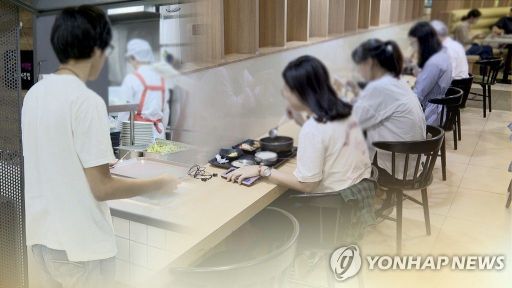
According to a survey, the number of young people eating alone is also increasing. On the 29th of last month, the 20s Research Institute at University Tomorrow released the '2019 MZ Generation Analysis Report,' which surveyed 450 men and women from 17 cities nationwide, born in 2019, 2009, and 1999. Among the millennial generation, 23.3% of those born in 1999 and 16.7% of those born in 1989 answered that they "eat lunch alone."
The institute explained, "Previously, people met frequently to become close and spent everyday time together, but this is not the case for the current 20s and 30s generation."
They agreed that the reason for spending time alone is "because they pursue goal-oriented relationships rather than simple social interactions."
Office worker C (27) called themselves a 'Cocoon-jok' and said, "I’m what people commonly call a homebody. Just lying down at home with my pet dog is fun."
C added, "Spending time alone watching movies or dramas on IPTV at home is better than meeting people."
Office worker D (25) said, "In the past, there was a negative view of people who ate or drank alone, but nowadays, such views have largely disappeared," adding, "Now, there are seats prepared for people who come alone to bars or restaurants, which is nice."
D added, "Especially on weekdays, it’s uncomfortable to eat at the speed of others who don’t like the menu together at work. The time I eat comfortably alone is my favorite time of the week."
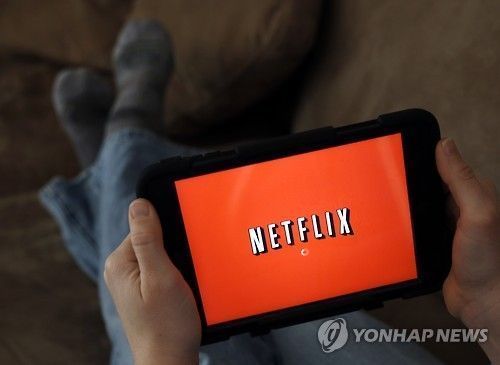
As the number of 'Cocoon-jok' who enjoy leisure and hobbies alone without forming relationships with others increases, the number of 'Home Ludens-jok' who enjoy leisure activities at home has also increased.
'Home Ludens-jok' is a newly coined term combining 'Home' and 'Ludens' (meaning play or recreation), referring to those who enjoy everything within their own living space.
Last year, Job Korea and Albamon surveyed 3,839 millennials in their 20s and 30s about the status of 'Home Ludens-jok,' and 72.3% of respondents said they preferred playing at home and identified themselves as 'Home Ludens-jok.'
The main reasons for becoming 'Home Ludens-jok' were "because home is the most comfortable" and "because I can fully realize my tastes at home."
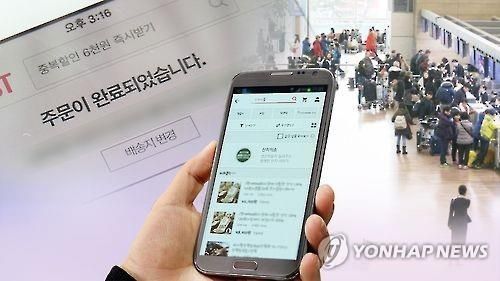
In October last year, Shinhan Card Big Data Research Institute analyzed changes in keyword mentions related to 'home' among millennials and found that 'home training' increased by a whopping 213% from 2017 to 2018.
The institute also announced that keywords related to 'vacation' among millennials included 'staycation (spending vacation at home)' accounting for 41%.
Experts analyzed that the culture of the 20s and 30s generation enjoying leisure alone at home without forming relationships with others may be influenced by the environment in which they grew up.
Professor Kwak Geum-ju of Seoul National University’s Psychology Department explained, "The current 20s and 30s generation grew up in family environments with few siblings. Moreover, they grew up in a competitive society throughout childhood, so they had few opportunities to learn a culture of cooperation with others," adding, "Among the 20s and 30s generation, there is an increased tendency to reduce the burden of cooperating and forming interpersonal relationships."
She continued, "Along with this, marketing targeting the 20s and 30s generation has made them feel comfortable living alone. Thanks to companies’ tailored marketing for this generation, living alone has become more enriched, and this has strengthened the characteristic of the 20s and 30s generation to 'play alone.'"
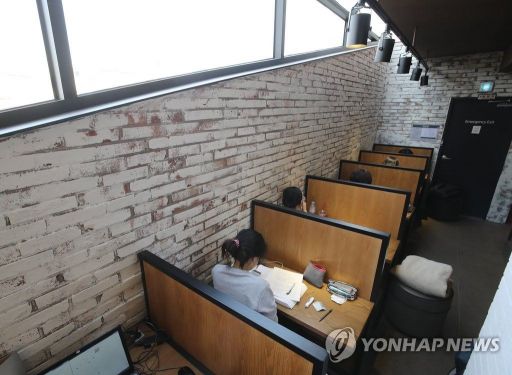
Experts advised a balanced lifestyle, noting that while this culture has positive aspects, it also has negative sides.
Professor Kwak said, "It can be seen positively that forming interpersonal relationships does not consume unnecessary spending and energy," but expressed concern that "the culture of living alone may further confine the 20s and 30s generation to their homes."
He added, "A balance must be found between living alone and living with others. Even if it’s uncomfortable, efforts such as setting rules like 'I eat alone but participate in company dinners' are necessary."
Another expert emphasized that understanding between generations is needed because this phenomenon is related to the social position of the 20s and 30s generation.
Professor Lee Dong-gwi of Yonsei University’s Psychology Department said, "The 20s and 30s generation is a generation that does 'network dieting.' Since their financial situation is not affluent, they can reduce unnecessary costs that come from forming relationships with people. It can be seen positively that they reduce consumption and avoid exhausting energy from interpersonal relationships."
However, Professor Lee expressed concern that "communication may not be smooth because the older generation does not understand these characteristics of the 20s and 30s generation."
He suggested, "Interpersonal relationships through virtual environments are not considered deep relationships. 'Relationship immunity' can grow through face-to-face relationships. To build relationship immunity, learning and time are needed. It is important to maintain a balanced digital and offline life."
© The Asia Business Daily(www.asiae.co.kr). All rights reserved.
![Clutching a Stolen Dior Bag, Saying "I Hate Being Poor but Real"... The Grotesque Con of a "Human Knockoff" [Slate]](https://cwcontent.asiae.co.kr/asiaresize/183/2026021902243444107_1771435474.jpg)

















