Traditional Liquor Previously Available Only Online Now Also Sold via Apps
With Implementation of Volume Tax, Number of Breweries and Types of Alcohol Gradually Increasing
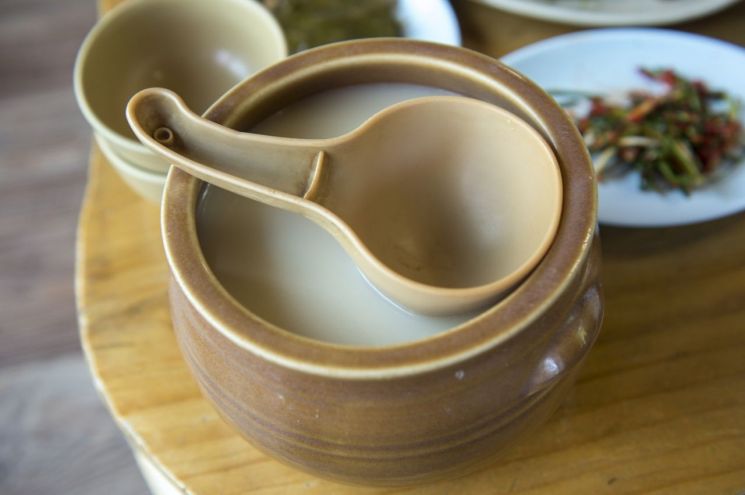
[Asia Economy Reporter Choi Saeng-hye] Oh Hye-jin (34), who lives in Dongjak-gu, Seoul, purchased traditional liquor online to place on the ancestral rite table ahead of the Lunar New Year. She is highly satisfied because she does not have to spend time going around the crowded department store liquor section, and can gather with her family to directly choose rare liquors of the desired style through the monitor.
Kim Sa-ra (39), who lives in Gangnam-gu, Seoul, has been subscribed to a traditional liquor subscription service for a month. It is a subscription service that recommends and allows tasting of two types of traditional liquors each month from over 800 varieties from breweries nationwide. There is also a service that recommends types of liquor based on mood and weather. Kim plans to enjoy the recommended traditional liquors with her family when she visits her hometown this holiday season.
According to the Ministry of Economy and Finance and the National Tax Service on the 23rd, the liquor mail-order sales notification will be revised to expand the internet sales of traditional liquors, which began in 2017, to all online channels capable of adult authentication such as smartphone applications. Currently, general liquors like whiskey, soju, and beer are prohibited from distribution via the internet, but regulations are being relaxed exclusively for traditional liquors. Thanks to these government efforts, the number of breweries producing traditional liquors and the variety of liquors are increasing.
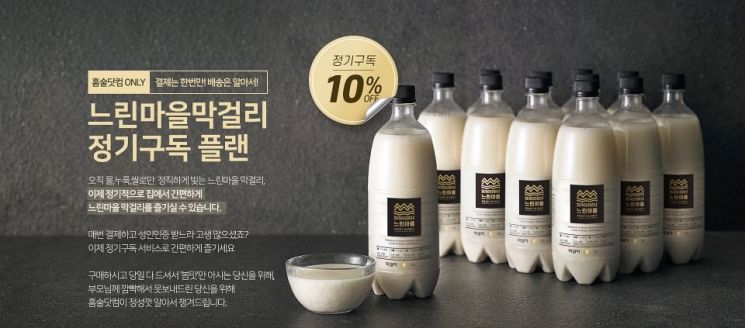 Baesangmyeon Brewery and Pocheon LB launched the online shopping mall 'Homsul.com' on the 9th and introduced a subscription service.
Traditional liquor manufacturers are also continuously launching new online-based services. Baesangmyeon Brewery launched the online shopping mall 'Homsul.com' on the 9th and introduced a Makgeolli subscription service. This service regularly delivers Makgeolli from Baesangmyeon Brewery’s Pocheon LB, such as 'Neurin Maeul Makgeolli', 'Simsul 6', and 'Onggi Makgeolli', according to a set schedule. Subscription fees range from the low 10,000 KRW to the 40,000 KRW range. A Baesangmyeon Brewery official explained, "Sales of Neurin Maeul Makgeolli and Simsul products have been steadily increasing ahead of the Lunar New Year," adding, "With the subscription economy becoming active in the online market, we expect positive responses from the recently opened Homsul.com."
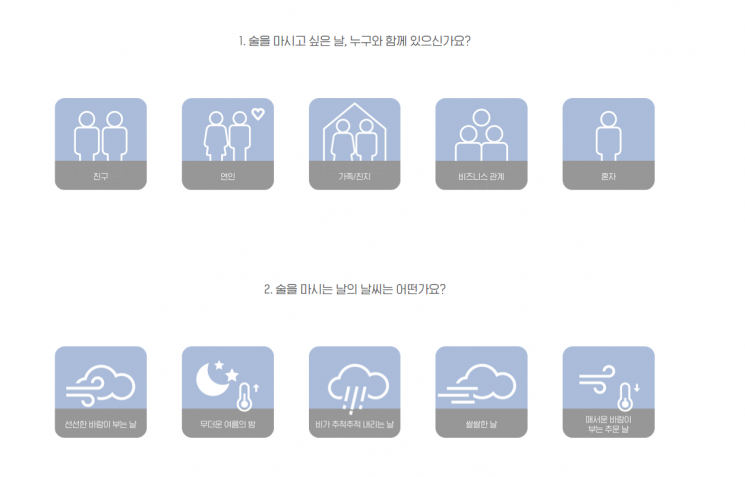 At Damhwa Company's traditional liquor online shopping mall 'Suldamhwa,' there is a service that recommends traditional liquors based on members, weather, and other factors.
Damwha Company also operates the traditional liquor online shopping mall 'Suldamhwa', based on subscription and recommendation services. Once a month, they deliver a Damhwa Box package to consumers, which includes two bottles of seasonal traditional liquor, a curation card, and paired organic side dishes. The subscription fee is 39,000 KRW per month.
The number of small restaurants handling Makgeolli and other traditional liquors is also increasing. According to the Korea Foodservice Industry Research Institute, 'Korean-style pubs brewing liquor' similar to old taverns have recently increased. Representative popular pubs include 'Sotdae' in Gwanak-gu, Seoul, 'Wolhyang' in Jung-gu, Seoul, and Baesangmyeon Brewery’s franchise chain 'Neurin Maeul Brewery'. Corkage-free Korean pubs like Rakheeok and Instagrammer-run Gyedong Aeho-rak are also gaining popularity among young people.
The Ministry of Economy and Finance expects the traditional liquor industry to prosper as the taxation method for Makgeolli changes this year from the existing ad valorem tax (price-based) to a specific tax (quantity and alcohol content-based). Previously, using expensive domestic rice as raw material increased manufacturing costs and tax burdens. The switch to specific tax makes it possible to develop a variety of high-quality products using domestic rice and upgrade packaging. Previously, there were difficulties in developing diverse Makgeolli products, and small traditional liquor manufacturers bore heavier tax burdens than large corporations producing mass-market liquors. However, with the change to specific tax, development of various high-quality products using domestic rice is now possible, and packaging can be upgraded.
Starting in April, fruit wines will be included in the scope of small-scale liquor manufacturing licenses, which were previously issued only for Takju, Yakju, Cheongju, and beer. This will relax manufacturing facility standards and allow distribution through specific liquor wholesalers. The National Tax Service plans to discover historic breweries that have succeeded family businesses this year and provide technical support through the Liquor License Support Center. Lee Kyung-mi, senior researcher at the Korea Foodservice Industry Research Institute, said, "With the revision of laws related to traditional liquor manufacturing and distribution, restaurant owners can not only sell high value-added traditional liquors but also engage in small-scale manufacturing," adding, "This is expected to help alleviate management difficulties in the foodservice industry."
© The Asia Business Daily(www.asiae.co.kr). All rights reserved.
![Clutching a Stolen Dior Bag, Saying "I Hate Being Poor but Real"... The Grotesque Con of a "Human Knockoff" [Slate]](https://cwcontent.asiae.co.kr/asiaresize/183/2026021902243444107_1771435474.jpg)

















