Passage of Prosecutor Organization Reform Plan at Cabinet Meeting
Next Issues Include Introduction of Autonomous Police System
Mid-Level Personnel Changes on 23rd Based on Reorganized Structure
Among 13 Direct Investigation Departments to be Abolished,
Anti-Corruption Investigation Division 3 Retained
Renamed as Public Official Crime Criminal Division
All Cases Must Be Transferred if Corruption Investigation Office Established
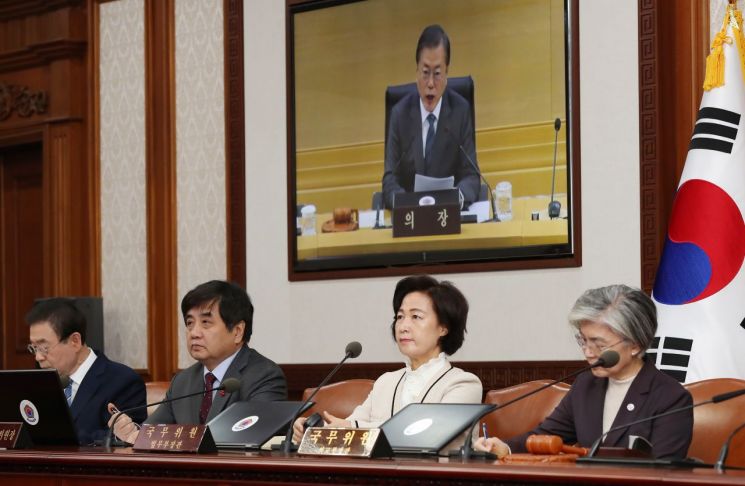
[Asia Economy Reporters Kim Hyung-min and Song Seung-yoon] The 'Prosecutor's Office Organizational Reform Plan' prepared by the Ministry of Justice and the Supreme Prosecutors' Office was approved at the Cabinet meeting on the 21st. This marks the realization of a major change in the functions, roles, and authority of the prosecution.
The prosecution reform, led by the adjustment of investigative authority between the police and prosecution, is also approaching its final form. President Moon Jae-in emphasized in his opening remarks at the Cabinet meeting held at the Government Complex Sejong that morning, "The establishment of the High-ranking Officials' Investigation Office, adjustment of investigative authority, introduction of the autonomous police system, and establishment of the National Investigation Headquarters are a package," adding, "The increased authority of the police due to the reduction of the prosecution's direct investigation must also be democratically distributed." This indicated that discussions related to the introduction of the autonomous police system, which the prosecution proposed as a condition for accepting the adjustment of investigative authority, will emerge as the next issue among the police, prosecution, and political circles.
Among the agenda items passed at the Cabinet meeting that day, the 'organizational reform plan' related to prosecution reform contains very important content in terms of reducing prosecutorial authority, along with the mid-level prosecutor personnel reshuffle scheduled for the 23rd. The Ministry of Justice initially intended to abolish all 13 direct investigation departments to reduce the prosecution's direct investigative functions, but accepted some frontline opinions collected by the Supreme Prosecutors' Office and left some departments intact.
The remaining direct investigation department is the Anti-Corruption Investigation Division 3 under the 3rd Deputy Chief Prosecutor of the Seoul Central District Prosecutors' Office. It was renamed the Public Official Crime Criminal Division but retained its direct investigation function by accepting the Supreme Prosecutors' Office's opinion. The Food and Drug Investigation Division of the Seoul Western District Prosecutors' Office was renamed the Food and Drug Criminal Division but can still conduct direct investigations. The Tax Crime Investigation Division of the Seoul Central District Prosecutors' Office was converted into a Criminal Division, but since the Seoul Northern District Prosecutors' Office was designated as the main office for tax cases, one Criminal Division in the Northern District Prosecutors' Office was changed to a Tax Criminal Division to allow direct investigation of tax crimes.
The reduction of anti-corruption investigation departments is key to controlling prosecution investigations overall. With this organizational reform, the anti-corruption investigation departments decreased from 6 in 3 offices to 4 in 3 offices: 2 in Seoul, 1 in Daegu, and 1 in Gwangju, and the Public Official Crime Criminal Division was newly established. Considering that the anti-corruption investigation departments were called the 'flower' among direct investigation departments, this reform essentially significantly limits the prosecution's investigative scope. The anti-corruption investigation departments were formerly known as Special Investigation Divisions (Special Divisions). Until now, the prosecution often initiated investigations on socially controversial or publicly suspicious cases without complaints, but such scenes are expected to become rare in the future.
There is also talk that the key will be how the renamed Public Official Crime Criminal Division behaves. This division is expected to mainly handle criminal cases involving public officials, but once the High-ranking Officials' Investigation Office is established in July, all cases must be transferred according to the High-ranking Officials' Investigation Office Act. Some view that it will be important to watch which cases Prosecutor General Yoon Seok-youl assigns to this division.
As expected, frontline prosecutors' opposition to this reform is growing. A prosecution official said, "It is hard to understand the government's decision to appoint a special investigation expert as Prosecutor General but then prevent special investigations." There are also concerns that the overall volume of corruption prevention by state agencies will decrease.
On the other hand, there is analysis that the prosecution will use the reduced departmental structure to intensify direct investigations through selection and concentration. There is a possibility that direct investigations will focus on specific types of crimes. The Food and Drug Criminal Division of the Seoul Western District Prosecutors' Office and the newly established Tax Criminal Division of the Seoul Northern District Prosecutors' Office, which retained direct investigation functions, could be such examples. The prosecution still holds the authority to actively conduct direct investigations exceptionally in corporate-related crimes.
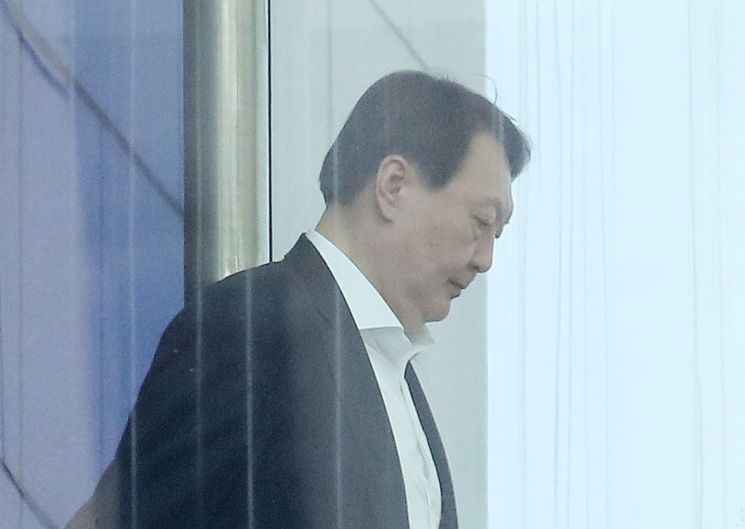
Meanwhile, the Ministry of Justice is expected to begin final preparations for the mid-level prosecutor personnel reshuffle on the 23rd based on the reorganized structure. The Ministry held a personnel committee meeting the day before and completed deliberations on the personnel direction. The dominant analysis is that the mid-level personnel reshuffle will be extensive, similar to the high-level personnel reshuffle conducted on the 8th. In particular, since the Ministry of Justice defined the previous personnel practice that favored certain departments such as the former Special Divisions as 'elitism within the organization' and declared its intention to break away from it, the regime investigation teams are highly likely to become direct targets. Specifically, the 1st, 2nd, and 3rd Deputy Chief Prosecutors of the Seoul Central District Prosecutors' Office and the working chief prosecutors under the deputies are mentioned. These prosecutors have all led investigations related to the regime on the front lines.
Conversely, there are also forecasts that the personnel reshuffle will not be extensive, causing confusion within the prosecution. The Ministry of Justice stated the day before that it would "also consider the continuity of investigations and trials" when presenting personnel principles. This has led to speculation that there will be no sweeping personnel changes that replace all prosecutors handling major cases. In this regard, the Ministry decided to postpone the promotion of chiefs from the 34th Judicial Research and Training Institute class and deputy chiefs from the 35th class until the next personnel reshuffle. This is because promoting the 34th class to chiefs, who handle major investigations, would inevitably reduce frontline criminal and trial personnel.
However, many inside and outside the prosecution view the Ministry of Justice's establishment of such principles as ultimately a 'token gesture.' They analyze that since the Ministry has secured the pretext of partially accepting the prosecution's opinions, the actual key regime investigation practitioners will all be cut off.
© The Asia Business Daily(www.asiae.co.kr). All rights reserved.
![Clutching a Stolen Dior Bag, Saying "I Hate Being Poor but Real"... The Grotesque Con of a "Human Knockoff" [Slate]](https://cwcontent.asiae.co.kr/asiaresize/183/2026021902243444107_1771435474.jpg)
















