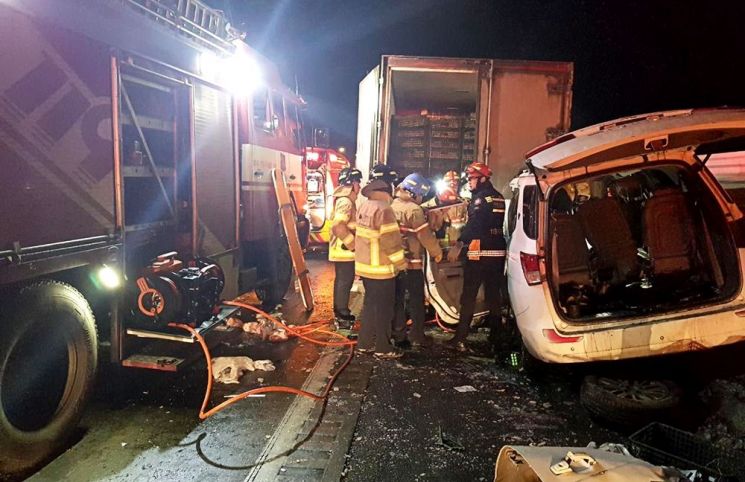
[Asia Economy (Suwon) = Reporter Lee Young-gyu] The Gyeonggi-do Fire and Disaster Headquarters reported that it responded to a total of approximately 900,000 fire, rescue, and emergency medical service calls last year. This amounts to an average of 103.4 dispatches per hour. Fire dispatches decreased compared to the previous year, while rescue dispatches increased due to a rise in community-related complaints. On the other hand, emergency medical service dispatches remained similar to the previous year.
The Gyeonggi Fire Headquarters announced on the 1st that the total number of dispatches last year was 906,041, including 9,379 fire incidents, 221,697 rescues, and 674,965 emergency medical services.
Specifically, fire incidents numbered 9,379, a 2.6% (253 cases) decrease compared to 2018 (9,632 cases). However, accounting for 23.5% of the nationwide 39,874 fire incidents, the fire occurrence rate remained the highest in the country. There were 574 casualties due to fires, 26 fewer than the previous year. Property damage amounted to 205 billion KRW, a decrease of 65 billion KRW from the previous year.
The reduction in fire damage compared to the previous year is attributed by the Gyeonggi Fire Headquarters to the national fire safety special inspections nearing completion, as well as various preventive activities such as surprise inspections and the expansion of basic firefighting facilities. The city with the highest number of fires was Hwaseong-si, with 633 cases.
To improve fire damage, the Gyeonggi Fire Headquarters plans to expand 119 Safety Centers and implement a "priority passage system for emergency vehicles" this year.
In the rescue sector, there were 221,697 dispatches, an increase of about 20,000 from the previous year. Major dispatch cases included removal of beehives (43,337) and unlocking locked doors (13,029), indicating an increase in community-related dispatches.
Emergency medical service dispatches totaled 674,965, similar to the previous year. By type, the dispatches were ▲ illness (267,312) ▲ accident injuries (107,166) ▲ traffic accidents (47,997) in order.
The similar number of emergency medical dispatches compared to the previous year is mainly attributed to population stagnation. The Gyeonggi Fire Headquarters plans to enhance professionalism by increasing the number of personnel on ambulances from two to three, recognizing the need for specialized emergency medical activities.
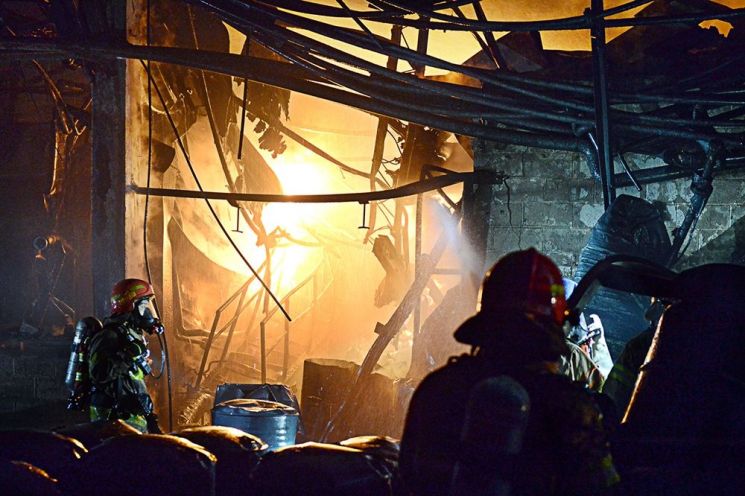
Additionally, they plan to expand emergency medical teams in busy stations such as Suwon, Yongin, and Bucheon, where emergency dispatches are concentrated, and to establish new 119 Safety Centers in areas like Hwaseong and Siheung, which have large jurisdictions and long ambulance travel distances, causing longer response times.
A representative from the Gyeonggi Fire Headquarters emphasized, "To realize the 'Fair Gyeonggi-do,' the top priority value of the 7th term of the provincial government, the Gyeonggi Fire Headquarters will do its best to ensure equal firefighting services."
© The Asia Business Daily(www.asiae.co.kr). All rights reserved.
![Clutching a Stolen Dior Bag, Saying "I Hate Being Poor but Real"... The Grotesque Con of a "Human Knockoff" [Slate]](https://cwcontent.asiae.co.kr/asiaresize/183/2026021902243444107_1771435474.jpg)
















