US Experts: "Iran-Style Decapitation Operation Difficult for North Korea"
"Nuclear Arsenal and China-Russia Factor... Far Riskier Than Iran"
Could the so-called "decapitation operation" carried out by the United States against Iran also be applied to North Korea? This question has surfaced recently amid developments in the Middle East, but experts in the United States assess that the Korean Peninsula represents an entirely different strategic environment. Military conflict with North Korea, a nuclear-armed state, would pose risks that are incomparable to those involving Iran. In addition, the involvement of China and Russia introduces further complexity, raising concerns that any military response could escalate from a simple confrontation between North Korea and the United States into a broader regional crisis.
On March 3 (local time), Ellen Kim, Vice President of Academic Affairs at the Korea Economic Institute of America (KEI) in Washington D.C., stated during a seminar titled "America's New Defense Strategy and Its Implications for the Indo-Pacific," co-hosted by KEI and the Indo-Pacific Institute for Security Studies (IIPS), "I have thought about this issue quite deeply, and Iran and North Korea are significantly different."
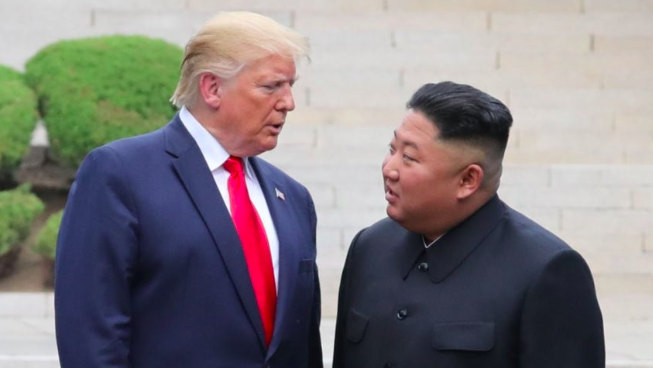
Kim noted, "People might think that North Korean Chairman Kim Jongun must be truly terrified right now, especially after seeing the arrest of Venezuelan leader Maduro and the recent events involving the Iranian leader. However, it is difficult to apply the same approach to North Korea."
"North Korea Is a Nuclear-Armed State...The Dimension of Military Options Is Different"
The biggest reason is nuclear weapons. Kim stressed, "Because North Korea possesses nuclear weapons, choosing military options is much more dangerous." This means the issue is far more complex than simply removing the leadership; it also involves considerations of nuclear retaliation and various response scenarios.
The presence of China and Russia is also a factor. Geopolitically, North Korea shares borders with these two major powers, and the possibility of diplomatic or military support from them cannot be ruled out. Military action on the Korean Peninsula could quickly escalate into a matter of regional power balance.
The geopolitical risks were also highlighted. Kim stated, "South Korea and Japan are directly exposed to North Korea's nuclear and missile threats," and added, "Military operations in this region are highly likely to result in large-scale casualties."
She cited the 1994 North Korean nuclear crisis as a precedent. At that time, the Bill Clinton administration considered a strategic strike against North Korea's nuclear facilities but did not proceed due to opposition from the South Korean government and the projection of massive damages. Kim emphasized, "The fundamental risk structure has not changed much even today," and concluded, "It would be far more difficult for President Donald Trump to opt for a decapitation operation against North Korea."
Japan Also Fears 'Large-Scale Chaos'
Japanese experts have voiced similar concerns. Yuki Tatsumi, Senior Director at IIPS, said, "From the perspective of not only Prime Minister Takaichi as an individual but also Japan as a whole, a large-scale disaster of this kind in North Korea would mean massive chaos on the Korean Peninsula," adding, "This could trigger an influx of refugees and various other contingencies."
She also pointed out, "We must not forget that many Japanese people live, work, and study in South Korea," and emphasized, "All of this would be a truly catastrophic scenario that Japan desperately wants to avoid."
© The Asia Business Daily(www.asiae.co.kr). All rights reserved.