US Markets Stabilize After Trump's Statement on Ship Protection
Korean Market Faces Correction After Sharp Rally... Fundamentals Remain Strong
![[Good Morning Market] U.S. Stocks Pare Losses After Sharp Drop... Will Korea's Market Also Catch Its Breath?](https://cphoto.asiae.co.kr/listimglink/1/2025112108183126325_1763680712.png)
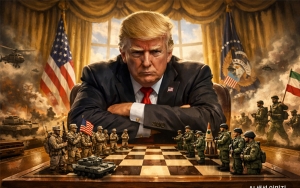
Due to the escalating war between the United States and Iran, both the New York Stock Exchange and U.S. government bonds experienced sharp declines. The losses eased somewhat after U.S. President Donald Trump made a statement pledging to protect ships passing through the Strait of Hormuz. In the domestic stock market, there are projections that a correction may occur in the near term, as not only external factors such as U.S.-Iran tensions but also concerns over overheating from the sharp rise in stock prices have emerged.
On March 3 (local time) at the New York Stock Exchange, the S&P 500 index closed at 6,816.63, down 0.94% from the previous day. The tech-heavy Nasdaq 100 index also fell by 1.02% and at one point plunged as much as 2.7%. The Dow Jones Industrial Average ended at 58,501.27, a decrease of 0.83% from the previous day. The volatility index (VIX) of the Chicago Board Options Exchange (CBOE), known as the 'fear index,' surged to above 23, reaching its highest level of the year.
The intensifying war between the United States and Iran drove international oil prices up by more than 9% and heightened inflationary pressures, negatively affecting the overall stock market. The yield on the 10-year U.S. Treasury rose by 2 basis points (1bp=0.01%) to 4.06%, and the dollar also strengthened. Additionally, the largest-ever redemption occurred in Blackstone's private lending fund, bringing private credit risks into focus and adding to the market's burden.
However, the losses narrowed somewhat after President Trump commented that Iran's military strength was rapidly weakening, raising expectations for an early end to the war. In an official statement, he also said, "I have instructed the U.S. Navy to escort tankers and ships passing through the Strait of Hormuz and directed the U.S. International Development Finance Corporation (DFC) to offer insurance and guarantees at reasonable prices." This announcement helped stabilize the market to some extent.
Meanwhile, John Williams, President of the Federal Reserve Bank of New York, and Neel Kashkari, President of the Federal Reserve Bank of Minneapolis, argued that it is still too early to assess the impact of geopolitical shocks on inflation and the monetary policy path. They emphasized that the key variable is how long elevated energy prices will persist, and stated that they would closely monitor inflation data. Seo Sangyoung, Managing Director at Mirae Asset Securities, explained, "This suggests that inflationary pressures stemming from the war with Iran are emerging as a key variable in monetary policy decisions."
It is expected that the domestic stock market will undergo a process of absorbing both external factors and the burden from its own rapid rise. While the U.S. stock market has remained relatively flat since the beginning of the year, the KOSPI surged by nearly 50% in just two months. Analysts say that, having entered a technically overheated phase, a market correction may occur in the short term.
The MSCI Korea ETF, which moves similarly to the domestic market, plunged by 10.30%. The MSCI Emerging Markets ETF also fell by 5.01%. The Philadelphia Semiconductor Index dropped by 4.58% as well.
Nevertheless, there is analysis suggesting that the fundamentals of the Korean stock market remain unchanged. This is because the profits of semiconductor-related companies are still solid, and policy-driven upward momentum has not yet faded.
Han Jiyeong, Research Analyst at Kiwoom Securities, said, "The increased volatility that may continue throughout this week is worth enduring," adding, "Given that the degree of the plunge appears excessive, we are expecting a narrowing of the losses."
© The Asia Business Daily(www.asiae.co.kr). All rights reserved.