Presidential Policy Chief Kim Yongbeom posts message on social media after President Lee's National Tourism Strategy Meeting
"We must dismantle the deeply entrenched Incheon Airport-centric structure"
"We have forged consensus among ministries including the Culture Ministry, Justice Ministry, and Health Ministry"
"We will prove it through speed and change"
On the 25th, Presidential Policy Chief Kim Yongbeom stated at the Blue House, immediately after the 11th Expanded National Tourism Strategy Meeting presided over by President Lee Jaemyung, that "the era of 30 million inbound tourists is not about numbers, but a competition of 'experience'," adding, "The key battleground is how much we can remove inconveniences along the journey from the tourists' perspective." He then cited visa expansion, air accessibility, accommodation infrastructure, and cruise tourism as the core agenda items.
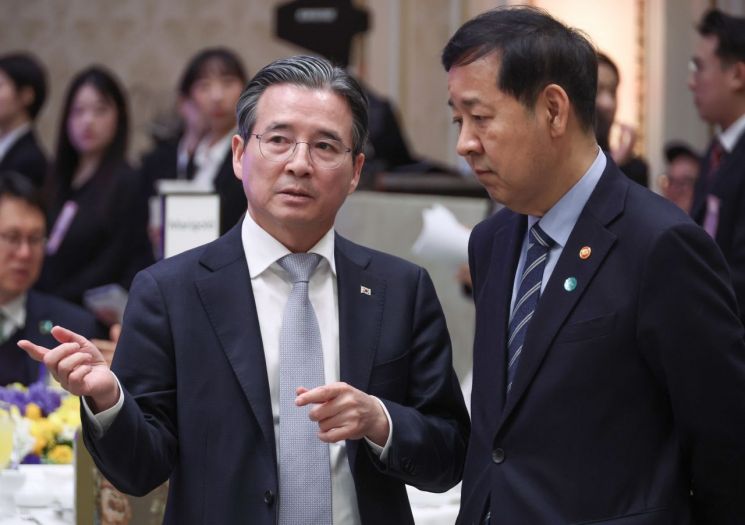
In a Facebook post the same day, Kim wrote, "It is hard to understand from a tourist's standpoint that a foreigner who arrives in Incheon after a long flight has to move to Gimpo and board another plane because there is no connecting flight to the provincial destination they actually want to visit," pointing out that this is "a problem created by an excessively 'Incheon Airport-centric structure'." He continued, "We need to increase direct flights to regional airports and overhaul the transfer system to build a country where 'you can go anywhere nationwide without passing through Incheon'."
Kim named visa expansion, air accessibility, accommodation infrastructure, and cruise tourism as the core agenda items of this meeting. Regarding the expansion of multiple-entry visas, he described it as "a signal of trust that 'you can come back anytime'," expressing his gratitude to the Ministry of Justice for moving to improve the system, while also saying that "accessibility is the very beginning of tourism" and pledging to follow up by expanding direct flights to regional airports and improving transfer systems.
On accommodation, he stressed the need to ease regulations, saying, "It does not add up to declare that we will attract 30 million people while accommodation supply is blocked." On cruises, he said, "The time it takes to enter and leave the country is itself a matter of competitiveness," and explained that consensus had been reached on drastically shortening procedures. At a briefing the same day, the government announced plans to add more cruise immigration counters and security checkpoints, introduce a fast-track immigration system for cruises calling at multiple ports, and pilot an extension of terminal operating hours to 24 hours.
Kim also described the "growing pains" during the coordination process. He said, "The perspectives of the Ministry of Culture, Sports and Tourism, which emphasizes convenience, and the Ministry of Justice, which is concerned about illegal stays, were bound to clash," and added, "There was also considerable debate over accommodation regulations between the Ministry of Health and Welfare, which prioritizes hygiene, and the Ministry of Culture, Sports and Tourism, which emphasizes user convenience." Even so, he said, "In the face of the overarching goal of becoming a tourism powerhouse, the ministries each took a step closer," explaining that the accommodation management system has been unified under the Ministry of Culture, Sports and Tourism and that substantive agreements have been reached on visa and cruise procedures as well.
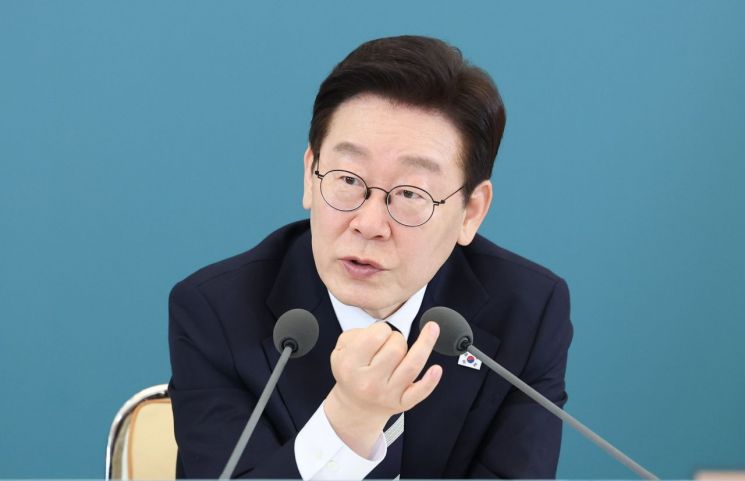
Earlier in his opening remarks, President Lee said, "A crucial task for the relaunch of the tourism industry is to boldly expand the horizon of tourism across the entire Republic of Korea," warning that "if we are content with the current reality in which 80% of foreign tourists are concentrated in Seoul, the growth of the tourism industry will inevitably hit a ceiling."
President Lee also stressed, "The development of the cultural industry triggered by K-culture must ultimately lead to tourism in the Republic of Korea," and added, "Only when people around the world set foot on Korean soil and experience it firsthand can the energy of K-culture translate into growth and jobs." He further noted that the fruits of regional tourism must flow back to neighborhood businesses and small merchants for it to be sustainable.
He also called for the establishment of sound tourism order. President Lee said, "Price gouging, unkindness, and aggressive touting are vicious abuses that inflict great harm on local economies and must be eradicated at the root," urging officials to create changes that can be felt on the ground at airports, ports, and accommodations from the demand side. In response, Kim said, "Now the answer lies in the field," adding, "If it is not felt at the airport, at the port, and at the accommodation, it is meaningless. We will prove it through speed and change."
© The Asia Business Daily(www.asiae.co.kr). All rights reserved.


















