Deaths projected to surge from 22,000 to 60,000 in 30 years
Antibiotic use in Korea 1.6 times the OECD average
Measures include expanding hospital ASP and training specialized personnel
"The current situation of antibiotic resistance in Korea is not only an immediate national health threat but also a disaster for future generations. We can no longer delay the timing of control measures."
 Im Seunggwan, commissioner of the Korea Disease Control and Prevention Agency, announced the '3rd National Antimicrobial Resistance Management Plan (2026-2030)' on the 25th at the Korea Disease Control and Prevention Agency in Osong, North Chungcheong. Korea Disease Control and Prevention Agency
At a briefing held at the Korea Disease Control and Prevention Agency in Osong, Chungcheongbuk-do on the 25th, Im Seunggwan, director of the Korea Disease Control and Prevention Agency, said, "The number of deaths caused by antibiotic resistance in 2021 is estimated at 22,000," adding, "If the current trend continues, the number is expected to nearly triple to around 60,000 in 30 years." Director Im warned, "The number of people with weakened immunity is rapidly increasing due to population aging, and the spread of resistant bacteria is accelerating in long-term care hospitals and similar facilities," and added, "If the current structure persists, there is serious concern that control will become even more difficult."
On this day, the agency announced the "3rd National Antibiotic Resistance Management Plan (2026-2030)," which was formulated together with seven related ministries and agencies: the Ministry of Health and Welfare, the Ministry of Food and Drug Safety, the Ministry of Agriculture, Food and Rural Affairs, the Ministry of Climate, Energy and Environment, the Ministry of Oceans and Fisheries, and the Rural Development Administration. The 3rd plan aims to compensate for the limitations of the 2nd plan (2021-2025), which focused on establishing an institutional foundation, and sets the reduction of antibiotic use and the strengthening of infection prevention as its core goals.
Korea ranks relatively high among major advanced countries in both antibiotic consumption and resistance rates. In 2023, the defined daily dose of antibiotics per 1,000 inhabitants per day was 31.8 DID, about 1.6 times higher than the Organisation for Economic Co-operation and Development (OECD) average of 19.5. The resistance rate of methicillin-resistant Staphylococcus aureus (MRSA), a major resistant pathogen, also stood at 45.2% in 2023, far exceeding the global average of 27.1%. The government believes that high medical accessibility and relatively active use of prescription-only medicines have, in part, led to increased exposure to antibiotics.
The core of this 3rd plan is the expansion of the Antimicrobial Stewardship Program (ASP). Under ASP, a dedicated team consisting of infectious disease specialists, pharmacists, and others monitors and intervenes in antibiotic prescriptions, and a pilot project has been underway since November 2024. The goal is to first establish the system for general hospitals with 301 beds or more by next year and then expand it to all general hospitals by 2030. In parallel, the government will also work on training specialized personnel.
An official at the Korea Disease Control and Prevention Agency said, "Through the 2nd plan, we established an institutional foundation, but there were limits to significantly lowering resistance rates and usage volumes," adding, "As many as 30% of general hospital-level institutions and above are still not making sufficient use of ASP. Participation by all medical institutions must be expanded in order to substantially reduce antibiotic use."
The government also took into account that antibiotic use is not confined to the human medical sector. Antibiotic consumption is actually greater in non-human sectors such as agriculture, livestock, and fisheries. Accordingly, the system will be revised so that all antibiotics are used only under prescriptions issued by veterinarians or aquatic animal disease control officers, and the scope of the Positive List System (PLS) for managing the list of permissible residue substances will be expanded. The management of sales records for pesticides (including antibiotics) used in crop production will also be strengthened.
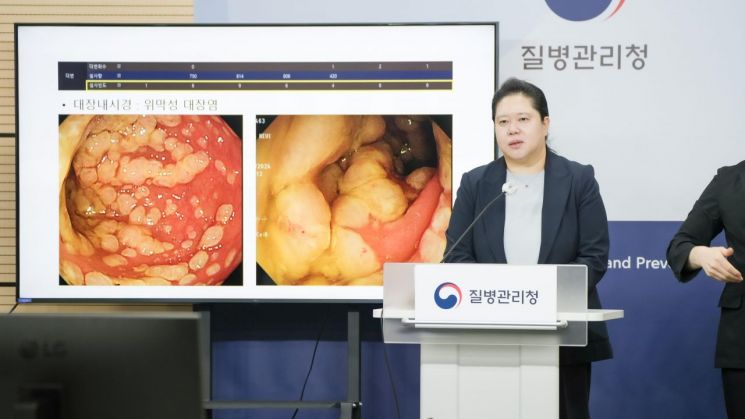 Moon Songmi, Professor of Infectious Diseases at Seoul National University Bundang Hospital, is presenting at a briefing on the "3rd National Antimicrobial Resistance Management Plan (2026-2030)" held at the Korea Disease Control and Prevention Agency in Osong, Chungbuk.
Korea Disease Control and Prevention Agency
Experts unanimously stated that a whole-of-government approach is needed to tackle antibiotic resistance. Moon Songmi, Professor of Infectious Diseases at Seoul National University Bundang Hospital, said, "There are not many new resistant-bacteria treatments being developed at present, and even those that exist have limited therapeutic effects," adding, "There are also many cases in which patients die from bacterial infections after high-risk surgeries, so efforts are required from everyone."
Kim Sungmin, Professor of Infectious Diseases at Chungnam Sejong Hospital, emphasized, "Antibiotics are used not only in humans but also in animals, the environment, and other diverse fields, and resistance spreads along these routes," and added, "A government-level One Health approach that views humans, animals, and the environment in an integrated manner is essential."
© The Asia Business Daily(www.asiae.co.kr). All rights reserved.


















