Board of Audit and Inspection announces results of regular audit of KFTC
258.3 billion won in cartel surcharges reduced over the past three years
Leniency granted to spin-off and newly established corporations confirmed..."Reductions possible even for repeated cartels"
Excessive surcharge calculation at first review report stage flagged
Funeral service compensation: "Insufficient guidance on claim deadlines"
1 disciplinary action request, 2 caution requests, 7 notifications
The Board of Audit and Inspection has notified the Korea Fair Trade Commission (KFTC) to come up with improvement measures after finding that the leniency program for voluntary reporting of cartels (unfair concerted acts) has been operated loosely, resulting in excessively reduced surcharges. It also raised issues that consumer guidance on compensation for prepaid funeral service products is insufficient, and that the effectiveness of sanctions is weakened because only "simple warnings" have repeatedly been issued to business groups that submitted false data for designation as large business groups.
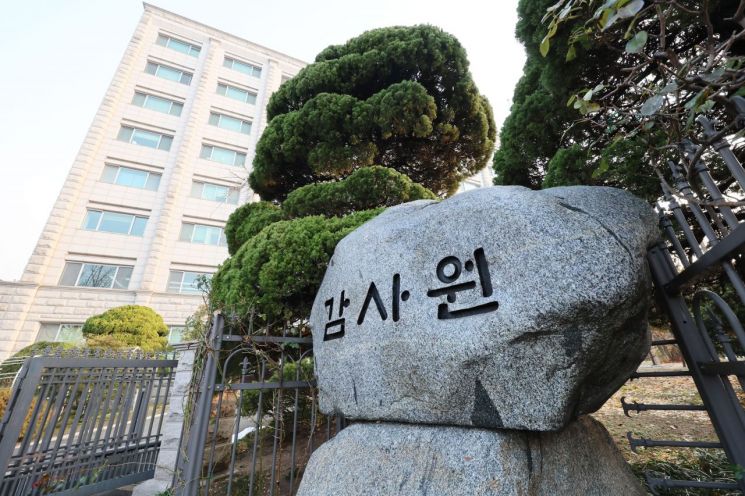
On the 25th, the Board of Audit and Inspection released the main results of its "regular audit of the KFTC," and announced that it had identified 10 cases of necessary institutional improvements or illegal/unreasonable practices (1 disciplinary action request, 2 caution requests, and 7 notifications) in areas such as investigation and handling of unfair trade practices and consumer protection, and ordered corrective measures.
The Board of Audit and Inspection first pointed out that the KFTC's leniency program for voluntary reporting of cartels is being operated in an unreasonable manner. Over the past three years (2022-2024), the KFTC imposed a total of 1.3029 trillion won in surcharges on 144 cases of unfair concerted acts, and applied leniency to 98 of these cases, reducing surcharges by 258.3 billion won. In particular, it confirmed that the KFTC’s subordinate public notice has been operated in such a way that, contrary to the intent of the Enforcement Decree of the Monopoly Regulation and Fair Trade Act, companies created through corporate spin-offs or newly established corporations could still be granted reductions even for repeated violations on the grounds that they had "no past surcharge payment record."
The Board of Audit and Inspection stated, "In some joint reduction applications by affiliates within a business group, reductions were granted even in cases of repeated unfair concerted acts," and pointed out that "in one case in 2022, first- and second-priority reductions were granted separately to the spin-off corporation and the newly established corporation, leading to a surcharge reduction of 54.6 billion won, raising concerns that the effectiveness of the system may be undermined."
It also uncovered a case in which the KFTC failed to report to the Commission the whistleblower’s report filed under the reward-for-reporting system, and nevertheless adopted a resolution granting leniency for voluntary reporting to the violating company. There were 20 such cases over the past three years in which both reward payments and leniency for voluntary reporting were applied simultaneously. There were also instances where, despite having the authority to request and obtain investigation records from the prosecution or the police, the KFTC granted reductions merely on the grounds that the company had "simply submitted investigation records," without making such requests.
The Board of Audit and Inspection notified the KFTC Chairperson to: ▲prepare improvement measures to prevent unreasonable reductions for newly established or spin-off corporations; ▲ensure that, when sanctions are imposed based on necessary evidence submitted through reports or whistleblowing, such facts are reported to the Commission and reflected in determining leniency status; and ▲as a rule, request and obtain investigation records when receiving investigation result notifications, thereby enhancing the effectiveness of the system.
Excessive surcharge calculation at the first review report stage..."Amounts at review report stage were 1.9 to 2.8 times the final imposed surcharges"
The Board of Audit and Inspection also concluded that the handling of surcharge calculation and public announcements was inappropriate. Its analysis of 87 surcharge imposition cases in 2024 showed that in 75 cases (86%), the amount calculated at the Secretariat’s review report stage was 1.9 to 2.8 times larger than the final imposed surcharge. This means companies may face a heavier burden by having to submit opinions and explanations based on excessively high preliminary amounts.
In the case involving joint adjustment of sales incentives (cartel) by the three mobile telecommunications companies, the KFTC, at the review report stage in April 2024, calculated and notified a surcharge range of 3.4 trillion to 5.5 trillion won, but stated that the final amount imposed through the resolution in June 2025 was 96.4 billion won, which was only about "2% of the calculated amount." The Board of Audit and Inspection explained, "Our analysis found that the related sales were overestimated (16.9 trillion won) mainly because factors such as the number of subscription lines were insufficiently considered in the process of estimating related sales, and that there was an additional overestimation of 3.1 trillion won because sales unrelated to sales incentives were not deducted."
Cases were also found in which inaccurate provisional amounts were announced before the final resolution on surcharges, by making public the surcharge amounts at the review report stage. In some cases, the difference between the amount reported to the media and the final amount reached hundreds of billions of won, raising concerns that this could further increase the burden on companies. Accordingly, the Board of Audit and Inspection notified the KFTC to prepare improvement measures so that, when it is difficult to calculate related sales at the review report stage, the KFTC should estimate them within an objective and reasonable range by comprehensively considering total sales and the sales ratio of related products, and that, when it is unavoidable to announce amounts before the final resolution, the KFTC should calculate and disclose them in a way that reflects the Commission’s deliberations and consensus.
"Only 1 investigation launched out of 230 cases" despite receiving tax data intended to uncover unfair support
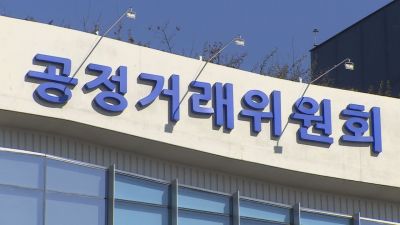
There was also criticism that the KFTC has made only limited use of tax information from the National Tax Service for imposing sanctions on unfair support and private benefit-taking. The Board of Audit and Inspection stated that although the KFTC has been receiving tax information since 2020 under the revised Framework Act on National Taxes, it launched an actual investigation in only 1 case over the past two years (2023-2024) out of 230 cases received, citing reasons such as "difficulty in calculating normal prices." The Board of Audit and Inspection requested the KFTC to exercise greater caution by thoroughly performing related work, including appropriately using tax information when imposing and collecting surcharges.
In addition, it pointed out that the operation of the system has been inappropriate in that, when the KFTC files a complaint against a subcontracting law violator at the request of the Ministry of SMEs and Startups (under the mandatory complaint request system), no demerit points are imposed, and therefore such companies are excluded from review for restrictions on eligibility to participate in bidding. The Board of Audit and Inspection stated that since the system was introduced in 2014, no demerit points have been imposed in 38 cases where complaints were filed.
Insufficient guidance on deadlines for funeral service compensation claims..."6.6 billion won unpaid due to expired claim periods"
In the area of consumer protection, for which the KFTC is responsible, it was found that there is a risk of amplifying consumer damage because the claim period for compensation and other details are not clearly communicated at the subscription stage for prepaid funeral service products. According to the Board of Audit and Inspection, as of last year there were 9.34 million subscribers to prepaid funeral service products, with advance payments totaling 10.2 trillion won, and the amount of reserves for advance payments was 5.2 trillion won (2.8 trillion won deposited in banks and 2.4 trillion won held by mutual aid cooperatives).
While bank deposits have no separate claim period, mutual aid cooperatives apply a three-year claim period from the occurrence of payment events such as business closure. However, it was confirmed that companies did not sufficiently inform customers of key transaction terms, such as the claim period for each obligated payer, during the contract process. As a result, since 2020, 6.6 billion won in compensation (for 16,162 people) that mutual aid cooperatives should have paid remained unpaid due to the expiration of the claim period at 12 companies where incidents occurred. As of May last year, the cumulative number of unpaid recipients reached 38,311 (21.3 billion won), indicating a risk of further damage. The Board of Audit and Inspection stated, "After the completion of the on-site audit, mutual aid cooperatives re-notified unpaid consumers at companies where compensation was in progress, and as of December 2025, an additional 8,797 people (9.4 billion won), or 45% of the unpaid recipients, received their compensation."
False submissions of large business group designation data..."29 out of 31 cases resulted in warnings, with 11 repeat violators"
In the area of curbing concentration of economic power, the Board of Audit and Inspection stated that sanctions for false submissions of data for designation as large business groups were limited to "warnings," undermining their effectiveness. The Monopoly Regulation and Fair Trade Act requires the submission of information such as the status of shares held by affiliates and relatives for designating large business groups, and allows for criminal complaints in cases of false submissions, but, as the Board of Audit and Inspection pointed out, it does not provide for administrative sanctions.
The Board of Audit and Inspection stated that although the KFTC established the "Guidelines on Filing Complaints for Violations Related to Designation Data" in September 2020 and has been deciding whether to file complaints based on factors such as recognizability and seriousness, 29 out of 31 cases of false submissions over the past three years (2022-2024) resulted only in simple warnings. It also pointed out that 11 business groups repeatedly violated their submission obligations (up to six times), and that in some cases warnings were issued because the KFTC assessed recognizability and seriousness as low, contrary to the standards set out in its own complaint guidelines. The Board of Audit and Inspection notified the KFTC Chairperson to prepare measures to ensure effectiveness by imposing consistent sanctions for false submissions of designation data so as to prevent repeated violations.
© The Asia Business Daily(www.asiae.co.kr). All rights reserved.


















