992 Fraudulent Cases Detected in 2025, Up 1.6 Times From Previous Year
Total of 2.8 Trillion Won in Unused Subsidies Recovered
The government has mobilized its statistical model system and joint on-site inspections to uncover the largest-ever number of fraudulent cases involving national subsidies. In particular, it succeeded in recovering approximately 2.8 trillion won in subsidies to the national treasury that had been left unadjusted and idle in project operators' accounts even after projects had ended.
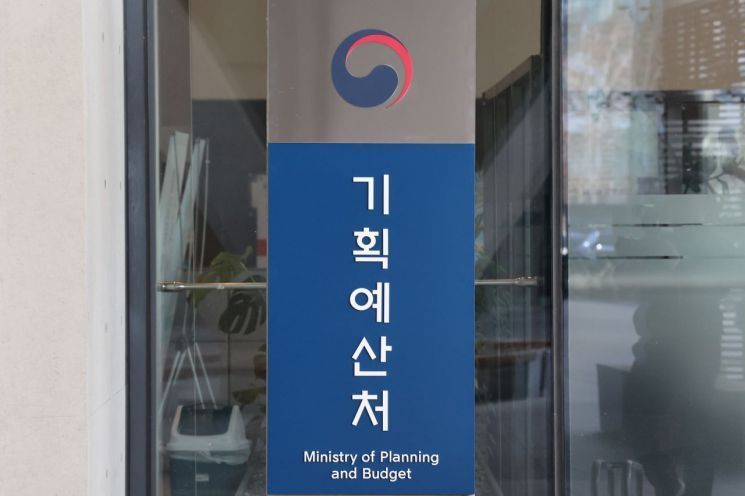
On the 25th, the Ministry of Planning and Budget held the "2nd Subsidy Management Committee" meeting, presided over by Director General Kang Younggyu of the Future Strategy and Planning Office, and reviewed and approved a total of four agenda items, including the results of the 2025 inspection on fraudulent receipt of national subsidies and the 2026 implementation plan.
992 cases detected, setting an all-time record
According to the ministry, a total of 992 cases of fraudulent receipt of subsidies were detected last year, the highest number on record. This represents about a 1.6-fold increase compared with 630 cases in the previous year. The total amount detected was 66.77 billion won, slightly below the record 69.985 billion won in 2023. The year 2023 was a special period that included 31.89 billion won in fraudulent claims related to small business quarantine support funds established to overcome COVID-19.
The ministry used the fraud detection system within the Integrated National Subsidy Management System (e-Naeradorum) to extract 10,780 suspected cases from among subsidy projects implemented between July and December 2024. Of these, 317 cases of fraudulent receipt, totaling 49.7 billion won, were uncovered through joint on-site inspections conducted together with relevant ministries, the Korea Public Finance Information Service, and accounting firms. In terms of joint on-site inspections alone, both the amount and the number of detected cases were the largest ever. For serious cases of fraud, the ministry plans to impose penalty surcharges of up to five times the amount fraudulently received, and to carry out follow-up measures such as filing criminal complaints and recovering the funds.
Although the methods of fraudulent receipt have become increasingly sophisticated, the government's monitoring network has become even tighter. By detection pattern, "violations of specific transaction management" such as splitting projects to award private contracts or steering work to specific companies accounted for the largest share, with 647 cases totaling 21.32 billion won. "Transactions among family members," involving deals with companies owned by employees' family members, also reached 122 cases totaling 1.33 billion won. In particular, detection using statistical models identified 25.6 billion won across 59 cases, accounting for 38% of the total amount detected, thereby demonstrating the effectiveness of digital monitoring.
Another notable achievement is the large-scale recovery of unused subsidies. Since 2024, the government has been clearing subsidies that remained in the accounts of project operators, local governments, or ministries after project completion, either because settlement procedures were delayed or because the funds were left untouched even after settlement was completed. In 2024, it conducted a full-scale review of subsidy projects completed between 2017 and 2023 and recovered 1.7 trillion won to the national treasury. In 2025, it recovered more than 1.07 trillion won in remaining subsidy balances. In total, the amount recovered to the national treasury has reached approximately 2.8 trillion won.
AI to provide real-time monitoring... pushing innovation in the subsidy management system
Going forward, the government plans to continuously improve the management system in order to fundamentally block attempts at fraudulent receipt of subsidies. It intends to build a next-generation national subsidy management system (BPR/ISP) based on artificial intelligence (AI) and cloud technology by 2030. The goal is to enable AI to detect abnormal signs on a real-time basis and thereby prevent fraudulent receipt at the source. In addition, national subsidy projects that are currently managed through separate systems, such as those executed by local governments, will be integrated and managed through e-Naeradorum.
Kang Younggyu, Director General of the Future Strategy and Planning Office at the Ministry of Planning and Budget, said, "Fraudulent receipt of national subsidies hinders the achievement of national policy objectives pursued through subsidy projects and results in the reckless waste of precious tax money paid by the people," adding, "With our ministry taking the lead, each government agency will thoroughly track down and uncover any potential fraud so that not a single won of subsidies is wasted, and will rigorously manage the process to ensure that related subsidies are recovered."
© The Asia Business Daily(www.asiae.co.kr). All rights reserved.

















