LG Uplus: "Building a World-Class AIDC"
AIDC market expected to grow 28.3% annually on average
Ruling and opposition parties jointly sponsor special act to support AIDCs
The three mobile network operators are locked in fierce competition to expand their AI data centers (AIDCs), which are drawing attention as a future growth engine. The National Assembly has stepped in with a special act to support the profitability and scalability of AIDCs.
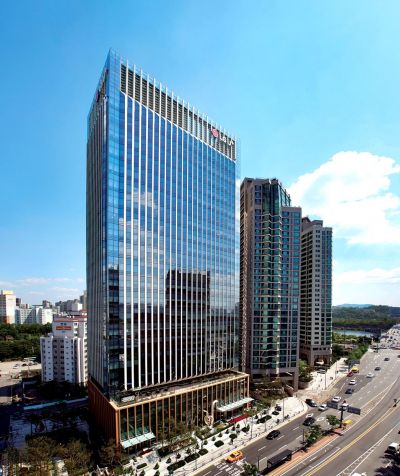
LG Uplus is building an AIDC in Wollong-myeon, Paju, Gyeonggi Province, with completion targeted for May 2027. The facility will be the size of nine soccer fields. With a total floor area of 46,013 square meters, it will be four times larger than the existing LG Uplus AIDC Pyeongchon Mega Center. Once the Paju AIDC is completed, into which about 615.9 billion won is being invested, LG Uplus will become the only company in Korea to own three hyperscale commercial AIDCs. LG Uplus plans to use the Paju AIDC as a starting point to preempt demand related to AI infrastructure.
On March 2 next year (local time), LG Uplus plans to unveil technologies and operational strategies of LG affiliates that are being applied to the Paju AIDC under construction at MWC26, the world's largest mobile exhibition, to be held in Barcelona, Spain. For the heat-generation issue of AIDCs, the company decided to apply LG Electronics' liquid cooling solution. This method attaches a dedicated metal plate to high-performance graphics processing unit (GPU) chips and circulates liquid through a coolant distribution unit to directly remove heat. According to LG Uplus, this solution has improved energy efficiency by about 24% compared with conventional air cooling. In addition, through LG Energy Solution's high-performance uninterruptible power supply (UPS) battery technology, power is immediately stabilized in the event of a blackout or voltage fluctuation.
SK Telecom has also embarked on large-scale investment to secure a share of the AIDC market. SK Group is building an AIDC in the Ulsan Mipo National Industrial Complex that can accommodate about 60,000 GPUs. This is a project in which Amazon Web Services (AWS), which runs Amazon.com's cloud business, and SK Group are jointly investing about 7 trillion won. SK Telecom is responsible for the construction and operation of the Ulsan AIDC. At this MWC26, SK Telecom also plans to showcase its AIDC expertise. SK Telecom will unveil "AIDC Infrastructure Manager," an intelligent platform that consolidates various data within the AIDC into a single system and manages it efficiently and stably. The company will also present "AI Cloud Manager," a GPU resource optimization solution, and "Petasus AI Cloud," a high-performance, high-efficiency cloud platform.
KT expects its Gasan AIDC, which opened in November last year, to become a hub for large-scale AI infrastructure. According to KT, the Gasan AIDC is the first in Korea to adopt a liquid cooling system, enabling high-performance AI computation and large-scale data processing. KT plans to secure 320 megawatts (MW) of AI data center power infrastructure by 2030 and to build an infrastructure, platform, and partner ecosystem through collaboration with domestic and overseas software companies. Introducing the "AI Innovation Center" last December as a facility to validate AIDC technologies, Choi Jiwoong, CEO of KT Cloud, said, "KT Cloud will set a new standard for data center technology innovation and lead the growth of the domestic AI ecosystem."
Rapid revenue growth in the AIDC segment..."AIDC market expected to grow 28.3% annually"
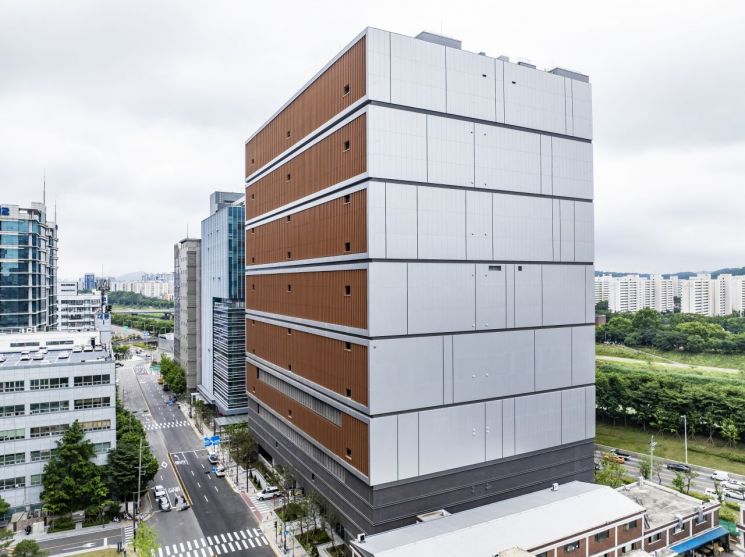
The reason the three telecom operators are staking their future on AIDCs is sharply improving profitability. SK Telecom's AIDC-related revenue last year was 519.9 billion won, up 34.9% from the previous year. LG Uplus' AIDC segment revenue last year also grew 18.4% to 422 billion won. KT subsidiary KT Cloud, boosted by AIDC growth, posted revenue of 997.5 billion won over the same period, an increase of 27.4%.
The outlook is bright as well. According to the report "Trends and Implications of AI Data Centers," published last August by the Software Policy & Research Institute, the global AIDC market is expected to grow at an average annual rate of 28.3%, from about 13.6 billion dollars (19.6615 trillion won) in 2024 to about 60.5 billion dollars in 2030. At a conference call on February 5, LG Uplus CFO Myunghee Yeo said, "Additional demand for AIDCs is expected," adding, "We are also considering further expansion of investment."
The National Assembly also views AIDCs as a future growth engine and has moved to support them. On this day, the National Assembly's Science, ICT, Broadcasting, and Communications Committee will convene a bill review subcommittee to examine the "Special Act on Supporting AI Data Centers." The special act includes provisions such as easing location regulations for data centers, streamlining licensing and approval procedures, and offering tax benefits. In the 22nd National Assembly alone, lawmakers Chung Dong-young, Han Minsoo, Hwang Jeongah, and Cho Incheol of the Democratic Party of Korea, Kim Jangkyum of the People Power Party, and Lee Haemin of the Rebuilding Korea Party have each sponsored AIDC-related bills, transcending party lines.
Representative Chung said, "Although private businesses are individually building data centers, there is insufficient status and policy-driven investment incentives for them as national-level AI infrastructure," adding, "We aim to streamline administrative procedures for the construction and operation of AIDCs and to establish a comprehensive support system at the national level."
© The Asia Business Daily(www.asiae.co.kr). All rights reserved.
![Clutching a Stolen Dior Bag, Saying "I Hate Being Poor but Real"... The Grotesque Con of a "Human Knockoff" [Slate]](https://cwcontent.asiae.co.kr/asiaresize/183/2026021902243444107_1771435474.jpg)

















