Landfilling of 1 Million Tons of Unprocessed Waste
Holding Operator Cheongjeong Bitgoeul Accountable
Gwangju Metropolitan City has filed a damages lawsuit against the operator of its combustible waste-to-fuel facility (Solid Recovered Fuel, SRF), claiming that abnormal operation of the facility has shortened the lifespan of the Gwangju Regional Sanitary Landfill.
According to Gwangju City and other sources on February 24, the city has filed a damages claim of 29.3 billion won against Cheongjeong Bitgoeul Co., Ltd., the operator of the SRF manufacturing facility. The city explained that, because the SRF manufacturing facility did not operate normally, approximately 1 million tons of municipal solid waste that should have been processed there were instead landfilled at the regional sanitary landfill, shortening the landfill’s usable lifespan by 6.5 years.
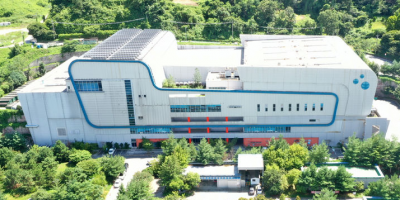
The Gwangju Regional Sanitary Landfill is a facility established to treat municipal solid waste generated in Gwangju City and Gokseong County. Its landfill capacity is limited. Landfilling began in January 2005, and as of December last year, about 49% of the total landfill capacity had been used.
To improve the efficiency of landfill use, Gwangju City installed the SRF manufacturing facility and entrusted its operation to Cheongjeong Bitgoeul Co., Ltd. starting in 2017. The SRF manufacturing facility processes municipal solid waste into fuel, thereby reducing the volume of waste sent to the landfill.
However, operation of the facility was suspended for about four years from 2018 to 2021 because the permitting process for fuel use at Korea District Heating Corporation’s Naju SRF combined heat and power plant was delayed. The city stated that even after the facility resumed operation in 2022, the volume of municipal solid waste processed was limited due to maintenance and other reasons.
In September to October 2025, the operator voluntarily shut down the facility to comply with an administrative order from Gwangju Nam-gu District Office after emissions exceeded the permitted odor threshold.
Gwangju City stated that, due to the abnormal operation of the SRF manufacturing facility, all waste that could not be converted into fuel was instead sent to the landfill, increasing the landfilled volume by about 1 million tons. The city explained that this represents approximately 33% of the total 3.06 million tons landfilled since 2005.
The city calculated the damages at 29.3 billion won, reflecting the costs of constructing and developing the landfill.
Lee Sangbae, Director General of Climate and Environment for Gwangju City, said, “Because the entrusted operator failed to operate the facility normally, the Gwangju Regional Sanitary Landfill, whose lifespan is limited, has suffered damage,” adding, “Through this damages lawsuit, we will determine the specific extent of the losses.”
© The Asia Business Daily(www.asiae.co.kr). All rights reserved.
![Clutching a Stolen Dior Bag, Saying "I Hate Being Poor but Real"... The Grotesque Con of a "Human Knockoff" [Slate]](https://cwcontent.asiae.co.kr/asiaresize/183/2026021902243444107_1771435474.jpg)
















