As Russia's war with Ukraine, which began on February 24, 2022, drags into its fifth year, serious problems are emerging, including corporate labor shortages, rising crime and corruption, and weakening social cohesion caused by tighter controls over the internet and public protests.
John F. Tefft, who served as U.S. Ambassador to Russia from 2014 to 2017, made this assessment in an article titled "The War Is Coming Home to Russia," posted on February 20 on the website of the RAND Corporation, a U.S. defense and public policy think tank. The following is a summarized and organized version of his article.
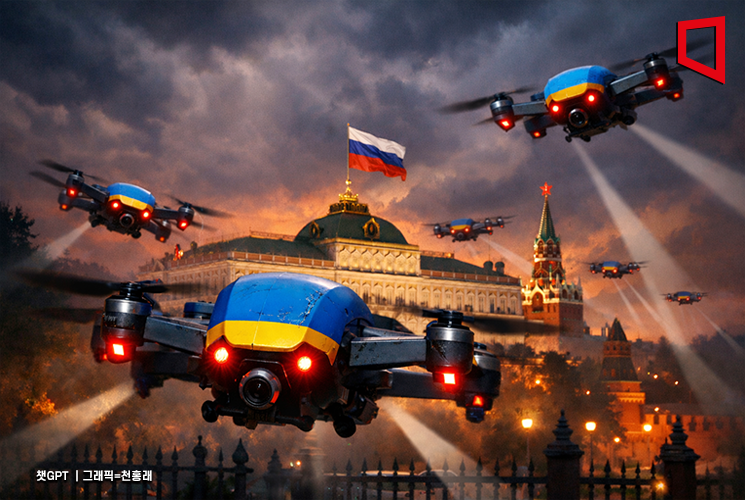
From the early stages of its so?called "special military operation," Russia tried to ensure that the war would not affect the daily lives of ordinary citizens, especially residents of Moscow and St. Petersburg, but the situation is no longer unfolding as intended. Ukrainian attacks on military and oil refinery facilities across Russia have caused significant damage and have even led to gasoline shortages.
Western sanctions are putting additional pressure on Russia's already fragile economy. Combined with massive military expenditures that account for 8% of gross domestic product (GDP), the sanctions are restricting the inflow of long?term capital needed for the civilian economy. Russia's energy revenues fell by about 20% in 2025. Fiscal problems are deepening, and the country may be on the brink of a severe recession. The fiscal deficit in 2025 reached 2.5% of GDP, five times the level expected at the beginning of the year. To boost tax revenues, the value?added tax (VAT) has been raised, and a "technological fee" will be imposed on imported electronic devices and home appliances.
Beyond economic issues, evidence is mounting of the war's long?term, negative impact on Russian society. Rising crime and corruption and the intensification of political repression all point to looming social unrest and weakening cohesion.
The impact of population decline
First, the impact of population decline is a major concern. Despite the Russian government's decades?long efforts to promote childbirth, the official fertility rate stands at 1.78 children per woman, no different from the level in 1991. Experts estimate that the actual fertility rate is around 1.5 (2.1 is needed just to maintain the population).
The war could further worsen mortality. The Center for Strategic and International Studies (CSIS) estimates that Russian military casualties could reach up to 1.2 million, including about 325,000 deaths. Ukrainian casualties are estimated at between 500,000 and 600,000, including 100,000 to 140,000 deaths.
The war is already dealing a major blow to Russia's labor market. Labor shortages are severe. The Russian minister of labor has reportedly stated that the country will face a shortfall of 2.4 million workers by 2030. Some estimates are even higher. Young men can earn more than in civilian jobs by joining the military, where they receive large bonuses.
As a result, companies are being forced to raise wages, which is driving up costs and fueling inflation (the official figure for September 2025 was 6-7%, but the real rate is likely higher). In the past, Russia relied on migrant workers from Central Asia, but their numbers have declined since the Crocus City Hall terrorist attack in 2024 (a mass shooting and arson attack at "Crocus City Hall" on the outskirts of Moscow on March 22, 2024, in which the death toll rose into the hundreds) and the subsequent tightening of security. Russia is now turning to workers from India and Sri Lanka.
Returning soldiers and rising crime
In January this year, Russian state media reported that about 250,000 combat veterans were unemployed. The report was quickly deleted, as memories still linger of the surge in crime and social unrest when veterans returned from the war in Afghanistan.
The government is trying to help soldiers reintegrate into society, but this is proving difficult. While financial resources exist, the capacity of social infrastructure such as healthcare and law enforcement is insufficient. Veterans may become discontented because they can earn only a fraction of what they made while in service. President Vladimir Putin recognizes this as a political risk and is working to prevent social unrest.
One of the most striking changes since the start of the war has been the rise in crime. In a 2025 paper, V. A. Maslov of the Ural Law Institute wrote, "The special military operation has, to some extent, affected the lives of all Russians. It is influencing the current crime situation and will inevitably affect crime rates in the future." He pointed to crimes committed by pardoned inmates, crimes related to post?traumatic stress disorder (PTSD), the spread of high?income, firearms?related skills, fraud targeting soldiers' families, social problems affecting the families of returning soldiers, forced displacement, extremism, and war crimes.
The independent outlet Novaya Gazeta reported that since 2022 more than 8,000 people have been convicted of civilian crimes, and about 7,000 of them were returning soldiers. About 900 committed violent crimes, and at least 423 people were killed. Some 27% had criminal records even before the war. Putin has pardoned 656 of them.
Spreading corruption and political repression
Corruption has been rampant since Soviet times and has increased further since the war began. In Transparency International's 2025 Corruption Perceptions Index, Russia ranked 157th out of 182 countries, with a score of 22 out of 100. The report stated, "Because of the full?scale war, the crackdown on civil society, attacks on independent media, and the refusal to ensure transparency in public procurement and budget management, corruption is becoming the norm rather than the exception." During the war, bribery cases nearly doubled, and the average bribe reached 1 million rubles (about 18.8 million won). The military and the defense industry are the core drivers.
Repression has steadily intensified since the war began. In an article in Foreign Affairs, Professor Nina Khrushcheva wrote, "Various restrictions have been expanded, including book bans, limits on access to social networking services (SNS), crackdowns on protests, and repression of LGBT people and feminism. The 'foreign agent' law, created in 2012 to identify individuals and organizations receiving international funding, has become a tool to punish dissenters."
The list of "foreign agents" has grown from 300 at the beginning of 2022 to more than 1,100 today. The Kremlin has even begun cracking down on hard?line nationalists. Internet controls are also being tightened, and a bill is being pushed that would allow the Federal Security Service (FSB) to cut off communications. In the long term, this will weaken social cohesion.
Former Ambassador John F. Tefft
© The Asia Business Daily(www.asiae.co.kr). All rights reserved.

















