Kidney stones kept by homeowner stolen by thieves
Total damage amounts to only about 250,000 won
In Italy, thieves mistook kidney stones for valuables and stole them in a bizarre incident.
According to local media reports including ANSA, a burglary took place on February 17 (local time) in Pordenone in northern Italy. The thieves targeted the home of Giuseppe Ragogna, former editor-in-chief of the well-known local daily newspaper "Messaggero Veneto." They entered the house through the terrace and searched the interior thoroughly.
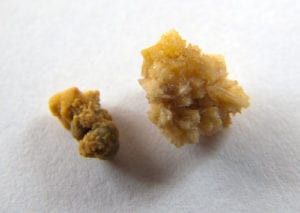
According to the media, the burglars ignored small amounts of cash and instead opened drawers and ceilings until they discovered a small box. Inside the box were several small pebbles that appeared to be minerals. Believing these minerals to be "rare gemstones," the thieves took all of them and fled the scene before the homeowner returned.
However, what they stole was neither rare minerals nor gemstones. It was kidney stones that Ragogna had recently passed. Ragogna said, "I was keeping the stones that had been removed after surgery in a small box, and they (the thieves) must have thought it was something valuable," adding, "I do not keep valuables such as jewelry or cash at home in the first place in order to avoid burglaries."
In the end, what the burglars took in terms of money was Ragogna's hobby collection of coins and banknotes from various countries, totaling only about 150 euros (around 250,000 won). Ragogna reported the incident to the police immediately afterward.
Kidney stones are a condition in which minerals containing bodily waste harden and form stones in the kidneys. They are also called urinary stones or urolithiasis. They do not usually have much impact on the body, but if the stones grow larger over time, they can later cause severe pain in areas such as the flank and back. In some cases, they can also lead to hematuria (blood in the urine).
Small stones less than 4 mm in size are usually allowed to pass naturally through urine, but if they become too large, they may be removed through extracorporeal shock wave lithotripsy (a treatment that breaks up the stones by generating shock waves from outside the body toward the kidneys) or surgery. Since kidney stones are caused by a lack of water in the urine, which leads to the concentration of waste products, they should be prevented through consistent fluid intake and dietary control.
© The Asia Business Daily(www.asiae.co.kr). All rights reserved.
![Clutching a Stolen Dior Bag, Saying "I Hate Being Poor but Real"... The Grotesque Con of a "Human Knockoff" [Slate]](https://cwcontent.asiae.co.kr/asiaresize/183/2026021902243444107_1771435474.jpg)















