China's Average Tariff Rate to Fall 7.1 Percentage Points
Canada, Vietnam and Others Also Expected to Enjoy "Windfall Gains"
Tariff Rates Unchanged for Korea but Fears of Price Disadvantage
Significant Overlap with Star Export Items of Korean SMEs
Immediately after the U.S. Supreme Court ruled that reciprocal tariffs were illegal, President Donald Trump pulled out a flat 15% tariff card, prompting growing concern among Korean small and medium-sized enterprises (SMEs) about a potential weakening of their export competitiveness. Although the tariff rates applied to Korean companies themselves have not changed significantly, concern is mounting because some competing countries such as China, Vietnam, and Canada are expected to enjoy windfall gains.
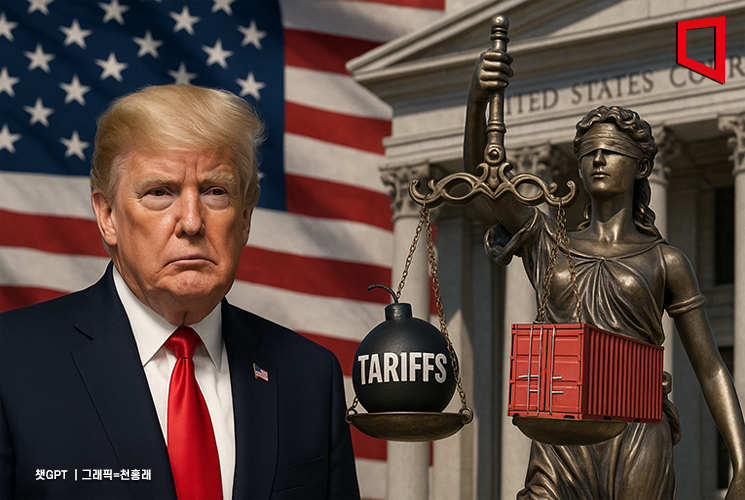
According to related industries on the 24th, Korean SMEs are on high alert over the possibility that lower average tariff rates for some competing countries could create a price disadvantage for Korean products. The previous 15% reciprocal tariff imposed by the Trump administration has been removed and replaced with a new flat 15% tariff based on Section 122 of the Trade Act, opening the door for competing countries to enjoy a relative "benefit."
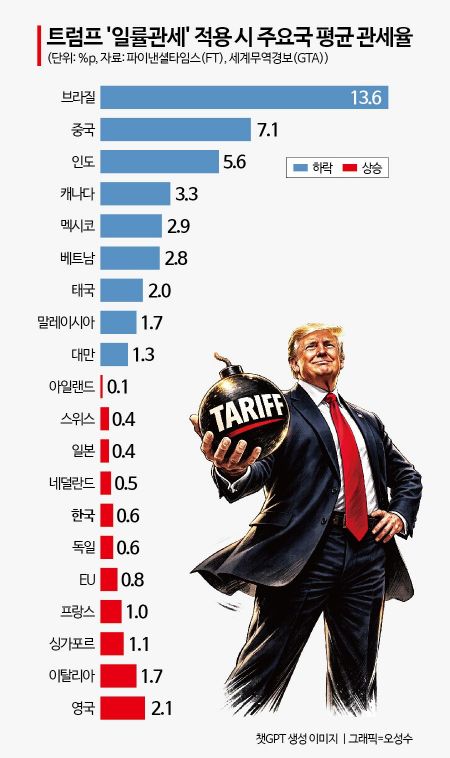
According to data released the previous day by the trade research institution Global Trade Alert (GTA), this ruling is expected to lower the average tariff rates of Brazil and China by 13.6 percentage points and 7.1 percentage points, respectively. Southeast Asian countries such as Canada (3.3 percentage points), Vietnam (2.8 percentage points), and Thailand (2.0 percentage points) have also been classified as beneficiaries of tariff reductions under the new measure. In contrast, Korea's average tariff rate is projected to rise by 0.6 percentage points from the previous level, which could increase the burden of price management.
Tensions are rising in particular because the export bases of some countries whose U.S.-bound tariff rates have been cut overlap significantly with the "star export items" of Korean SMEs. According to the Ministry of SMEs and Startups, exports of cosmetics by Korean SMEs reached a record high of 8.3 billion dollars last year, driving overall exports.
In the U.S. cosmetics market, Korea’s largest export destination, France (the No. 2 exporter as of 2024), Canada (No. 3), and China (No. 5) have consistently ranked alongside Korea at the top, and they are cited as countries that are locked in direct price competition with Korean products. Apparel, which recorded the second-strongest online export performance after cosmetics with total exports of 1,007,000 dollars, also faces stiff competition, as China, Vietnam, and India together account for about 30% of the U.S. market.
The Ministry of SMEs and Startups plans to closely monitor the impact of the new tariff regime on Korean SMEs and to prepare countermeasures. For now, it is preparing initial consulting to guide companies on refund methods and schedules in case tariff refunds are confirmed and formal procedures begin.
An official at the Ministry of SMEs and Startups said, "We are concerned that some export competitors will now receive the same tariff conditions as Korea," adding, "At this stage, we are focusing primarily on providing tariff refund consulting for SMEs that have limited capacity to respond, but we will continue to monitor the situation and stand ready to take additional measures at any time."
© The Asia Business Daily(www.asiae.co.kr). All rights reserved.
![Clutching a Stolen Dior Bag, Saying "I Hate Being Poor but Real"... The Grotesque Con of a "Human Knockoff" [Slate]](https://cwcontent.asiae.co.kr/asiaresize/183/2026021902243444107_1771435474.jpg)
















