Close Monitoring of Flat-Slab Buildings... Substantial Improvements Toward Zero Defects
"Strengthening the System from Register Management to Post-Completion Maintenance"
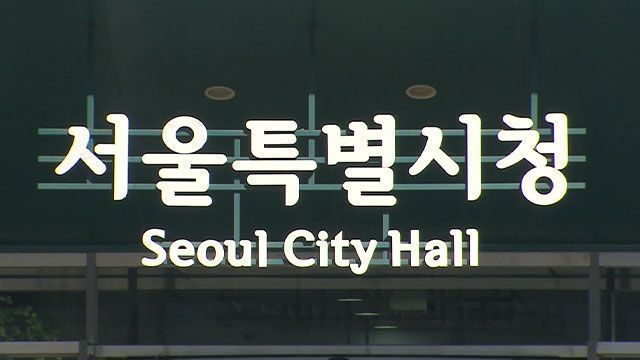
The Seoul Metropolitan Government announced on the 24th that it will establish an "integrated safety network" that covers flat-slab structure buildings from design through post-completion maintenance.
A flat-slab structure building is one in which the floor slab is connected directly to vertical columns without beams such as girders. Because loads are concentrated on the slab around the columns, rigorous safety management is required.
The city plans to create a register that allows officials to grasp all flat-slab structure buildings and construction sites at a glance, thereby eliminating blind spots in management. Starting with the 314 sites currently identified, it plans to build an integrated management network that will be continuously updated to reflect newly commenced projects and the status of buildings that meet the standard criteria.
At the design stage, the scope of structural safety verification will be expanded. Currently, even if a building uses a flat-slab structure, it is classified as a special-structure building and subject to structural safety review only when the flat-slab portion exceeds a certain ratio. The city plans to propose a revision of the relevant laws and regulations to the Ministry of Land, Infrastructure and Transport so that all flat-slab structures, regardless of ratio, are included within the category of "special-structure buildings."
During construction, a "dedicated checklist" tailored to the characteristics of flat-slab structures will be used to identify risk factors in advance, while safety inspections will be carried out in parallel to strengthen on-site checks. In particular, the city will focus on checking for deflection and cracks in the slabs around columns, and, when necessary, will mobilize equipment such as rebar detectors to thoroughly inspect concrete strength and reinforcement conditions.
The city will also disseminate these safety management practices and strengthen safety capabilities through the "Seoul Architectural Safety Seminar" and training sessions for construction-related personnel held twice a year.
In addition, the city plans to ensure that a dense follow-up management system continues to operate after completion. It will propose functional improvements to the building management system to the Ministry of Land, Infrastructure and Transport so that the "presence or absence of a flat-slab structure" can be clearly indicated, enabling managers to access essential building management information even when personnel change. The city will also provide management entities with enhanced inspection standards so that inspections, repairs, and other safety management activities continue after a building is completed.
For multi-family housing, the city will require that flat-slab structures be a key focus during mandatory semiannual inspections, and, when necessary, will deploy the "Seoul Quality Inspection Team" to carry out detailed inspections so that issues can be detected and addressed at an early stage before problems arise.
Kim Sungbo, Second Vice Mayor for Administrative Affairs of the Seoul Metropolitan Government, said, "By strengthening a full life-cycle safety management system, from maintaining a register of flat-slab structure buildings to post-completion maintenance, we will build a safe city where citizens can feel secure."
© The Asia Business Daily(www.asiae.co.kr). All rights reserved.
![Clutching a Stolen Dior Bag, Saying "I Hate Being Poor but Real"... The Grotesque Con of a "Human Knockoff" [Slate]](https://cwcontent.asiae.co.kr/asiaresize/183/2026021902243444107_1771435474.jpg)















