Sharp gains in industrials, materials, utilities, and consumer staples
The Wall Street Journal (WSJ) reported on the 22nd (local time) that Wall Street money, which had been enthusiastic about artificial intelligence (AI), is now shifting from technology stocks represented by the M7 (Microsoft, Meta, Amazon, Alphabet, Apple, Nvidia, Tesla) to so-called "HALO" (Heavy Assets, Low Obsolescence) stocks.
"HALO" refers to companies that hold high-value assets and face a low risk of business obsolescence due to AI. They can be considered AI-immune stocks. Fast-food chain McDonald’s, energy company ExxonMobil, and tractor manufacturer Deere are cited as examples. Josh Brown, CEO of Ritholtz Wealth Management, who coined the term "HALO," said, "These are not the kinds of companies you can just shake up by typing something into a prompt," adding, "Every time uncertainty hits, people re-evaluate everything they thought they were sure of."
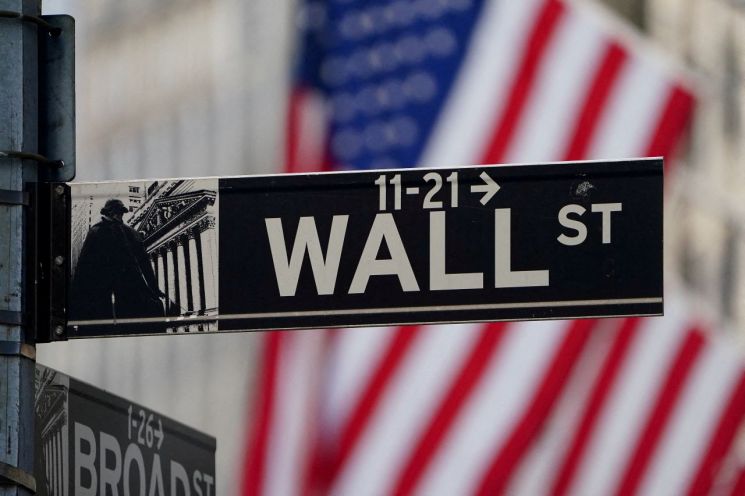
Over the past month, industrials, materials, utilities, and consumer staples sectors in the S&P 500 index have all surged, outperforming the overall index. In particular, the consumer staples sector posted its best performance on record from the beginning of the year through the 20th. In contrast, technology companies, including the M7 big tech names, have been sluggish. Since Anthropic announced "Claude CoWork" earlier this month, about 300 billion dollars in market capitalization has been wiped out from software, financial data, and exchange-related stocks that are expected to be hit directly by AI automation tools. When AI-based logistics platform company Algorithm Holdings issued an AI-related press release, transportation stocks suffered their worst decline since the announcement of reciprocal tariffs in April last year.
These fluctuations have opened a new chapter in the trend of capital rotating into real-economy stocks that has continued in recent months. After the Nasdaq index hit an all-time high in October last year, the drivers of the market rally broadened from a small number of AI-related names to a wide range of blue chips, small and mid-cap stocks, and overseas equities. This reflected expectations of accelerating economic growth. However, in recent weeks, WSJ explained that the moves appear less like a bet on growth prospects and more like a flight into safe assets to avoid rising AI-related uncertainty.
CEO Brown analyzed that as investors seek havens, the traditional binary distinction between risk-on and risk-off is breaking down. Even within the same asset class, only stocks that are less exposed to technological change are perceived as safe. For example, Delta Air Lines’ share price has risen 5.4 percent this month, while online travel information site Expedia’s share price has plunged 23 percent. This is because AI can help find the cheapest airfares, but it cannot replace the service of actually boarding an airplane.
Some, however, argue that the HALO boom will not last long. The Nasdaq index outperformed the Dow Jones Industrial Average 30 last week, showing a modest rebound in tech stocks, and on the 20th the U.S. Supreme Court ruled that President Trump’s reciprocal tariff policy was illegal, lifting the stock market across the board. Data storage companies Seagate and Western Digital are among the top performers in this year’s S&P 500 index. According to analysts at JPMorgan, large-cap stocks such as Microsoft, Palantir, and Amazon account for most of the net buying by individual investors.
Jed Ellerbrock, portfolio manager at Argent Capital Management, analyzed that concerns about excessive technology spending in big tech’s competitive race, combined with recent volatility, have led to a kind of evolution in the AI investment boom. "We think we have entered a new phase, and this phase will be defined by companies proving it with their results," he said, adding, "Exaggeration will no longer work."
© The Asia Business Daily(www.asiae.co.kr). All rights reserved.
![Clutching a Stolen Dior Bag, Saying "I Hate Being Poor but Real"... The Grotesque Con of a "Human Knockoff" [Slate]](https://cwcontent.asiae.co.kr/asiaresize/183/2026021902243444107_1771435474.jpg)
















