Out of the world’s 70 largest economies, 52 countries (including the 27 member states of the European Union) have introduced new trade barrier measures and investigations in response to market distortions caused by China’s excessive exports. However, an analysis has found that many of the countries that had raised their trade barriers against China last year, amid the Trump administration’s all-out tariffs, have slowed or halted the introduction of new measures.
The assessment is that many countries are easing trade restrictions on China because they are more exposed to the short-term pressure created by U.S. tariffs than to the long-term problem of their own manufacturing sectors being gradually weakened by China.
According to the “Trade Defenses Map” released on February 19 by the Mercator Institute for China Studies (MERICS), a European think tank, many countries have adopted measures to counter China’s low-priced export offensive, but the actual intensity of these policies has clearly weakened.
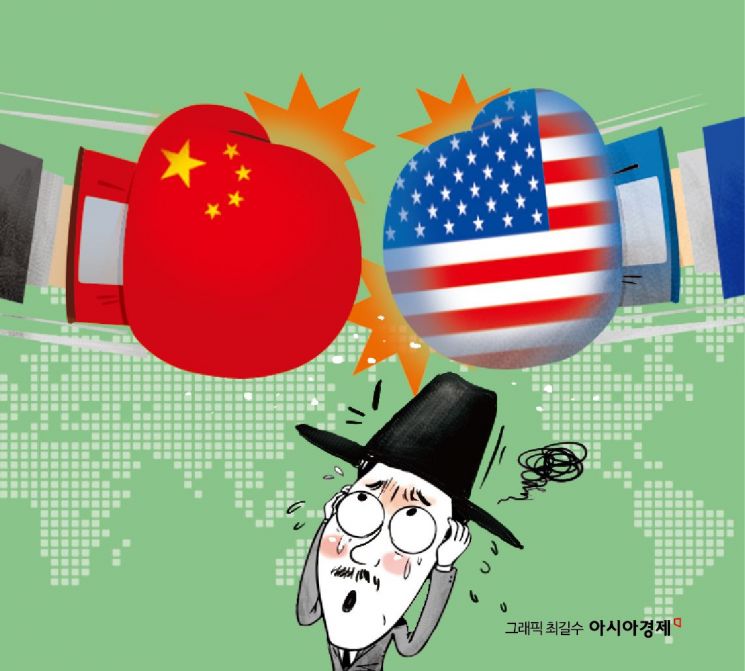
As the United States has imposed broad tariffs not only on China but also on its allies, governments have begun to prioritize their policy response to the United States over efforts to contain China. As a result, some countries are moving to recalibrate their trade relations with Beijing. A prime example is Canada, which imposed 100% tariffs on Chinese electric vehicles in 2024 but, through a trade agreement with China concluded this January, agreed to improve export conditions for Canadian canola, crab, lobster, and peas in exchange for allowing duty-free imports of up to 49,000 Chinese electric vehicles and encouraging Chinese investment in its electric vehicle sector.
Experts interpret this as a “strategic rebalancing.” As the strengthening of U.S. protectionism is creating a greater short-term economic burden, countries are increasingly inclined to use China as an alternative market or cooperation partner.
This shift, however, manifests differently across countries. Advanced economies, judging that their industrial bases are relatively solid, are willing to tolerate a certain increase in imports from China. In contrast, some emerging economies such as India, Brazil, Turkey, and Mexico are actually reinforcing trade barriers to protect their domestic industries. India faces a geopolitical conflict with China over a border dispute, while Brazil and Turkey aim to grow into industrial hubs in their own right. Mexico is closely integrated with the North American market.
Even so, overall momentum for tightening trade barriers against China is slowing. In reality, despite various national regulations, Chinese exports have continued to grow. Last year, China’s trade surplus expanded by 20% year-on-year to 1.2 trillion dollars, reaching a record high.
Experts say this trend is creating a favorable environment for China. For a country grappling with sluggish domestic demand and industrial overcapacity, it effectively buys time by allowing China to continue expanding its exports.
MERICS noted, “In the medium to long term, however, policy directions could shift again,” adding, “As countries gradually adapt to the shock of U.S. tariffs, it is highly likely that China’s overproduction and low-price export practices will once again become a core policy agenda.” It went on to say, “Ultimately, the current global trade environment has entered a transitional phase in which short-term pressures and long-term industrial strategies are colliding.”
© The Asia Business Daily(www.asiae.co.kr). All rights reserved.
![Clutching a Stolen Dior Bag, Saying "I Hate Being Poor but Real"... The Grotesque Con of a "Human Knockoff" [Slate]](https://cwcontent.asiae.co.kr/asiaresize/183/2026021902243444107_1771435474.jpg)















