Bessent: "They want to maintain the existing agreements"
Greer: "Section 301 investigations are underway"
Governments likely to maintain agreements and wait and see
Section 122 of the Trade Act could lower the effective tariff rate
Tariff imposition could effectively be deferred
Trump’s potential retaliation cannot be ignored if agreements are scrapped
The U.S. Supreme Court has ruled that a trade agreement the administration concluded with foreign countries is illegal, but the administration's key aides have made it clear one after another that they will not back down. Following President Donald Trump’s move to reimpose a “10% global tariff,” the administration has now moved to investigate unfair practices by trading partners. The latest actions are being interpreted as an attempt to keep countries from withdrawing from the trade deal in response to the ruling. Some observers also forecast that, because of the possibility of U.S. retaliation, it will be difficult for governments to revoke existing agreements.
U.S. administration strikes back: "We have many other cards"
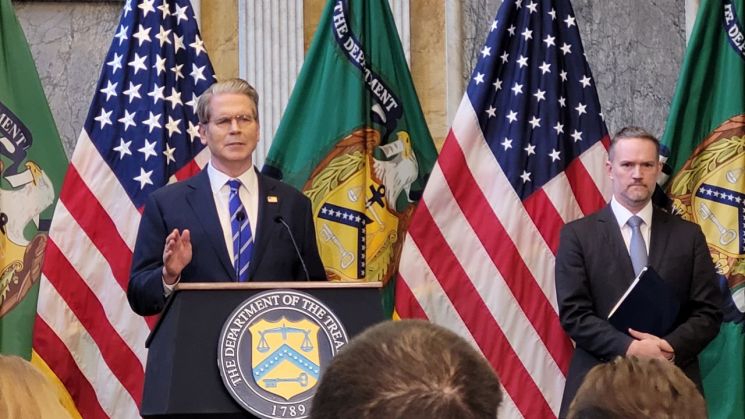
U.S. Treasury Secretary Scott Bessent said in an interview with CNN on the 22nd (local time), “We are in continued contact with our foreign trading partners, and all of them want to maintain the trade agreements that have already been concluded.” Secretary Bessent emphasized again, “What the Supreme Court decided is that tariffs cannot be imposed under the International Emergency Economic Powers Act (IEEPA),” adding, “The President has other authorities.”
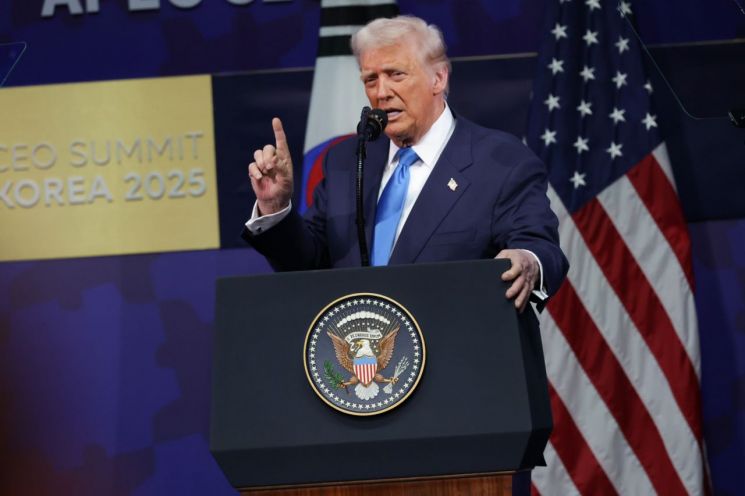
After the Supreme Court’s illegality ruling, President Trump signed a proclamation on the 20th to raise tariffs by an additional 10% on countries trading with the United States, based on Section 122 of the Trade Act. The next day he then declared, “I will raise the tariff rate to 15%.” Section 122 of the Trade Act stipulates that the President may impose tariffs of up to 15% for up to 150 days in response to balance-of-payments problems. President Trump then wrote on Truth Social, “Over the coming months, I will decide on and announce new tariffs that are legally permissible.”
To keep Section 122 in place beyond 150 days, congressional approval is required. Secretary Bessent explained, “Section 122 of the Trade Act is more of a bridge than a permanent measure,” and added, “During that period, the tariff investigations under Section 232 of the Trade Expansion Act and Section 301 of the Trade Act can be completed, and after five months Section 122 may no longer be necessary.” He said, “Tariffs under Section 232 of the Trade Expansion Act and Section 301 of the Trade Act have withstood more than 4,000 lawsuits since Trump’s first term,” and added, “In the end, we will be able to maintain the same tariff levels as before.”
That day, U.S. Trade Representative (USTR) Jamison Greer said in an interview with ABC that the administration is using Section 301 of the Trade Act to investigate unfair practices by trading partners. “We have launched investigations into Brazil and China,” he said, adding, “We also plan to begin an investigation into excess production capacity. This will address several Asian countries with excess capacity. They produce more than they can consume, and instead of following basic economic principles, they simply build factories and maintain employment, collapsing prices globally.” Section 301 of the Trade Act allows the USTR to investigate and then recommend retaliatory tariffs if it determines that a foreign government’s trade practices are harming U.S. industry. Because there is no cap on tariff rates and specific countries and specific industries can be targeted, it was used in the past as the legal basis for high tariffs on China.
"Governments likely to maintain agreements"...Retaliation cannot be ignored
Amid these moves by the Trump administration, governments are expected to maintain the tariff deals and wait and see. Andrew Wilson, Deputy Secretary General of the International Chamber of Commerce (ICC), said, “Based on recent discussions with governments, I do not expect any country to withdraw immediately from the agreements that have been concluded so far.”
If alternative tariffs based on the Trade Act are applied, the effective tariff rate could also decline. Hana Securities analyzed that if tariffs on all items are imposed under the Trade Act, the effective tariff rate could rise. However, it projected that if exemptions for items that were previously excluded are maintained, the effective rate could fall by around 1.5 percentage points. When announcing the alternative tariffs, the White House decided to exempt from tariffs certain key minerals such as natural resources that are difficult to produce in the United States, as well as pharmaceuticals, certain electronic products, passenger cars, and certain aerospace products.
There could also be a tariff-deferral effect. Section 122 of the Trade Act expires at the end of August, three months before the midterm elections in November. The likelihood of implementing new measures such as Section 301 of the Trade Act or Section 232 of the Trade Expansion Act is low at that time. If the Trump administration does not move with this in mind, a de facto deferral of tariff imposition could occur.
Fear of retaliation by the Trump administration is also cited as a reason for maintaining a wait-and-see stance. The Financial Times (FT) reported that the European Union (EU), Japan, and South Korea are unlikely to scrap the agreements because they fear retaliation. Nicolas Koehler-Suzki, adviser on economic security at the Jacques Delors Institute, said, “The agreement with the EU will be maintained,” and explained, “If additional tariffs are imposed again on automobiles, it could have a huge impact on the economy, so breaking the agreement would be difficult.”
© The Asia Business Daily(www.asiae.co.kr). All rights reserved.
![Clutching a Stolen Dior Bag, Saying "I Hate Being Poor but Real"... The Grotesque Con of a "Human Knockoff" [Slate]](https://cwcontent.asiae.co.kr/asiaresize/183/2026021902243444107_1771435474.jpg)













