Maximizing Growth in High-Potential Markets
Sales in India, Saudi Arabia, and Brazil Up 20%
Launching Region-Specific Products and Building Infrastructure
LG Electronics is accelerating its growth in the Global South. In key markets such as India, Saudi Arabia, and Brazil, the company has set a goal of doubling sales by 2030 and is reinforcing its region-specific and localization strategies.
According to LG Electronics on February 22, combined sales in 2025 from India, Saudi Arabia, and Brazil, which the company has designated as the leading countries driving its Global South growth strategy, reached 6.2 trillion won, an increase of more than 20% compared with 2023, two years earlier. This figure is more than double the overall corporate sales growth rate over the same period. Despite the global economic downturn and delayed demand recovery, the company is posting growth based on the unique potential of emerging markets.
LG Electronics has drawn up a plan to double its current sales in these countries by 2030. CEO Ryu Jaecheol also publicly committed to this objective in his first message to employees after taking office late last year. The strategy is to maximize growth in high-potential markets and use it as a springboard for the company’s mid- to long-term growth, while at the same time improving the health of its regional portfolio, which has been heavily concentrated in advanced markets such as Korea, North America, and Europe.
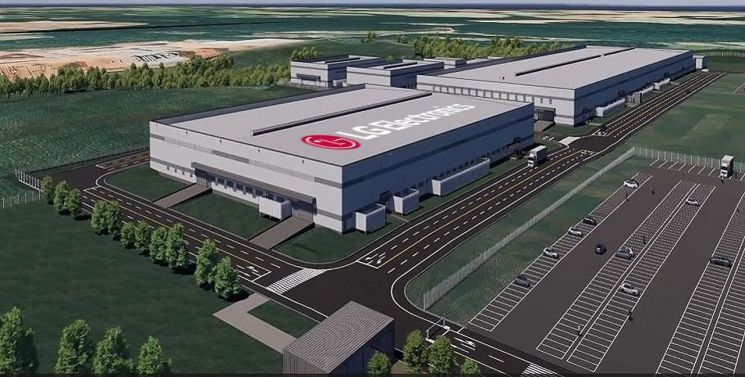 An aerial rendering of LG Electronics' new production plant under construction in the state of Parana in southern Brazil, aimed to be operational within the year. LG Electronics.
Brazil, the world’s 11th-largest economy, is seeing purchasing power rise thanks to policies supporting low-income households. LG Electronics is preparing for a full-scale push into the Brazilian market by expanding its local production base. In India, the world’s most populous country, LG Electronics leads the market as the No. 1 brand in major home appliances. With household appliance penetration at only 20% to 30%, there is still very substantial room for further growth. In Saudi Arabia, there are many B2G (business-to-government) and B2B (business-to-business) opportunities linked to state-led policies and development projects under Vision 2030.
In the southern Brazilian state of Paran?, LG Electronics is investing more than 200 million dollars to build a new production facility with a site area of 767,000 square meters and a total floor area of 70,000 square meters, aiming to begin operations within the year. The new plant will produce premium products and models tailored to local needs. It will help secure cost competitiveness in response to growing local demand for home appliances and serve as a bridgehead for targeting the South American home appliance market by producing export volumes for neighboring countries.
Once the new plant under construction in Paran? is combined with the existing production base in Manaus in the northern state of Amazonas, LG Electronics’ local production capacity for premium home appliances and components in Brazil is expected to increase to 7.2 million units per year.
In India, LG Electronics recently introduced the “Essential Series,” a line of India-exclusive home appliances developed with local customers’ tastes, lifestyles, and purchasing power in mind. The Essential Series consists of washing machines, air conditioners, and refrigerators, which young middle-class households in India regard as “essential appliances.”
The India-exclusive washing machine is designed to ensure stable water intake even in areas with low water pressure. It is also equipped with a special washing function for hard water, where detergent does not dissolve well. The air conditioner is engineered to provide powerful cooling even in the harsh local summer heat, when temperatures can rise to as high as 55 degrees Celsius. The refrigerator significantly expands the capacity of the fresh food compartment, taking into account cultural characteristics such as a large vegetarian population for religious reasons. On the exterior, a sparkling floral pattern has been applied to suit local preferences for bold, ornate designs.
In Saudi Arabia, LG Electronics entered the market in 1995 through a partnership with Shaker, the country’s largest home appliance distributor, and has maintained a strong collaboration for nearly 30 years. The two companies are also jointly carrying out research and development on region-specific technologies, such as HVAC (heating, ventilation and air conditioning) systems that deliver optimal efficiency in extremely hot climates.
The localization of business infrastructure and the development of region-specific technologies are translating into new business opportunities. Last year, LG Electronics signed a series of large-scale supply business agreements for Saudi government-led development projects. These include supplying cooling solutions for the Middle East’s largest “Net Zero AI Data Center” within a smart city development project, as well as providing AI home and smart solutions for a high-end residential complex construction project.
LG Electronics is also continuing region-tailored social contribution activities in these markets. Rather than simply pursuing profit, the company aims to achieve sustainable growth together with local communities by fulfilling its responsibilities and demonstrating commitment to the regions.
In India, where enthusiasm for education is high, the company operates the LG HOPE Technical Skill Academy. This initiative provides underprivileged youth with free training in repair skills and service capabilities for electronic and IT (information technology) products, helping them become self-reliant. To date, about 1,200 people have participated in the program. Through the LG LIFE'S GOOD Scholarship Program, the company is also supporting more than 2,200 underprivileged students at 78 universities.
In Brazil and Saudi Arabia, LG Electronics is creating synergies by aligning with national-level welfare programs and policy directions. In Brazil, in step with “Bolsa Familia,” a livelihood support program for low-income households, employees are taking part in activities to deliver food baskets to low-income families. In Saudi Arabia, employees are volunteering to plant trees as part of “Green Riyadh,” the world’s largest urban greening project.
© The Asia Business Daily(www.asiae.co.kr). All rights reserved.
![Clutching a Stolen Dior Bag, Saying "I Hate Being Poor but Real"... The Grotesque Con of a "Human Knockoff" [Slate]](https://cwcontent.asiae.co.kr/asiaresize/183/2026021902243444107_1771435474.jpg)















