Backlash on social media after ruling against "reciprocal tariffs"
Announces plans for "alternative tariffs" under Sections 122 and 301 of the Trade Act
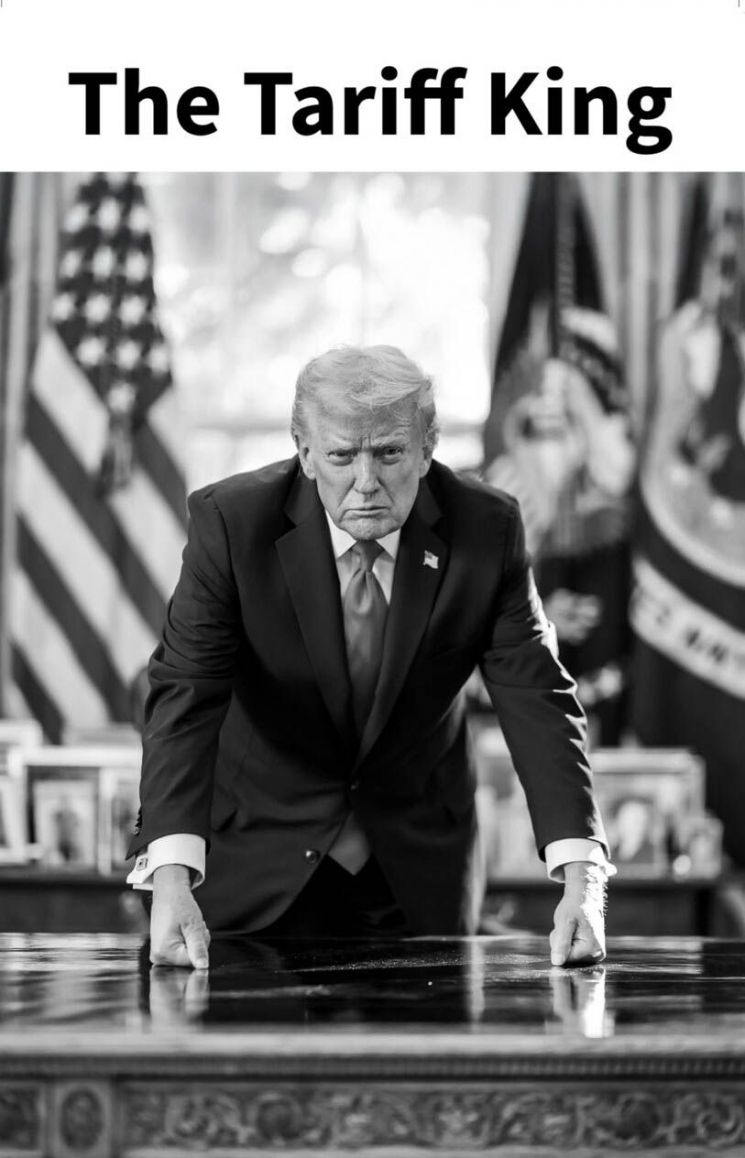
U.S. President Donald Trump reacted to the Supreme Court's ruling that his "reciprocal tariffs" were unlawful by announcing that he would impose an additional 10% tariff on all exports to the United States from around the world and would also proceed with other tariff-imposition measures.
President Trump said at a press conference held at the White House on the 20th (local time), after the Supreme Court ruling, that he would sign that day an executive order imposing an additional 10% tariff on the entire world under Section 122 of the Trade Act. He said he expected this tariff to take effect in three days.
President Trump said he was "very disappointed" with the Supreme Court's decision, adding, "The good news is that the entire Supreme Court and Congress, which handed down this terrible ruling, also recognize that there are tools, methods, regulations, and authorities that are stronger than tariffs under IEEPA."
President Trump cited as alternative tools to IEEPA for imposing tariffs Section 232 of the Trade Expansion Act, Sections 122, 201, and 301 of the Trade Act, and Section 338 of the Tariff Act.
Section 122 of the Trade Act, which President Trump presented as the basis for imposing the additional 10% tariff, allows the president to temporarily impose tariffs or set import quotas in order to respond to balance-of-payments problems.
Specifically, tariffs may be imposed in order to respond to a large and serious U.S. balance-of-payments deficit, to prevent an imminent and substantial devaluation of the dollar in foreign exchange markets, and to cooperate with other countries in correcting balance-of-payments imbalances.
However, tariffs imposed under Section 122 of the Trade Act may not exceed 15% and may remain in effect for only 150 days unless extended by Congress.
President Trump said, "During that period of about five months, we will conduct various investigations necessary to impose fair tariffs, or just tariffs, on other countries," adding, "Ultimately, I think we will collect more money than before."
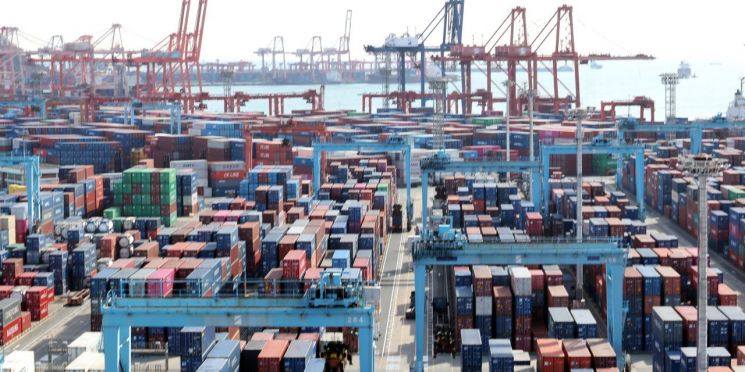
At the same time, President Trump also announced that the administration would initiate a tariff investigation under Section 301 of the Trade Act. Section 301 grants the administration the authority to respond, including through the imposition of tariffs, to unfair, unreasonable, and discriminatory acts, policies, and practices of foreign governments that restrict or burden U.S. trade.
Jamieson Greer of the Office of the United States Trade Representative (USTR) said at the press conference that "the legal basis for a Section 301 investigation under the Trade Act is very strong." President Trump did not specify which country or countries would be subject to an investigation under Section 301.
In the case of Korea, U.S. investment firms holding shares in Coupang previously invoked Section 301 of the Trade Act last month when they petitioned the Trump administration to investigate what they called Korea's "unfair and discriminatory actions" and to impose tariffs, criticizing the Korean government's response to Coupang's personal data leak incident.
President Trump did not clearly state his position on the possibility of renegotiating trade agreements that were concluded using IEEPA tariffs as leverage. When asked whether trade agreements concluded with other countries using IEEPA tariffs remain valid, he replied, "Most are valid. Some will not be valid, and those will be replaced with other tariffs."
When asked whether the administration should refund the tariffs it has collected so far, he said, "It took them (the justices) months to write their opinion, and they did not even address that issue," adding that he expects the matter to be litigated in the courts for years to come.
Meanwhile, on this day the Supreme Court ruled that the various tariffs President Trump imposed by invoking IEEPA were unlawful. Because the Court held that IEEPA does not grant the president the authority to impose tariffs, the "reciprocal tariffs" that the United States imposed on most countries, including Korea, as well as the "fentanyl" tariffs imposed on Canada, Mexico, and China, have been rendered invalid.
© The Asia Business Daily(www.asiae.co.kr). All rights reserved.
![Clutching a Stolen Dior Bag, Saying "I Hate Being Poor but Real"... The Grotesque Con of a "Human Knockoff" [Slate]](https://cwcontent.asiae.co.kr/asiaresize/183/2026021902243444107_1771435474.jpg)
















