IEEPA-Based Reciprocal Tariffs Voided
Attention on Changes in South Korea-U.S. Negotiating Dynamics
Government Begins Impact Analysis
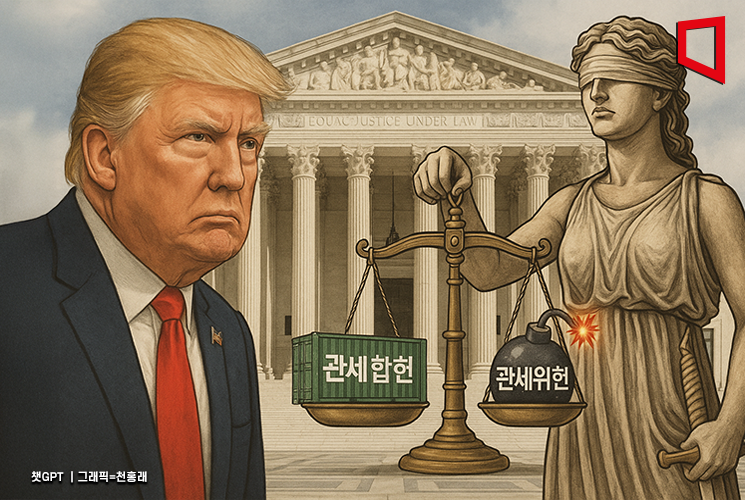
The U.S. Supreme Court has ruled that President Donald Trump’s tariffs based on national emergency powers are unlawful, creating a significant new variable for South Korea’s trade strategy toward the United States. Although existing tariffs on key export items such as steel and automobiles will not be immediately reversed, the fact that the U.S. administration’s sweeping tariff card has been checked makes changes in the future negotiation framework between South Korea and the United States inevitable.
On the 20th (local time), the U.S. Supreme Court ruled that President Trump’s broad tariffs on imports from around the world, imposed under the International Emergency Economic Powers Act (IEEPA) enacted in 1977, exceeded his legal authority and were therefore invalid. Among the nine justices, not only the three liberal justices but also three conservative justices joined the opinion that the tariffs were invalid.
Chief Justice John Roberts stated, “The president claims he can unilaterally exercise a special authority without limits on amount, duration, or scope, but no statute has been cited in which Congress expressly provided that the text of the IEEPA could be applied to tariffs.” He went on to rule, “The IEEPA does not grant the president the authority to impose tariffs.”
The U.S. Constitution grants Congress the authority to set tariffs. The IEEPA allows the president to regulate exports and imports when there is an “unusual and extraordinary threat,” but it does not contain any provision that explicitly authorizes tariffs. The fact that no president before Trump had ever used this law as the basis for imposing tariffs also influenced the Court’s decision.
Earlier, in February 2025, President Trump imposed a 25% tariff on Canada, China, and Mexico, arguing that they had failed to sufficiently block the inflow of illegal drugs such as fentanyl into the United States. On April 2, he declared “Liberation Day” and applied a flat 10% basic tariff on imports from almost all countries. Some countries were hit with additional high tariffs. With this ruling, these IEEPA-based tariffs will lose their effect.
However, measures based on other statutes, such as Section 232 of the Trade Expansion Act for steel and aluminum tariffs, will remain in place. As a result, there is speculation that the Trump administration may seek ways to reimpose tariffs by relying on alternative legal grounds.
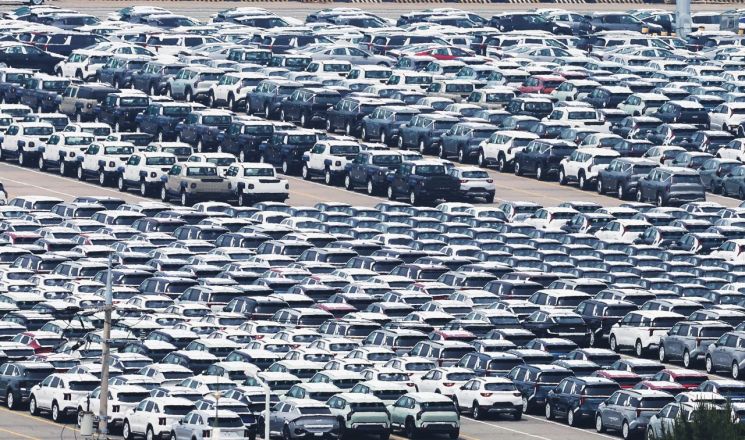
Analysts say the direct impact on South Korea will likely be limited. The tariffs invalidated by this ruling are the across-the-board 10% reciprocal tariffs based on the IEEPA and the additional tariffs on certain countries. South Korea was initially included in the “reciprocal tariff” measures announced by the United States in the first half of 2025, but the tariff regime was later adjusted through a bilateral trade agreement between South Korea and the United States. Under that agreement, the United States has been applying adjusted tariff rates to Korean products, including lowering the originally announced 25% tariff rate to 15%. In this process, the tariffs imposed on South Korea were not implemented solely on the legal basis of the IEEPA; rather, they were structured on the combination of bilateral negotiations and other legal authorities.
In particular, the tariffs currently applied to South Korea’s key export items such as steel and automobiles are based on other laws, including Section 232 of the Trade Expansion Act, and are therefore unrelated to this ruling. Industry sources say, “The risk of blanket tariffs based on the IEEPA has diminished, but the overall trade burden has by no means been fully resolved.”
Even so, the ruling carries considerable symbolic weight. By setting legal limits on the strategy of sweeping tariffs imposed under emergency powers, it effectively constrains any future U.S. administration from applying blanket tariffs to allied countries. There is also a possibility that trade issues will increasingly shift toward a Congress-centered process.
Many trade experts view this decision less as an issue that will deliver an immediate shock to the Korean economy and more as an opportunity to reset the legal framework of U.S. trade policy. With major pending issues such as strategic investment between South Korea and the United States, supply chain cooperation, and tariff negotiations still unfolding, the weakening of the administration’s “across-the-board tariff card” is expected to act as a new variable in the negotiation environment.
© The Asia Business Daily(www.asiae.co.kr). All rights reserved.
![Clutching a Stolen Dior Bag, Saying "I Hate Being Poor but Real"... The Grotesque Con of a "Human Knockoff" [Slate]](https://cwcontent.asiae.co.kr/asiaresize/183/2026021902243444107_1771435474.jpg)












