Ruling Bloc Races to Pass Amnesty Prohibition Bill...Could Be Handled as Early as February Session
Discussed at Legislation and Judiciary Committee Subcommittee
Opposition: "The Amnesty Act Cannot Restrict Eligible Targets...Constitutional Destruction"
As former President Yoon Suk Yeol was sentenced at the first trial to life imprisonment, rather than the death penalty, which is the maximum statutory sentence, on charges of leading an insurrection, the Democratic Party of Korea and other ruling bloc parties are moving quickly to revise the Amnesty Act to prevent him from being pardoned and having his rights restored in the future.
Democratic Party leader Jung Cheongrae said at a Supreme Council meeting on the 20th, "We will also swiftly pass a law prohibiting amnesty that restricts pardons for insurrectionists."
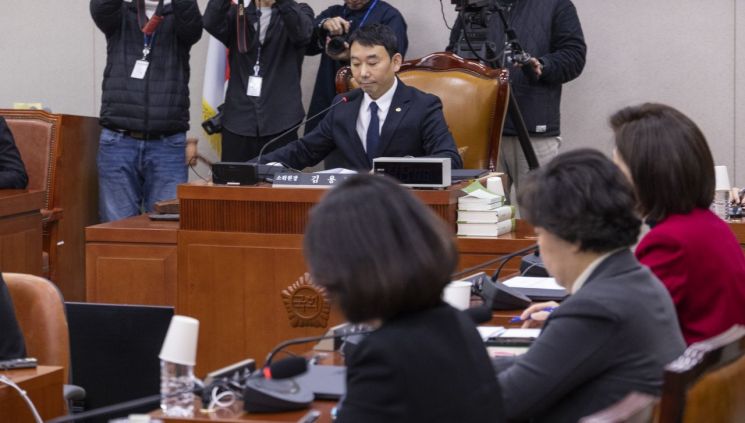
The Democratic Party has been accelerating efforts to revise the Amnesty Act since the first-instance sentencing of former President Yoon. Park Suhyeon, the party's chief spokesperson, also told reporters after the Supreme Council meeting that there is a possibility the amnesty prohibition bill could pass during the February session of the National Assembly. Chief Spokesperson Park explained, "From the public's perspective, there is absolutely no way (former President Yoon) should be pardoned," adding, "The party has decided to prioritize the amendment of the Amnesty Act in order to reflect the people's anger and hopes."
The National Assembly's Legislation and Judiciary Committee immediately began discussions on the matter. The first subcommittee on judicial bills placed the amendment to the Amnesty Act on its agenda for the day and discussed the legal revision. Kim Yongmin, the ruling party secretary of the Legislation and Judiciary Committee and chair of the first subcommittee on judicial bills, said, "We must pass the amnesty prohibition law and hold those guilty of insurrection fully accountable to the end. The weight of the crime of trampling on democracy and the Constitution is by no means light," stressing, "For that reason, no exoneration should ever be granted under any pretext or justification."
However, the People Power Party is expected to oppose the move, arguing that restricting the president's pardon authority for specific crimes could be unconstitutional. The core of the amendment to the Amnesty Act being pushed by the Democratic Party, the Cho Kuk Innovation Party, and other parties in the broader ruling bloc is to exclude from eligibility for pardon serious crimes that threaten the constitutional order, such as insurrection and treason under the Criminal Act.
Na Kyungwon, a lawmaker of the People Power Party, said at the subcommittee, "The Amnesty Act only stipulates the types of pardons and the procedures for granting them. It cannot be used to restrict which crimes or which individuals are eligible for pardon," adding, "The (amnesty prohibition law) that the Democratic Party is foreshadowing is clearly another unconstitutional act of destroying the Constitution."
In response, Democratic Party lawmaker Kim Gipyo countered, "When it comes to insurrection and treason, the current era demands that the pardon authority be exercised more strictly than it has been when exercised as a presidential power."
As of the day, a total of 26 separate amendment bills to the Amnesty Act, each sponsored by lawmakers from both the ruling and opposition parties, had been submitted to the National Assembly's bill information system. They mainly seek to restrict special pardons for persons convicted of specific crimes such as insurrection and treason. Among them, an amendment proposed by People Power Party lawmakers Kim Minjeon and Joo Jinwoo and others was originally aimed at Cho Kuk, now leader of the Cho Kuk Innovation Party, and is centered on limiting pardons and restoration of rights solely for so-called power-related crimes such as admissions fraud.
© The Asia Business Daily(www.asiae.co.kr). All rights reserved.
![Clutching a Stolen Dior Bag, Saying "I Hate Being Poor but Real"... The Grotesque Con of a "Human Knockoff" [Slate]](https://cwcontent.asiae.co.kr/asiaresize/183/2026021902243444107_1771435474.jpg)















