Examiner’s report sent to seven companies including CJ CheilJedang and Daehan Flour Mills
Prosecution estimates collusive sales at 5.9 trillion won...potential for record-breaking fine
The Korea Fair Trade Commission (KFTC) has begun imposing sanctions on seven major domestic flour milling companies suspected of collusion involving a total of about 6 trillion won.
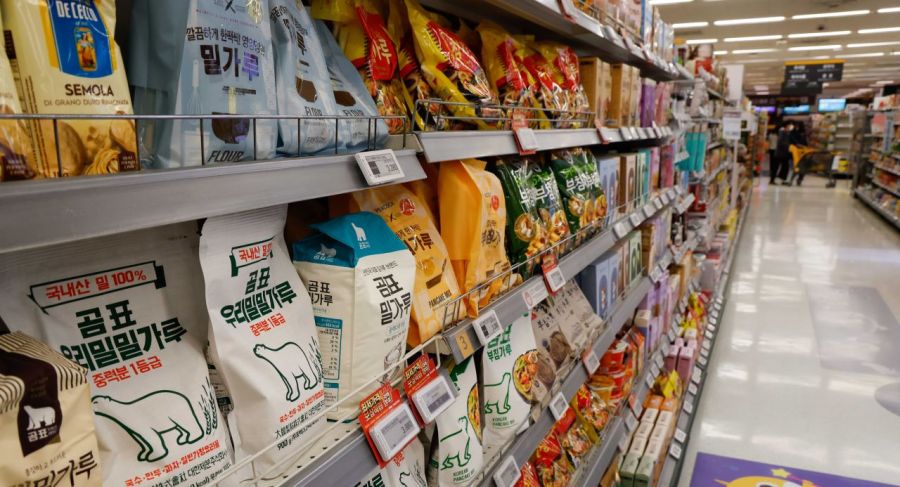
According to industry sources on the 19th, the KFTC has sent an "examiner’s report" to seven companies, including CJ CheilJedang and Daehan Flour Mills. An examiner’s report is a document the KFTC issues when it determines that a violation of the law has occurred. In prosecutorial terms, it is equivalent to an indictment. This comes about a week after the KFTC imposed the second-largest-ever fine in its history for sugar price-fixing on February 12.
Earlier, prosecutors estimated that these companies generated 5.9913 trillion won in sales over about five years through collusion and have already brought key executives to trial. In the previous sugar price-fixing case, the KFTC applied 15% of the related sales to the collusion amount of 3.2884 trillion won and imposed a fine of 408.3 billion won. Given that the sales involved in the current flour case are nearly double, the fine for this case could far exceed that level and become the largest ever. The case that has received the largest fine related to collusion so far is the 2010 LPG price-fixing case (fine of 668.9 billion won).
Once the KFTC’s examiner’s report is delivered to the respondent, the respondent can exercise its right of defense by submitting a written opinion within eight weeks (for cases to be reviewed by the full commission). The full commission then decides whether to impose sanctions and at what level, taking the respondent’s opinion into account. If the full commission concludes that collusion occurred, it will issue a corrective order and impose a fine.
Particular attention is being paid to whether a "price re-determination order" will be issued in this flour price-fixing case. This measure forces companies to discard (i.e., reduce) prices that were artificially raised or formed through collusion and to re-set prices in line with competitive market levels. Flour milling companies were caught engaging in collusion in 2006 as well, and at that time the KFTC imposed fines along with a price re-determination order. The measure has not been invoked since and has effectively fallen into disuse, but KFTC Chairperson Joo Byungki has recently pledged to actively utilize it, drawing attention to whether it will be revived for the first time in about 20 years.
© The Asia Business Daily(www.asiae.co.kr). All rights reserved.
![Clutching a Stolen Dior Bag, Saying "I Hate Being Poor but Real"... The Grotesque Con of a "Human Knockoff" [Slate]](https://cwcontent.asiae.co.kr/asiaresize/183/2026021902243444107_1771435474.jpg)











