Jeonnam Institute of Health and Environment Expands Targets
from Existing Water and Food to Entire Contact Environments
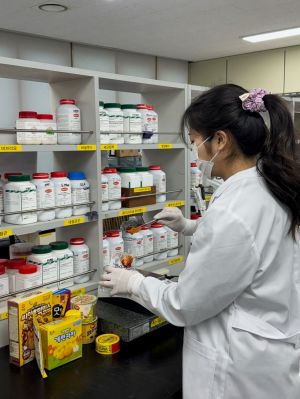 Jeollanam-do Institute of Health and Environment has greatly expanded the range of specimens ? from food to contact-environment elements such as childcare facilities ? to prevent an increase in norovirus food poisoning cases during the winter. Provided by Jeonnam Province
The Jeollanam-do Institute of Health and Environment announced that, in response to the increase in norovirus food poisoning cases during the winter season, it will expand its existing monitoring system, which has focused on raw oysters for direct consumption and groundwater, to include kimchi and contact-environment specimens from childcare facilities, in order to minimize patient occurrence in advance.
Norovirus mainly occurs from late autumn through early spring, and it remains highly viable even at low temperatures, causing infection with only a small amount of the virus.
It is transmitted not only through the intake of water and food, but also via various routes such as person-to-person contact, and the risk of infection spreading is particularly high in group facilities for infants and young children, where personal hygiene is difficult to manage.
In addition to testing raw oysters for direct consumption and groundwater used as water for food manufacturing and cooking, the Jeollanam-do Institute of Health and Environment will expand its testing targets to include kimchi, which is likely to be consumed without heating.
It also plans to establish a preemptive monitoring system that covers contact environments such as door handles, toys, and faucets in childcare facilities, in order to block group infections in advance.
If norovirus is detected in test results, the institute will immediately notify the relevant cities and counties and related agencies, then implement follow-up measures such as restricting the distribution, manufacturing, and use of the implicated food and disinfecting the environment, followed by retesting.
Kim Jin-young, head of the Food Analysis Division at Jeollanam-do, said, "Since norovirus poses a high risk of spreading, particularly in group facilities and foods intended for raw consumption, preemptive testing and thorough hygiene management are crucial," adding, "We will continue to strengthen the monitoring system to protect the health of residents and prevent food poisoning."
© The Asia Business Daily(www.asiae.co.kr). All rights reserved.
![Clutching a Stolen Dior Bag, Saying "I Hate Being Poor but Real"... The Grotesque Con of a "Human Knockoff" [Slate]](https://cwcontent.asiae.co.kr/asiaresize/183/2026021902243444107_1771435474.jpg)















