Government Working-Level Team Heads to U.S. While Special Act Stalls in National Assembly
Growing Pressure from Comparisons with Japan's "Execution Speed"
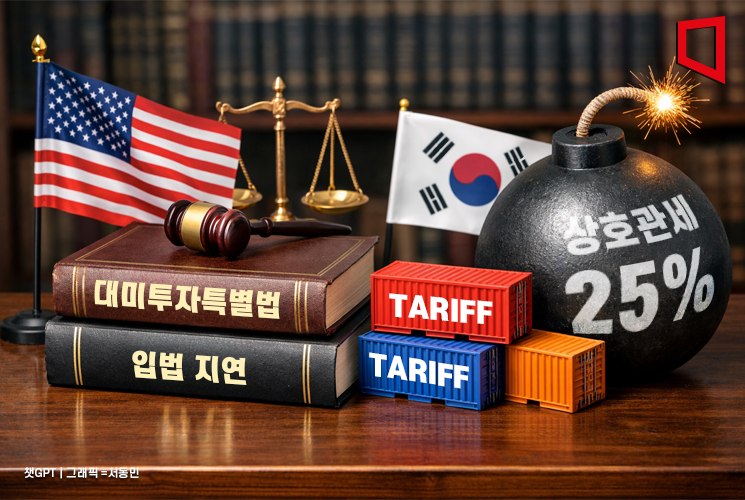
As Japan has finalized and begun implementing its first project under its investment pledge to the United States, pressure is mounting on Korea over the relative speed of its own investment execution. While the 350 billion dollar investment package has been agreed upon, the Special Act on Investment in the United States has not yet passed the National Assembly. The Korean government has dispatched a working-level delegation to the United States to begin preliminary consultations, but critics point out that a gap still remains between the legislative vacuum and the actual implementation schedule.
According to the Ministry of Trade, Industry and Energy on the 19th, a working-level negotiation team led by Deputy Minister for Trade Park Jeongseong is scheduled to visit the United States on this day to discuss candidate projects for investment and how to move them forward. The idea is to narrow down candidate projects and align the basic framework with the U.S. side, within the scope of what is administratively possible even before the special act is enacted. It is largely a form of advance groundwork to allow an immediate transition to the execution phase as soon as the law is passed.
Japan's moves lie in the background of the Korean government's sense of urgency. Japan has taken a symbolically significant first step by officially announcing the first project under its large-scale investment plan promised to the United States. Rather than a simple investment pledge, it has put forward an executable card that specifies concrete projects, amounts, and locations. For the Trump administration, which is facing criticism both at home and abroad, there is a strong possibility that this will be used as evidence that investment agreements with allies are translating into tangible results.
Korea, by contrast, remains stuck in the preparation phase. This is because the legal and financial structures needed to carry out investment in the United States have not yet been fully established. Even after the Special Act on Investment in the United States passes, follow-up procedures such as setting up the fund and drawing up detailed enforcement decrees will still be required. This is why concerns are being raised that it could take a considerable amount of time before actual execution begins.
For now, the government is using the Korea-U.S. Strategic Investment Memorandum of Understanding (MOU) Implementation Committee as a de facto temporary control tower. Until the special act comes into force, the strategy is to pre-screen candidate projects through consultations among relevant ministries, while simultaneously conducting working-level talks with the U.S. side. The plan is for the trade policy line and the industrial and fiscal policy lines to move in tandem, pursuing legislation and negotiations at the same time.
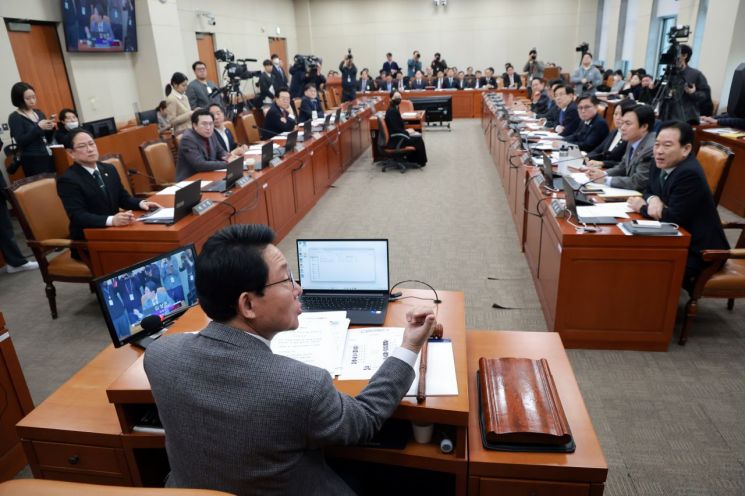
Potential investment areas include strategic industries such as energy infrastructure, semiconductors, critical minerals, pharmaceuticals, and artificial intelligence (AI). In particular, given the surge in electricity demand driven by the spread of AI, some observers predict that projects related to power grids and power generation infrastructure could emerge as leading candidates for the first project. The fact that Japan chose the energy sector as its first card lends further weight to this analysis.
The key issue is speed. At a time when the United States is effectively linking its tariff policy and investment policy, prolonged delays in investment could become a burden across the broader trade negotiation agenda. In practice, the U.S. side has been periodically reviewing whether allies are fulfilling their investment pledges and appears to be calibrating the level of pressure accordingly.
In particular, now that Japan has already finalized a project and moved into the implementation phase, Korea's pace in carrying out its investment pledges is likely to be judged by an even stricter standard. Given that the Trump administration has consistently used tariff policy as a bargaining lever, the difference in speed with Japan could itself become a topic at the negotiating table. Analysts note that if investment progress remains sluggish, it will be difficult to rule out the possibility that the U.S. side may present less favorable terms or increase the pressure level in discussions over tariff adjustments.
The government, however, maintains that effectiveness is as important as speed. Since the 350 billion dollar in funds is not structured to be disbursed in a short period, it explains that the method of financing, the division of roles between the public and private sectors, and profitability reviews must proceed in parallel. Underlying this is the judgment that hastily rolling out a merely symbolic first project is not the optimal course of action.
An official at the Ministry of Trade, Industry and Energy said, "The agreed investment direction between Korea and the United States remains unchanged, and we are steadily preparing executable projects in parallel with the enactment of the special act," adding, "We are in close consultation with the relevant ministries so that we can produce concrete results in line with the agreed timeline."
© The Asia Business Daily(www.asiae.co.kr). All rights reserved.


















