1,495 Regular Admission SKY University Admits Give Up Enrollment
70% from Natural Science Tracks Opt for Medical Schools
In the 2026 regular admission cycle, a total of 1,495 successful applicants to so-called "SKY universities" - Seoul National University, Korea University, and Yonsei University - chose not to enroll. Of these, 70% were in the natural sciences track, leading to analysis that a full-scale "shift to medical schools" has begun due to multiple admissions that include medical schools.
According to Jongro Academy on February 18, in the 2026 regular admissions, 612 successful applicants to Korea University, 224 to Seoul National University, and 659 to Yonsei University, a total of 1,495, did not complete enrollment despite being admitted.
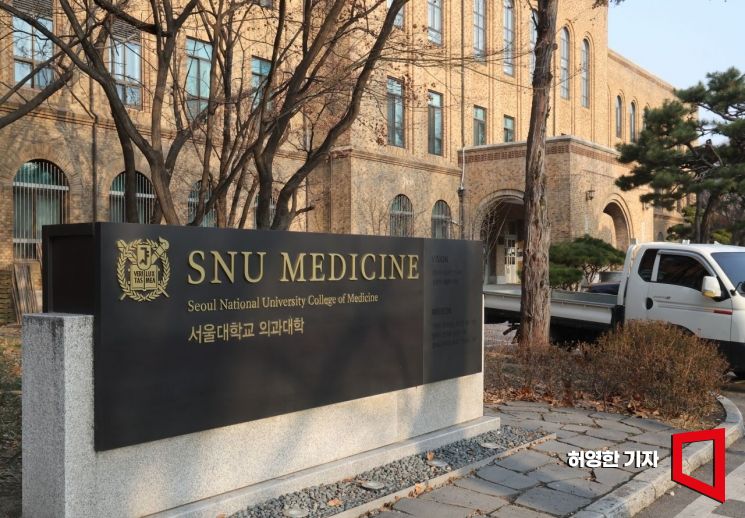
The outflow from the natural sciences track was particularly notable. At Korea University, 435 out of 612 who declined to enroll were from the natural sciences track; at Seoul National University, 180 out of 224; and at Yonsei University, 432 out of 659. In total, 1,047 students, or 70% of all those who declined to enroll, were in the natural sciences track.
The 180 students in the natural sciences track at Seoul National University who declined regular admission enrollment for the 2026 academic year represent the largest number in the past five years. The number of natural sciences track students at Seoul National University who declined enrollment in the regular admissions was 127 in the 2022 academic year, 88 in 2023, 164 in 2024, 178 in 2025, and 180 in 2026, showing a continued upward trend except for the 2023 academic year.
By contrast, the number of students in the humanities track was 36 (16.1%), down 15 from the previous year, while the arts and physical education track recorded 8 (3.6%), up 2.
By department, in the natural sciences track, 37 out of 40 departments saw students decline enrollment. These included 16 in the Advanced Convergence Division, 15 in the School of Electrical and Computer Engineering, 14 in the College of Nursing, 11 in the Department of Forest Sciences, 10 in the Pharmacy-related track, and 9 in the Department of Computer Science and Engineering. In contrast, there were no students declining enrollment in the Premedical Course, the Department of Energy Resources Engineering, or the Department of Statistics. In the humanities track, the College of Business Administration and the Department of Economics each had the highest number, with 7 students declining enrollment.
This trend is interpreted as the outcome of students' choices after receiving multiple admissions that include medical schools. It is explained that, over the past five years, the tendency of applicants who were admitted both to Seoul National University’s College of Engineering or other natural sciences programs and to medical schools in the Seoul metropolitan area or in regional areas to choose medical schools has become more pronounced than ever. The decline in humanities-track enrollment is also analyzed as being significantly affected by multiple admissions to medical schools, dental schools, and colleges of Korean medicine that recruit from the humanities track.
Lim Sung-ho, CEO of Jongro Academy, said, "The decision by successful applicants in the natural sciences track at Seoul National University to forgo regular admission enrollment can in fact be attributed mostly to multiple admissions that include medical schools," adding, "If the regional doctor system is implemented, the number of students who gain multiple admissions to both Seoul National University and medical schools will increase, and the scale of outflow is likely to grow further."
© The Asia Business Daily(www.asiae.co.kr). All rights reserved.
![Clutching a Stolen Dior Bag, Saying "I Hate Being Poor but Real"... The Grotesque Con of a "Human Knockoff" [Slate]](https://cwcontent.asiae.co.kr/asiaresize/183/2026021902243444107_1771435474.jpg)
















