The Key Factor Is Hierarchical Superiority in the Workplace
"Not Applicable If They Joined the Company at the Same Time"
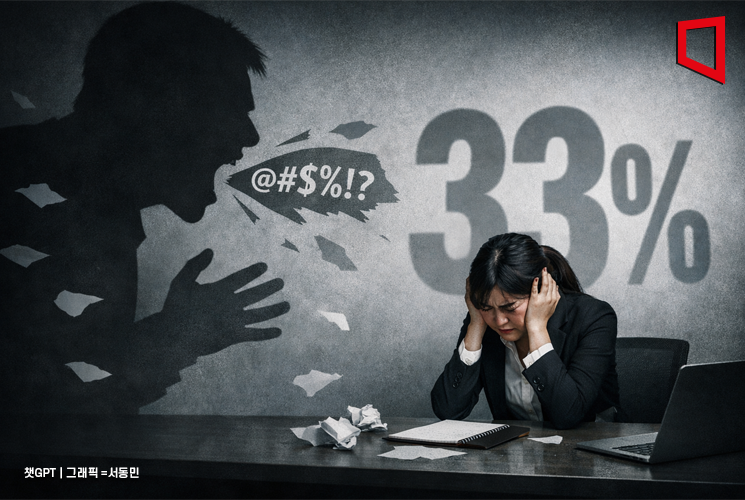
Even if verbal abuse or insults occur in the workplace, they do not constitute workplace harassment if the target is a colleague who joined the company at the same time, according to a court ruling.
On February 16, the 13th Administrative Division of the Seoul Administrative Court (Presiding Judge Jin Hyunseob) announced that it had partially ruled in favor of the plaintiff in a lawsuit filed by a person identified as Kim against the Chairperson of the Central Labor Relations Commission, seeking to overturn a decision on unfair disciplinary action (cancellation of the decision on the reexamination for relief from unfair discipline).
Kim worked as a call center agent at Company K. A, who was also working as a call center agent (the complainant), reported to the company on May 10, 2024 that Kim had subjected A to workplace harassment.
A claimed to have been subjected to workplace harassment since February of the same year. According to A's report, in the office Kim pushed a chair toward A's seat and loudly used threatening language such as "You crazy X, come out," while loudly slandering and insulting A.
In addition, Kim sent an email to six team members stating that A had deliberately failed to pass on customer information, thereby publicly humiliating A and requesting that a penalty be imposed on A. Kim also reported to the center manager that A's conversation with a fellow agent about working hard to increase sales constituted "threatening," and requested that a penalty be imposed.
After receiving this report, Company K conducted an investigation and concluded that "Kim was in a superior position to A and each of these actions constituted workplace harassment." The company notified Kim of the investigation results on July 24 of the same year.
On August 1 of the same year, after a resolution by the disciplinary committee, Company K determined that Kim fell under the grounds for discipline set out in the internal work rules, Article 63, Item 10, which covers "those who engage in workplace harassment or otherwise disrupt workplace order through similar conduct." The company ordered Kim to receive a one-month pay cut as a disciplinary measure and to be reassigned.
Kim objected and, in the same month, filed an application for relief with the Seoul Regional Labor Relations Commission, claiming that the disciplinary action and reassignment were unfair. However, the Seoul Regional Labor Relations Commission rejected Kim's application for relief, stating that "not only are the grounds for discipline established, but the level of discipline is also appropriate."
Seeking another decision, Kim filed for reexamination with the Central Labor Relations Commission in November of the same year, but in February of the following year the Central Labor Relations Commission dismissed Kim's reexamination request for the same reasons as the prior decision. Kim then filed a lawsuit with the Seoul Administrative Court seeking cancellation of the decision on the reexamination for relief from unfair discipline.
The court sided with Kim. It held that Kim's conduct could not be regarded as workplace harassment that took advantage of a superior position or relationship in the workplace.
The court stated, "Workplace harassment is established when a person who is in a superior position in terms of relationships in the workplace takes advantage of that position," and explained, "A is the oldest among Kim and the other agents, and A and Kim joined the company at the same time, so there is no difference in their length of service."
The court went on to say, "Since this cannot be regarded as workplace harassment, the grounds for discipline are not established," adding, "The portion of the reexamination decision concerning this disciplinary action must be revoked."
© The Asia Business Daily(www.asiae.co.kr). All rights reserved.
![Clutching a Stolen Dior Bag, Saying "I Hate Being Poor but Real"... The Grotesque Con of a "Human Knockoff" [Slate]](https://cwcontent.asiae.co.kr/asiaresize/183/2026021902243444107_1771435474.jpg)
















