Iran has indicated that it is willing to make concessions to reach a nuclear agreement if the United States enters into discussions on lifting sanctions.
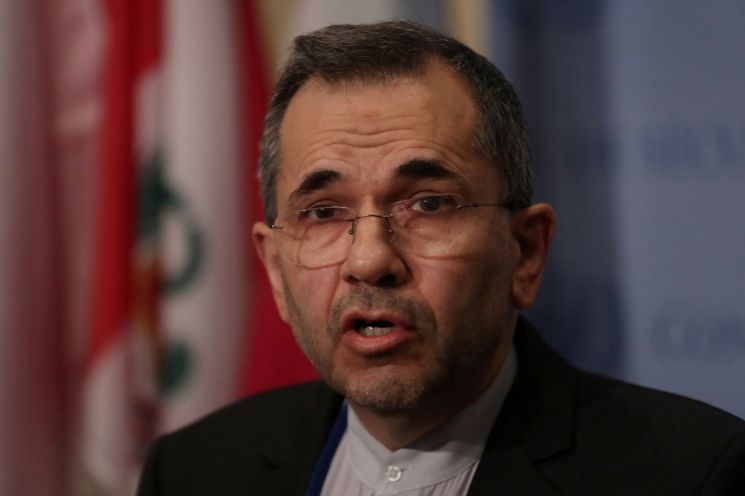
Majid Takht-Ravanchi, Iran's deputy foreign minister, said in an interview with the BBC in the United Kingdom on the 14th (local time), "The responsibility to prove the will to negotiate lies with the United States, and I am confident that if the United States shows sincerity, we can move toward an agreement." However, he did not clarify whether this meant that the United States must lift all sanctions on Iran or whether lifting some of them would be sufficient.
As a concession to conclude a deal, he proposed that Iran could dilute its stockpile of 60% enriched uranium. Sixty-percent enriched uranium is considered near-weapons-grade because its purity can be raised to 90% within a few weeks, and the international community has suspected on this basis that Iran is intent on developing nuclear weapons. Since recently entering nuclear talks with the United States, Iran has repeatedly signaled its willingness to dilute its 60% enriched uranium depending on whether sanctions are lifted.
Regarding whether Iran could, as in the 2015 nuclear agreement (JCPOA, Joint Comprehensive Plan of Action), ship abroad about 400 kilograms of highly enriched uranium from its stockpile, Takht-Ravanchi drew a line, saying, "It is still too early to make definitive statements about what will happen during the negotiation process." When the nuclear deal with the United States was concluded in 2015, Iran diluted its 20% enriched uranium to 3.67% and shipped the excess abroad.
On the issue of halting uranium enrichment, which the United States has demanded, he stated firmly, "We will not put that on the negotiating table." He also rejected the U.S. demand that Iran's ballistic missile program be included within the scope of the negotiations, saying, "It was missiles that protected us when we were attacked by Israel and the United States. How can we accept giving up our defensive capabilities?" and made clear that this issue is not up for negotiation.
Concerning the United States increasing its military assets in the Middle East, he warned, "If we judge that the situation poses a threat to our survival, we will respond accordingly." He also expressed concern about the fact that U.S. President Donald Trump shows interest in negotiations but at the same time sends mixed messages by talking about a change of regime.
Although there is widespread skepticism over whether the United States and Iran can reach a new nuclear agreement, Takht-Ravanchi said he would go into the next round of talks holding out hope for a deal, adding, "We will do our best, but the other side must also show sincerity."
© The Asia Business Daily(www.asiae.co.kr). All rights reserved.
![Clutching a Stolen Dior Bag, Saying "I Hate Being Poor but Real"... The Grotesque Con of a "Human Knockoff" [Slate]](https://cwcontent.asiae.co.kr/asiaresize/183/2026021902243444107_1771435474.jpg)
















