Taxation Criteria for Foreign Patent Royalties Reaffirmed
"Actual Place of Use, Not Place of Registration, Is the Determining Factor"
LG Electronics' Wins in First and Second Instance Overturned
Refund Claim Filed After Paying 97 Million Dollars
Taxation Dispute over Patents Not Registered in Korea
Dispute over Application of Korea-U.S. and Korea-Canada Tax Treaties
Supreme Court Orders Remand, Citing Need to Examine Domestic Exploitation
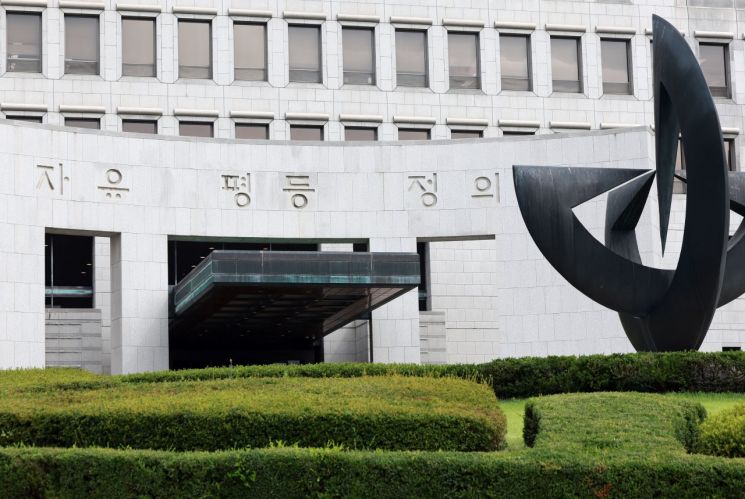
Even if royalties concern patents registered only in the United States, they can still be regarded as domestic-source income and taxed in Korea if the relevant technology is used in Korea to manufacture and sell products, according to a Supreme Court ruling. This is in line with the en banc decision handed down on September 18 last year.
According to the legal community on the 15th, the First Division of the Supreme Court (Presiding Justice Ma Yongjoo) reversed the lower court ruling, which had found in favor of the plaintiff in a lawsuit filed by LG Electronics seeking to cancel a corporate (withholding) tax reassessment refusal issued by the head of the Yeongdeungpo Tax Office, and remanded the case to the appellate court.
Around 2017, when LG Electronics settled a patent-related lawsuit with a U.S. semiconductor company, it entered into a cross-licensing and settlement agreement covering four U.S. patents it owned and twelve U.S.-registered patents owned by its subsidiary. Under the agreement, it paid 97 million dollars as royalties and paid the corresponding corporate tax by way of withholding.
In March 2018, LG Electronics filed a request for correction seeking a refund of the withholding tax, arguing that the royalties were consideration for patent rights not registered in Korea and therefore did not constitute domestic-source income under the Korea-U.S. tax treaty. However, the Yeongdeungpo Tax Office rejected the request. The key issues were: (1) whether royalties for patents not registered in Korea constitute domestic-source income, and (2) whether the Korea-Canada tax treaty could be applied to the ATI patent royalties.
The courts of first and second instance both ruled in favor of LG Electronics. The Supreme Court, however, reached a different conclusion. The bench stated, "If the royalties in this case were paid as consideration for using the patented technology to manufacture and sell products in Korea, then they constitute domestic-source income under the Korea-U.S. tax treaty and the former Corporate Tax Act." The implication is that the decisive factor is not where the patent is registered, but whether it is actually exploited in Korea.
The Supreme Court held that the lower court misinterpreted the law by concluding that the royalties were not taxable solely because they related to "patents not registered in Korea," without specifically examining whether the patents were used domestically. Accordingly, the Supreme Court reversed and remanded the case.
© The Asia Business Daily(www.asiae.co.kr). All rights reserved.

















