Among Gen Z, content confessing depression and emotional outbursts is trending
"In the AI era, imperfection is valued more than perfection"
Among Generation Z (those born between 1997 and 2006), a culture of openly revealing their own weaknesses and imperfections, or "vulnerability," is taking hold, bringing changes to advertising and marketing strategies. Moving away from traditional branding methods that emphasized perfection, a new approach that instead makes even shortcomings and anxieties public is emerging as a noteworthy way to build trust.

On the 12th, Cheil Worldwide's thought-leadership-based strategic insight group "Yojeum Research Lab" presented "Vulnerability" as a new key topic in brand marketing through its recently published report "Minority Report - The Right to Be Vulnerable." The report focused on the fact that Generation Z is enthusiastic about a culture centered on social networking services (SNS), in which they actively reveal their anxieties and flaws instead of hiding them.
Sharing everything from depression and anxiety to ADHD without filters
A representative example is so-called "mental health confession" content. This type of content, which shares mental difficulties such as depression, anxiety, and ADHD without any filtering, has become a trend on TikTok, where it has accumulated more than 25 billion views. A structure has formed in which talking openly about one's weaknesses, rather than hiding them, actually earns empathy and support.
Content that dramatically expresses everyday stress and discomfort, known as "crashing out," is also spreading. Exaggerated videos of emotions exploding in trivial situations have gained popularity, leading to the creation of more than 600,000 related hashtags on TikTok. This shows that, rather than controlling emotions, openly expressing them has become both a form of play and a way of communication.
The report analyzed that this trend is not a simple fad but is deeply connected to the environment in which Generation Z has grown up. For those who have come of age amid economic uncertainty and geopolitical risks, vulnerability is closer to a "default state" than an exception. The report explains that revealing one's flaws, rather than hiding them, is functioning as a strategy to secure individuality and scarcity value.
Why they are drawn more to 'imperfection' than to perfection
The spread of active vulnerability has been attributed to a backlash against technological advances and social change. As advances in technologies such as artificial intelligence (AI) have created an environment in which anyone can easily produce perfect outputs, there is now a growing atmosphere in which human flaws and imperfections are valued more highly. In an era overflowing with perfection, "human qualities" become a key differentiating factor.
A backlash against the success narratives of older generations and the lightness of relationships on SNS is also seen as having an impact. As a structure has emerged in which content that shares honest emotions and weaknesses resonates more strongly than outward displays of success and perfection, vulnerability has become a new language of communication.
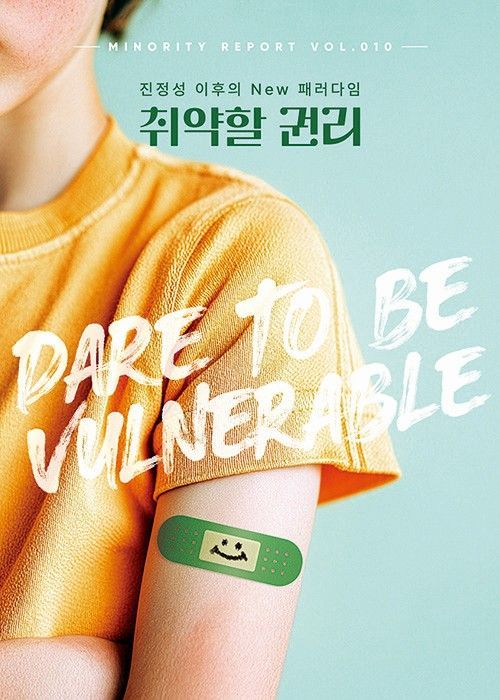 Cheil Worldwide's Yojum Research Lab, 'Minority Report - The Right to Be Vulnerable'. Cheil Worldwide
This trend is extending beyond individuals to influence corporate and brand strategies as well. In the past, the core was to appeal to "authenticity" by emphasizing consistency between beliefs and actions; now, however, "vulnerability," which reveals even weaknesses and limits, is being evaluated as a more powerful differentiation strategy.
The report suggested that, rather than hiding their limitations, brands can enhance consumer trust by openly disclosing them and transparently showing the process of improvement. In other words, an approach is needed that transforms vulnerability from a negative factor into a starting point for possibility and growth.
Park Miri, head of Cheil Worldwide's Yojeum Research Lab, said, "In an unpredictable business environment, proactively revealing vulnerability is a core differentiation strategy that can determine the success or failure of a business," adding, "It will not only build strong solidarity with 'true fans' who embrace even a brand's scars, but also serve as the most proactive growth engine for overturning the market landscape and securing a superior position."
© The Asia Business Daily(www.asiae.co.kr). All rights reserved.
![Clutching a Stolen Dior Bag, Saying "I Hate Being Poor but Real"... The Grotesque Con of a "Human Knockoff" [Slate]](https://cwcontent.asiae.co.kr/asiaresize/183/2026021902243444107_1771435474.jpg)
















