130,000 New Jobs Added
Gains Concentrated in Sectors Such as Healthcare
Market Eyes Details... New York Stocks End Slightly Lower
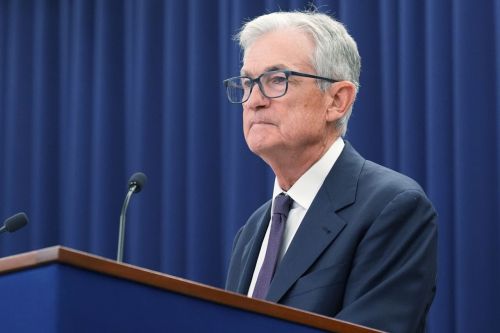 Jerome Powell, chair of the U.S. Federal Reserve (Fed). The interest-rate futures market is pricing in a 94.1% probability that the Fed will keep the policy rate unchanged at its March Federal Open Market Committee (FOMC) meeting. AP Yonhap News
The U.S. labor market showed a stronger-than-expected performance last month, pushing the probability that the Federal Reserve (Fed) will keep its policy rate unchanged next month into the 90% range. The Donald Trump administration hailed the solid fundamentals as proof of the "Trump Economy," but in the market the assessment is that the economic environment has become less favorable for delivering the rate cuts President Trump wants.
According to the CME FedWatch Tool on the 11th (local time), the interest-rate futures market is currently pricing in a 94.1% probability that the Federal Reserve will keep its policy rate unchanged at the March regular meeting of the Federal Open Market Committee (FOMC). This is 14 percentage points higher than the 79.9% recorded the previous day. The current policy rate stands at 3.5% to 3.75% per year.
The probability that rates will be kept unchanged in April also jumped from 58.4% to 78.5%. Even for June, which had initially been expected to mark the Fed's first rate cut of the year, the probability of no change rose from 24.8% to 41.0%. A recent report by the International Finance Center noted that global investment banks (IBs) expect the Fed to cut rates a total of two times within the year, starting in June.
January job gains more than double market expectations
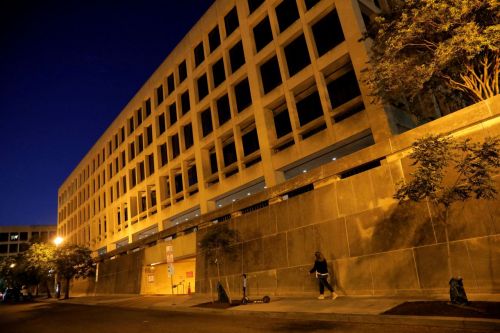
The sharp decline in expectations for rate cuts is largely due to the employment data released that day. Nonfarm payrolls in January, published by the Bureau of Labor Statistics (BLS) of the Department of Labor, increased by 130,000 from the previous month. This was a surge from December last year (48,000) and more than double the market consensus of 55,000. The unemployment rate fell to 4.3%, down from 4.4% a month earlier, and the labor force participation rate inched up to 62.5%. As a result, the unemployment rate has now declined for two consecutive months since November. Average hourly earnings also rose 0.4% from the previous month, beating expectations.
Bank of America (BoA) said the January employment report would be a "Super Bowl-level report," expecting the figures to reflect a labor supply shock stemming from the U.S. government's anti-immigration policies and a decline in labor demand due to companies' adoption of artificial intelligence (AI) technologies. Key aides, including Peter Navarro, White House advisor on trade and manufacturing, and Kevin Hassett, White House National Economic Council (NEC) Director, also appeared on television in advance to lower expectations.
Brad Smith, portfolio manager on the U.S. fixed income and corporate credit team at Janus Henderson, told U.S. financial media outlet CNBC, "In an environment where a weakened labor market had been the basis for a cautious economic outlook, these numbers are solid data showing robust economic growth, improvement in the labor market, and wage gains that will support consumption," adding, "The Fed will take this into account when it decides on rates next month."
Market focuses on sector concentration of new jobs
The market, however, took a cautious stance, focusing on the details of the January report. On the surface, it posted the highest increase of the past year (up 130,000), but attention centered on the fact that the new jobs were concentrated in a few sectors such as healthcare (82,000), social assistance (42,000), and construction (3,000). Rick Wedell, Chief Investment Officer (CIO) at RFG Advisory, said, "From the standpoint of the labor market, we are not completely out of the woods yet," adding, "The unemployment rate is improving, but there are still many signs that the labor market remains very fragile, and it is clear that there is a long way to go before it can be judged as solid."
Foreign media also pointed out that the credibility of the data is being undermined by the BLS repeatedly making large downward revisions after releasing employment figures in recent years. For example, in this report, the change in nonfarm payrolls from the second quarter of 2024 through the first quarter of 2025 was revised down by 862,000 (898,000 after seasonal adjustment). This means that the average monthly job growth in the United States last year was only 15,000.
CNBC noted, "Concerns about the labor market have not been fully resolved, as employment figures were repeatedly revised downward throughout last year." Reuters also sharply criticized the data, saying, "The largest increase in employment in 13 months (130,000), announced by the Department of Labor today, likely exaggerates the true state of the labor market."
U.S. Treasury yields surged immediately after the employment report was released, then gave back their gains as expectations for rate cuts diminished. According to MarketWatch, as of 7:55 p.m. local time that day, the 10-year U.S. Treasury yield was trading around 4.190%, up 1.4 basis points (1 bp = 0.01 percentage point) from the previous session. Right after the report was released, it had climbed into the 4.2% range before retreating. The two-year U.S. Treasury yield, which is sensitive to monetary policy, was down 0.9 bp at 3.52%. Overnight, all three major New York stock indexes ended the session slightly lower.
The White House, immediately after the January employment data that far exceeded Wall Street forecasts was released, stressed, "This is the Trump Economy," adding, "More Americans are working for higher wages, and job gains have blown past expectations." President Trump likewise downplayed last year's annual revisions and focused on the January employment surge. On his social media account that day, he wrote, "We have once again become the strongest country in the world," adding, "Interest rates should, by far, be the lowest."
© The Asia Business Daily(www.asiae.co.kr). All rights reserved.
![Clutching a Stolen Dior Bag, Saying "I Hate Being Poor but Real"... The Grotesque Con of a "Human Knockoff" [Slate]](https://cwcontent.asiae.co.kr/asiaresize/183/2026021902243444107_1771435474.jpg)
















